





 Portuguese
  English
  Spanish
  5 min of reading
  11 comments


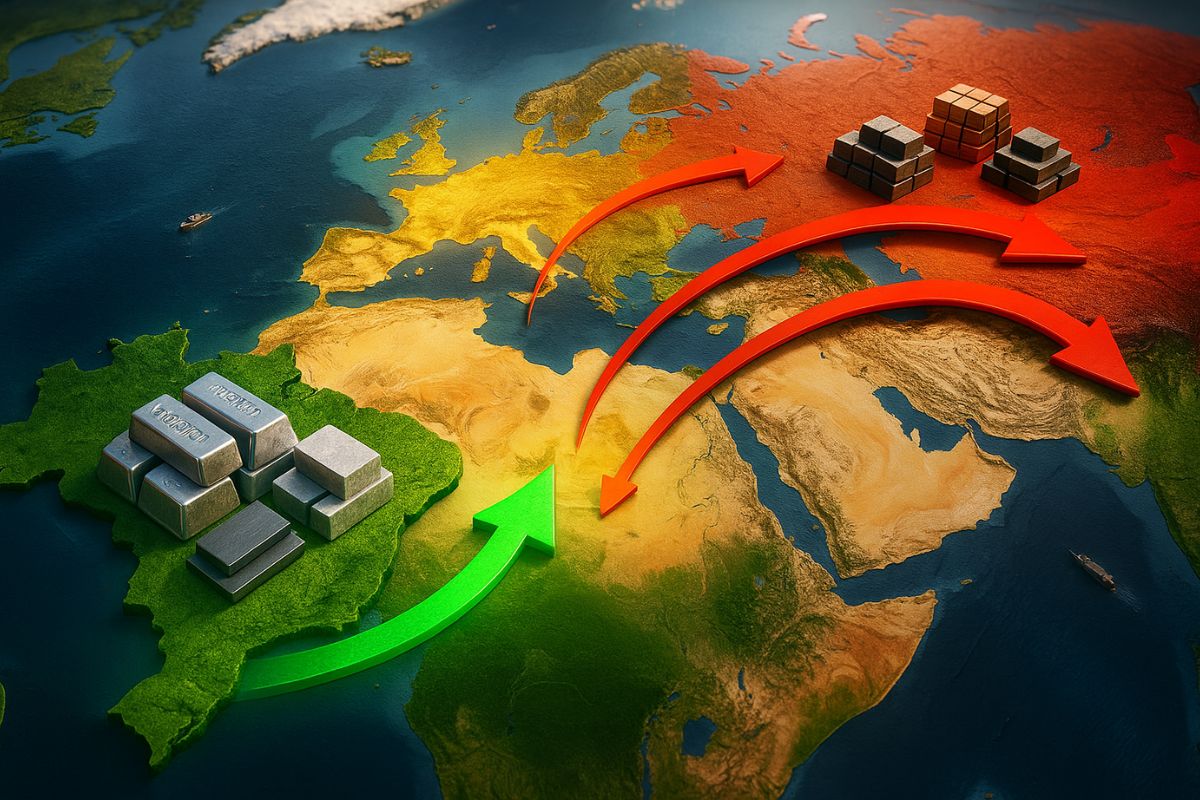


With Europe depending on about 75% of rare earths from China and Russia, Brazil holds strategic minerals (rare earths, uranium, and critical inputs) that could rebalance defense chains, chips, and batteries; according to Prof. Luiz Antonio, the window to industrialize and add value here is short and requires refining policies, technological partnerships, and geopolitical safeguards.
The competition for critical inputs has taken on an urgent component: Brazil holds strategic minerals capable of alleviating global bottlenecks in rare earths, uranium, and metals for the chip, battery, and defense industries. Prof. Luiz Antonio’s assessment is straightforward: if Europe today relies mainly on China and Russia, Brazil has the real ability to become a relevant supplier — as long as it stops exporting only raw ore and advances to refining and components.
In the specialist’s view, the risk to the West is obvious: concentrated supply chains mean industrial and military fragility. At the same time, Brazil can monetize its position if it combines geological mapping, processing plants, and long-term contracts. “Without a value-adding policy and regulatory protection, we lose the chance to lead,” summarizes Prof. Luiz Antonio.
Why Brazil Is a Key Piece Now
The European dependence on Asian and Russian supplies has created a “single point of failure” in critical sectors.
-
Brazilian city bets on the business environment to generate jobs and attract investments in the energy sector — secretary reveals strategy at Macaé Energy 2026.

-
50 viaducts, 4 tunnels, 28 bridges, and 40 kilometers of bike paths: BR-262 in Espírito Santo will receive 8.6 billion reais for the largest engineering project in the state’s history, inspired by the Immigrant Highway in São Paulo.

-
Brazil produces too much clean energy and doesn’t know what to do with it: over 20% of solar and wind capacity was wasted in 2025 while investors flee and 509 renewable generation projects were abandoned in the last year.
-
Piauí will produce a new fuel that replaces diesel without needing to change anything in the truck’s engine and reduces pollutant gas emissions by half: truck drivers from all over the Northeast are already celebrating the news that will arrive later this decade.

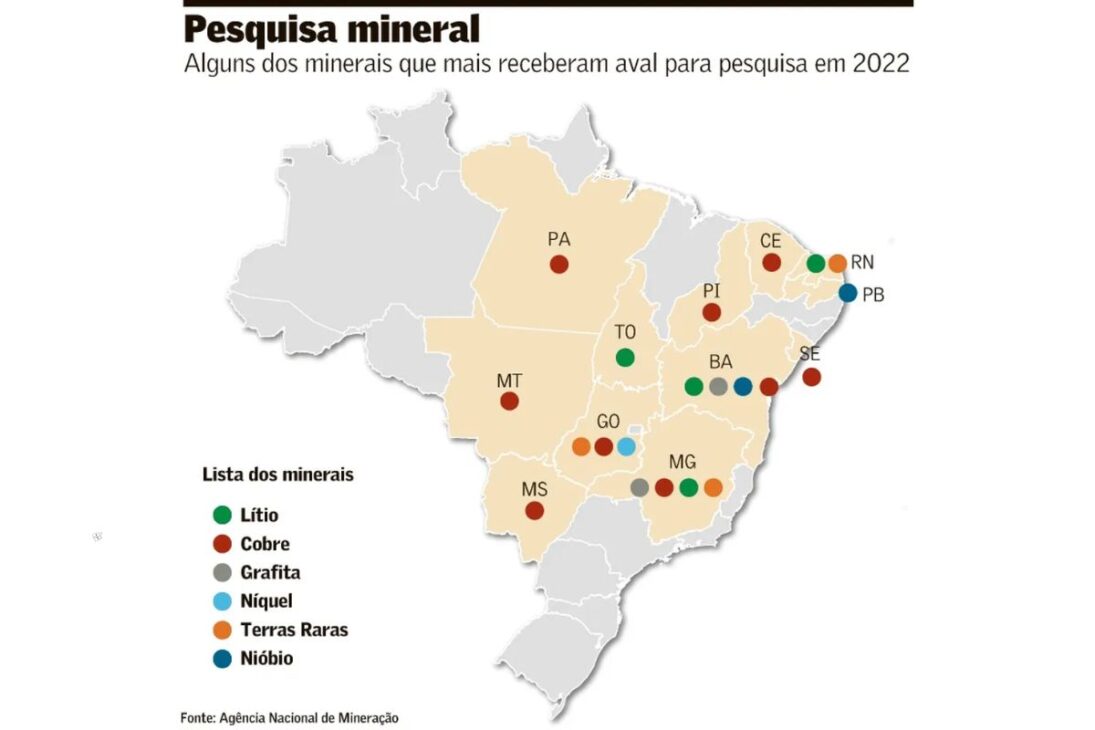
Brazil holds strategic minerals that can mitigate this exposure for three reasons: broad geological base, proximity to Western markets, and contractual stability.
According to Prof. Luiz Antonio, this opens space for industrial agreements that include technology transfer and Brazilian participation in refining.
The specialist emphasizes that the value is not just in the ore, but in mastering the processing and manufacturing of inputs for permanent magnets, catalysts, chips, and battery cathodes.
Without separation and refining plants, we remain stuck in the role of primary exporter, with little income capture and skilled job creation.
Rare Earths: From Ore to Permanent Magnet
In Prof. Luiz Antonio’s view, the priority is to establish complete routes: mining, separation, refining, and manufacturing components.
This includes enabling chemical complexes to separate light and heavy elements, ensuring strict environmental standards and traceability.
The next step is to manufacture permanent magnets (NdFeB, for example) for electric vehicle motors and wind turbines.
“If we do not produce the magnet, we will continue buying the expensive component from abroad, even having the mineral here”, warns the specialist.
Brazil holds strategic minerals, but needs to transform this advantage into high-value products.
Uranium and Energy for Data Centers and Industry
For Prof. Luiz Antonio, Brazil also has a advantage in the uranium cycle, a central piece for the expansion of data centers and decarbonization.
Stable, predictable, and low-emission energy is essential for AI, semiconductors, and electromobility — and the nuclear source can fulfill this role with regulatory safety.
The specialist advocates for responsible expansion of the fuel cycle (mining, conversion, enrichment, and manufacturing of fuel elements), as well as partnerships for PNRs/SMRs (small modular reactors) with local content in manufacturing and maintenance.
Brazil holds strategic minerals and can not only sell the fuel but also complete cycle services, capturing more value.
What Europe Wants — And What Brazil Should Demand
According to Prof. Luiz Antonio, Europe seeks stable contracts, ESG rules, and traceability.
In return, Brazil should negotiate industrial countermeasures: investment in separation plants, training engineers, metrology laboratories, and long-term purchase commitments that enable the initial CAPEX.
Another point is regulatory shielding: “Without predictability, capital does not come; without safeguards, we lose control over strategic assets”, he warns.
Brazil holds strategic minerals, but needs to preserve technological sovereignty with local content clauses, data governance, and clear export rules.
Industrial Structure: From Paper to Practice
Prof. Luiz Antonio proposes a path in three fronts. First, create Critical Minerals Processing Zones, with agile licensing and elevated environmental standards.
Second, form joint ventures between mining, chemical, and component manufacturing companies (magnets, catalysts, cathodes).
Third, guarantee funds and PPPs to reduce the risk of implementing refining and separation plants.
He emphasizes that “Brazil holds strategic minerals, but needs to accelerate process engineering.”
The goal is to move up the value curve: sell processed input today, components tomorrow, and in the medium term, complete equipment (electric motor modules, subsets for wind power, inputs for semiconductors).
Geopolitical Risks And How To Mitigate Them
The concentration of supply chains in few countries creates the risk of price shocks, export controls, and sanctions.
According to Prof. Luiz Antonio, Brazil should adopt diversification of destinations, supply security clauses, and regulatory stocks of strategic minerals.
He recommends “trigger” mechanisms in contracts (volume/price review in case of global disruptions) and government backstop agreements.
Brazil holds strategic minerals, but will only capture value if it ensures long-term stability for investors and customers.
Environmental, Social, And Governance: License To Operate
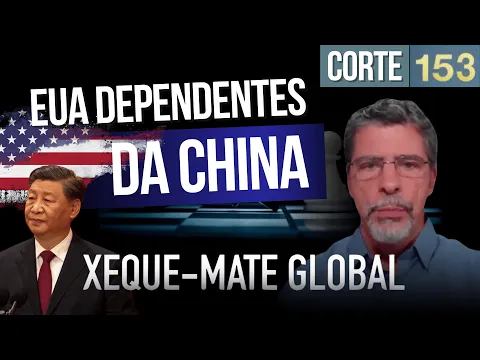

The specialist emphasizes that social license is as critical as environmental license.
Projects need to benefit local communities, with skilled jobs, regional content, and public monitoring of environmental performance.
“Without transparency and dialogue, the project will not lift off”, says Prof. Luiz Antonio.
Brazil holds strategic minerals, but should prove that it can produce with a lower footprint, traceability, and waste reuse — a competitive differential when closing contracts with Europe.
The diagnosis is clear: Brazil holds strategic minerals and is experiencing a rare window to move away from the role of raw ore exporter.
With local refining, component manufacturing, and long-term contracts, the country can become a pillar of supply security for Europe and allies — without giving up technological sovereignty.
As Prof. Luiz Antonio summarizes, “whoever masters processing will dictate the pace of green and digital reindustrialization”.
Do you agree that Brazil should demand technology transfer in exchange for access to minerals? What should be the priority: setting up rare earth separation plants, advancing in the uranium cycle, or focusing on manufacturing magnets and cathodes? Share your views in the comments — your experience in the sector could illuminate the next steps.






Vejam o exemplo da China!!!!! Mudou do dia pra noite!!!!
O Brasil está guardado nas empresas chinesas,vendendo nossas jazidas!
A chines silencioso ,abocanhou ,toda a produção domínio técnico,e essencial que façamos da nossa matéria prima , transformar em produtos acabado de alta tecnologia,e preciso decisão,dos ministros de tecnologia e inovação, e contratos, regulatórios , fiquei curioso e surpreso ,quando abri um servo moto de uma máquina de costura,fui entender,o salto que foi dado na transmissão de força , parabéns ao professor Luís Antônio, esse deve ser o caminho a seguir.