





 Português
  Inglês
  Espanhol
  3 min de leitura


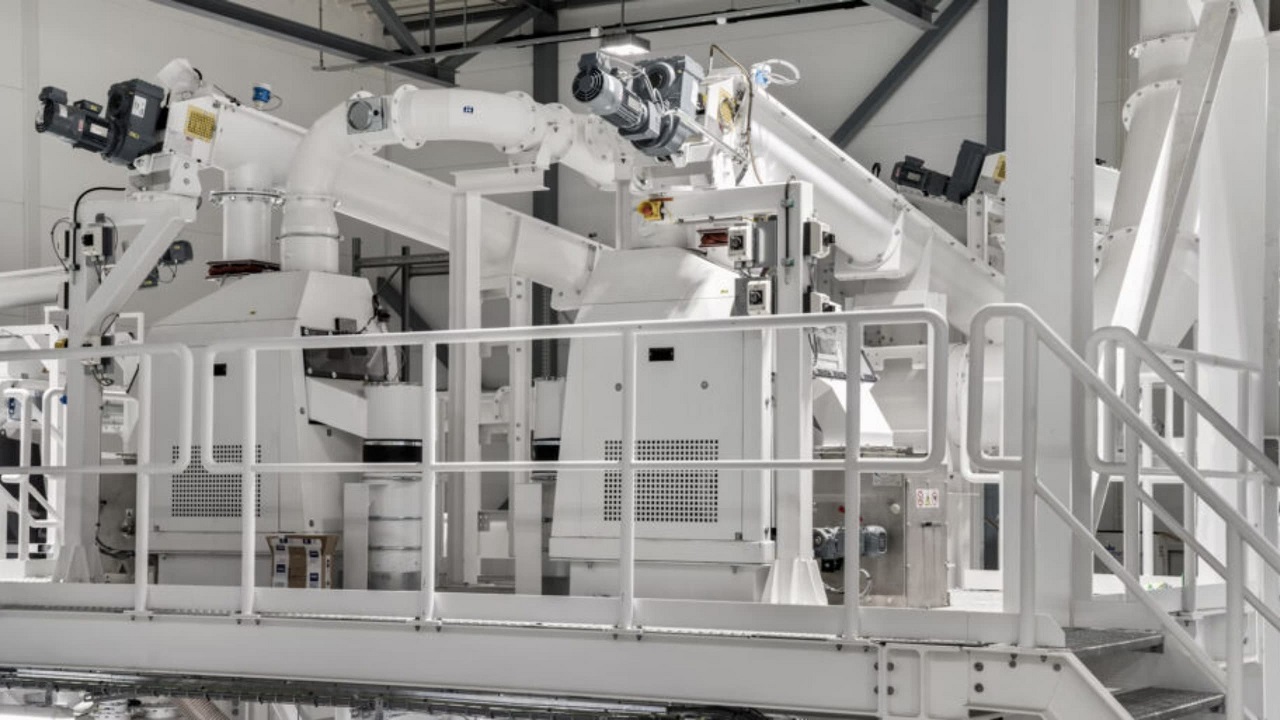
With the aim of preventing pollution from battery accumulation, companies have joined forces to develop the first battery recycling plant for electric cars, being the largest in all of Europe. The estimate is that the capacity will be 12 thousand tons per year.
Hydrovolt, a battery recycling joint venture for electric cars between Hydro, an aluminum company, and Northvolt, officially started its commercial operations at its recycling plant in Fredrikstad, Norway, on May 15. The factory, which prevents pollution by conducting the recycling and proper collection of electric vehicle batteries, began its commercial activities less than two years after the official announcement in 2020. According to the press release, Hydrovolt’s factory is currently the largest recycling plant for electric car batteries in Europe, with an annual capacity to recycle 12 thousand tons of batteries, equivalent to 25 thousand electric car batteries. The estimate is that it will be sufficient to recycle the entire end-of-life battery market in Norway.
Norway’s Recycling Plant Will Have Capacity of 300 Thousand Tons by 2030
It is clear that Europe, as a whole, will need to build many more recycling plants to meet future demands. Only Hydrovolt is exploring an expansion of recycling capacity on the continent with a long-term mission to reach 70 thousand tons of electric car batteries, equivalent to 35 thousand units, by 2025.
By the beginning of the next decade, the company, which seeks to prevent pollution, plans to recycle 300 thousand tons annually. Northvolt states that the fully automated recycling process is allowing up to 95% of materials to be recovered from electric car batteries, including copper, aluminum, plastics, and black mass, which is a compound made of nickel, cobalt, manganese, and lithium.
-
OMODA & JAECOO grows in Europe in 2026 with an integrated strategy of sales, innovation, local production, and technological advancement in the United Kingdom, Italy, and Spain.

-
OMODA & JAECOO expands after-sales service in Brazil with competitive maintenance, a 7-year warranty, and high availability of parts for technological SUVs.
-
OMODA & JAECOO appoints Alessandra Souza as executive marketing director in Brazil and accelerates brand expansion with a focus on innovation, networking, and hybrid portfolio.

-
Jaecoo 7 with super hybrid SHS system exceeds 1,200 km of combined range with a 1.5 turbo engine, high-density battery, and intelligent energy management.

The aluminum, recycled with only 5% of the initial energy required to produce primary aluminum, will be delivered to Hydro for recirculation into commercial-grade aluminum products. In the case of black mass powder, it will be sent to Northvolt’s Revolt Ett recycling plant in Skelleftea, Sweden, for hydrometallurgical treatment. The estimate is that the volume of black mass will exceed 2 thousand tons per year by 2025.
Hydrovolt Speaks Out About the New Recycling Plant for Electric Vehicle Batteries
Revolt Ett was launched last year, and valuable cathode materials from the recycling plant will be applied in the production of new battery cells at Northvolt Ett in Skelleftea, Sweden, to support the company’s goal of using half of the recycled material in battery production by 2030.
According to Hydrovolt’s CEO, Peter Qvarfordt, the company represents a milestone in Norway’s trailblazing journey towards widespread electric mobility. Norway has been leading the world in electric car usage for several years, but what is lacking is the capacity to recycle to ensure a sustainable solution for these batteries as their life cycle comes to an end.
Currently, the company is scaled to handle the entire volume of end-of-life batteries in Norway, but now the company will expand to ensure it is prepared for the higher flows of batteries that are coming.
Brazil Could Be a Hub for BMW’s Electric Car Battery Recycling Plant
BMW announced in March a partnership to develop a more sustainable process that ensures the recovery of chemical compounds from end-of-life electric car batteries, thus preventing pollution.
The company will invest about R$ 3.4 million and will last for 24 months, with results expected by the end of this year. The initiative opens a door for the use of recycled minerals in the production of new batteries and consists of recycling the active material of a battery’s cathode.










Seja o primeiro a reagir!