





 Portuguese
  English
  Spanish
  6 min of reading
  4 comments





German Startup Hypersonica Tested Hypersonic Missile at Mach 6 in Norway, Reached 7,400 km/h and Aims to Provide Europe Offensive Capability by 2029.
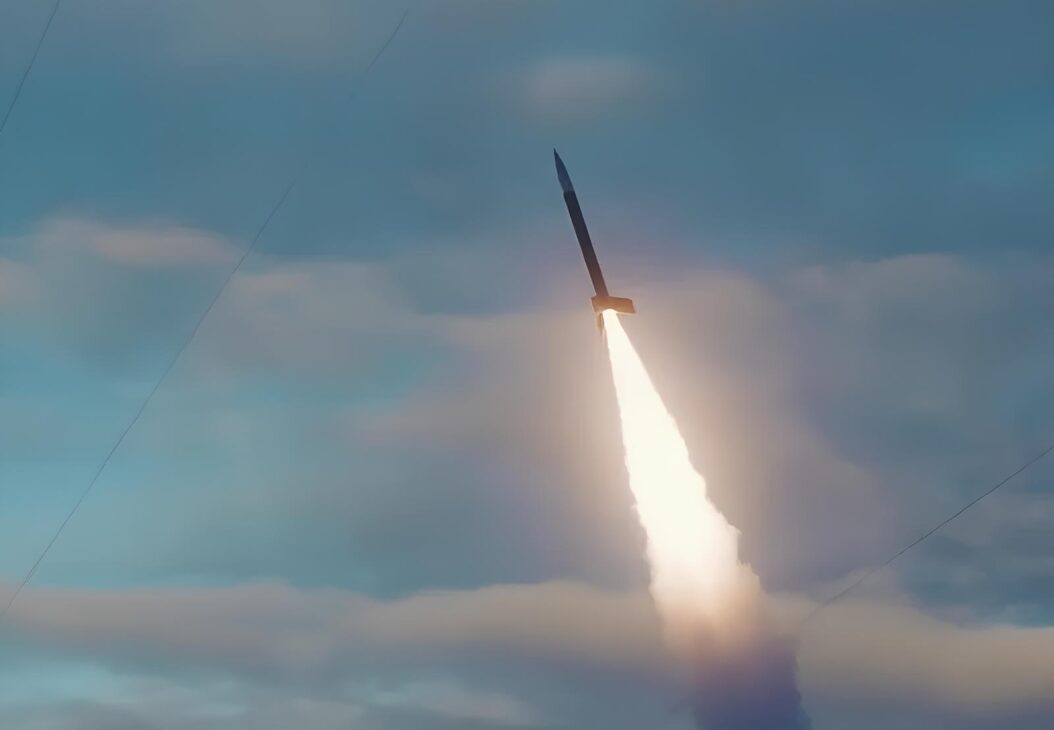
Hypersonic Missile Test Conducted in Norway Marks Advance of European Hypersonic Technology: On February 3, 2026, an experimental missile launched from the Andøya test base in the far north of Norway. Within seconds, the vehicle accelerated to 7,400 km/h — a speed equivalent to approximately Mach 6 and traveled over 300 kilometers before re-entering the atmosphere without any recorded failure. What caught the attention of the international defense community was not just the speed of the test, but who was behind it. The launch was not conducted by a large state military program from the United States, Russia, or China. The test was carried out by a European startup founded just over two years prior by two German physicists who met during their PhD at the University of Oxford.
The company responsible for the test is Hypersonica, a young aerospace firm aiming to drastically reduce the time and cost necessary to develop advanced hypersonic systems.
Hypersonica: German Hypersonic Technology Startup Founded by Oxford Physicists
Hypersonica was founded in December 2023 by Philipp Kerth and Marc Ewenz, who serve respectively as CEO and CTO of the company. Both are physicists with a PhD from the University of Oxford and have experience in aerospace research and high-speed flight dynamics.
-
In Mexico, a 3,000-year-old Maya site with the dimensions of an entire city may have been built as a colossal map of the cosmos, created to represent the order of the universe and reveal how this people organized space, time, and rituals.

-
Japan wants to build a solar ring of 10,900 kilometers on the Moon to continuously send energy to Earth.
-
Weighing almost 1 ton, with temperatures of up to 3,000°C, the ability to launch 10,000 fragments within a radius of 1 km, capable of penetrating concrete and melting steel, Turkey’s terrifying bomb emerges as one of the most destructive non-nuclear weapons ever presented.

-
After a submarine disappeared beneath the “Doomsday Glacier,” scientists announce a new monstrous machine capable of operating at 3,000 meters depth to return to the heart of the ice and investigate a threat that could raise sea levels worldwide.

The company is headquartered in Wessling, near Munich, Germany, with a technology subsidiary in London. In February 2026, when it publicly announced the success of the hypersonic test, the startup had about 50 highly specialized employees in aerospace engineering, advanced materials, and flight control.
The company also previously raised €23.3 million in Series A funding, led by the European fund Plural. Other investors include SPRIND — the German agency for disruptive innovation — as well as General Catalyst and 201 Ventures.
However, the most impressive fact about the project is not just the capital raised or the size of the team. The point that truly drew attention was the speed of development of the system.
From the conception of the project to the launch of the first hypersonic test, only nine months elapsed. During this period, the company completed all necessary steps for a real test: vehicle design, component manufacturing, export control certifications, flight safety licenses, and international coordination with the Norwegian test range.
What Flying at Mach 6 Means: How Hypersonic Missiles Work
A hypersonic missile is defined as any system capable of flying at speeds exceeding Mach 5 — five times the speed of sound — while maintaining maneuverability within the Earth’s atmosphere. The main difference between hypersonic weapons and conventional ballistic missiles is not just speed. The decisive factor is the unpredictability of the trajectory.
Traditional ballistic missiles follow a relatively predictable profile: they are launched, ascend out of the atmosphere, and return on a parabolic trajectory similar to that of a thrown object. Modern missile defense systems, such as the U.S. Aegis, Israeli Arrow, and THAAD, are designed to calculate and intercept this type of trajectory.
In contrast, a hypersonic missile flying within the atmosphere can maneuver continuously. It can change altitude, alter direction, and approach the target along trajectories that defense sensors cannot predict in advance.
Another technical challenge is the extreme environment created by the speed itself. Above Mach 5, the air around the vehicle heats to the point of ionization, forming a plasma layer that can interfere with radio communications and navigation sensors. To withstand this environment, the structural materials need to endure temperatures exceeding 2,000 °C.


This combination of extreme speed, maneuverability, and high temperatures makes the development of hypersonic technology one of the most complex engineering challenges of our time.
Global Race for Hypersonic Weapons Puts Europe at a Disadvantage
The technological race for hypersonic weapons began even before many countries realized their strategic importance. Russia declared operational capability in 2019 with the Kinzhal missile, launched from MiG-31 fighters. China tested the hypersonic glider DF-ZF in 2014 and also brought the system into operational service by the end of the decade.
The United States is investing billions of dollars in programs such as the Army’s Long Range Hypersonic Weapon (LRHW) and the Navy’s Conventional Prompt Strike, with deployment planned for the end of the decade. Europe, however, has fallen significantly behind in this technological race.
France has been working on the ASN4G project since the 1990s, a nuclear hypersonic missile launched from aircraft, expected to enter service only around 2035. In 2024, the United Kingdom and Germany announced the joint Deep Precision Strike Capability program, with a target range of 2,000 kilometers, but still without detailed technical specifications or a clear deployment timeline.
Much of the European investments so far have been directed toward defenses against hypersonic missiles, rather than developing equivalent offensive weapons. The European Defence Fund has allocated €168 million in the 2026 budget for research on hypersonic interception systems, recognizing that the continent needs to develop both offensive and defensive capabilities.
Nine-Month Development: Hypersonica’s Rapid Innovation Model
Hypersonica’s strategy differs from traditional long-term military programs. Instead of following development cycles that can last decades, the startup relies on an engineering philosophy inspired by the technology industry. According to its founders, the goal is to reduce development costs for hypersonic systems by over 80%, while shortening the innovation cycle from years to months.
This model is based on two main principles. The first is a modular architecture, where components can be replaced or updated without the need to redesign the entire system.
The second is the approach of rapid iterative testing: instead of trying to get everything right in a single, extremely complex project, the company conducts frequent experiments, collects flight data, and refines the design with each new test.
Scooter HS-1 Prototype Developed in Partnership with German Aerospace Agency
The prototype tested in February was internally named Scooter HS-1. The development involved collaboration with the DLR (German Aerospace Center), which has decades of experience in hypersonic research, including the experimental SHEFEX program, started in the 2000s.
The test was conducted at the same launch field in Andøya, Norway, where DLR conducted previous experiments involving atmospheric reentry vehicles and hypersonic aerodynamics.
Plan by 2029 Envisions Operational Hypersonic System for Europe
The flight in February 2026 represents only the first stage of a broader program structured in four phases. The company claims to have reached the initial phase: demonstrating sustained hypersonic flight.
The next stages include:
- advanced flight control at hypersonic speeds
- performing complex maneuvers in the atmosphere
- demonstrating complete operational requirements
According to the timeline released by the company, an initial capability for short-range hypersonic attack could be available around 2027.
The complete system, with a fully maneuverable long-range hypersonic glider, is expected by 2029, aligned with NATO’s strategic programs and the UK hypersonic weapons program announced in 2024.
Hypersonic Race Redefines Strategic Balance in Europe
The strategic window for the European continent is relatively narrow. In the coming years, significant changes will occur in the global military balance. By 2028, the United States plans to retire Ohio-class submarines converted into cruise missile platforms, each capable of launching 154 Tomahawk missiles.

At the same time, Russia maintains operational hypersonic systems, including the Oreshnik missile, which was used in attacks against Ukraine in 2024 and 2026.
China, for its part, continues to accelerate its hypersonic programs while developing advanced military platforms like the Fujian aircraft carrier, equipped with electromagnetic catapults. In this scenario, the emergence of companies like Hypersonica represents more than the success of a tech startup.
It represents a concrete attempt to answer a crucial strategic question: how to maintain military deterrence in a world where adversaries already operate weapons capable of flying at Mach 10 or more. The test conducted in February demonstrated that the European response may be emerging from an unexpected place: a young aerospace company based in an industrial park near Munich, founded by two German physicists who met in an Oxford lab.









FALSO.
Nem os EUA apresentou um míssil hipersônico operacionalizado ! Assim como, ainda, não operacionalizou um TVC-Thrust Vectoring Control de 3D, portanto não possue a tecnologia da Supermanobrabilidade em seus caças !!
Bene era ora che l’ europa cominci a creare qualcosa per la nostra difesa
Muy bien en no estar siempre dependiendo de otros países, ahora solo falta poderlos ponerlos en cualquier plataforma ya sea marítima, aérea, terrestre o submarina, desde luego después de todos los ensayos que se tengan previstos.