





 Portuguese
  English
  Spanish
  7 min of reading
  0 comments


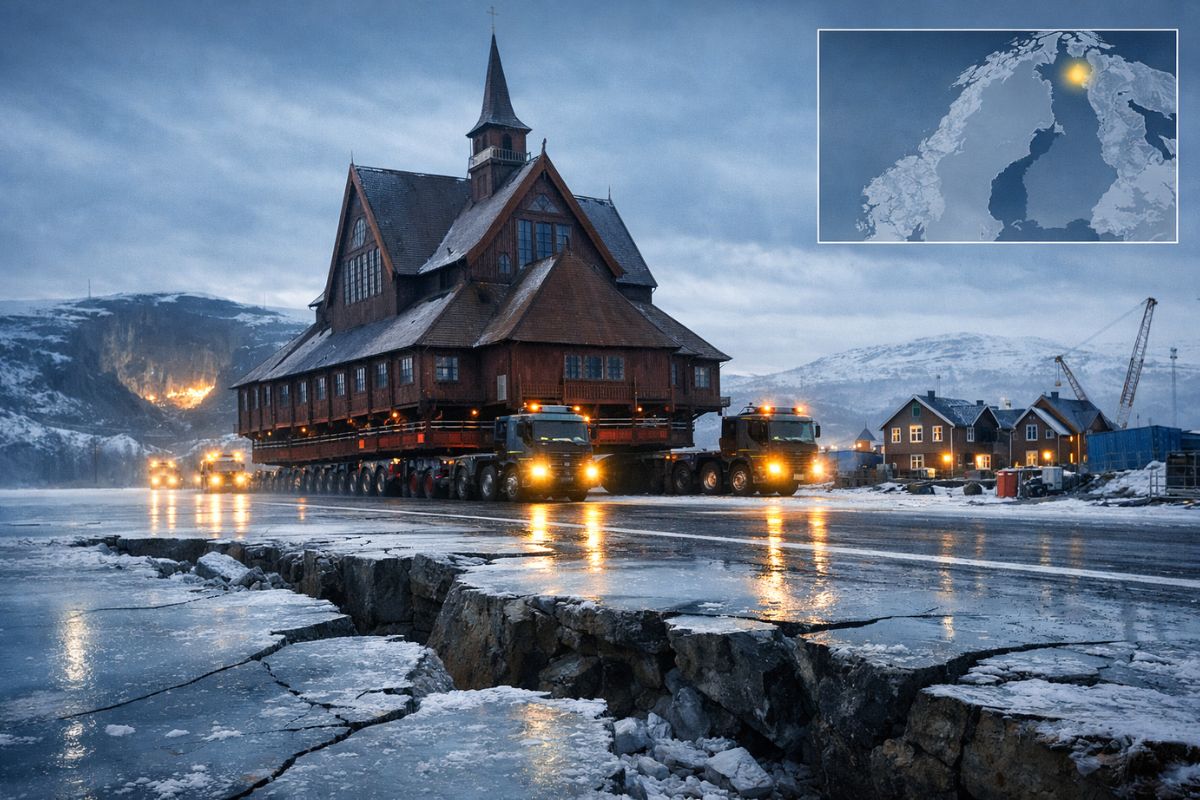
Report Details How An Entire City Is Relocated In Kiruna, In The Arctic, To Allow Expansion Of Iron Mine And Exploration Of Rare Earths, While Europe Negotiates Compensation, Faces Indigenous Peoples, And Transforms The Region Into An Extreme Laboratory For Strategic Mining Under European Political Pressure And Competition For Critical Minerals
The relocation of Kiruna, at the edge of the Arctic Circle, encapsulates the new phase of the global competition for strategic minerals. Europe Accepts To Displace An Entire City To Secure Iron Ore And Rare Earths, while the state-owned LKAB expands the world’s largest underground iron mine and prepares for the exploration of the largest known rare earth deposit on the continent. The operation is presented as a key piece of the energy transition and European mineral autonomy.
At the same time, the urban project that began to be drafted in 2004 enters a decisive phase. The old Kiruna is being dismantled building by building, with milestones such as the transfer, on August 20, 2025, of the 113-year-old church, fully relocated by special trucks to a new address three kilometers to the east. By 2035, the goal is to complete the migration to the new urban layout, at an estimated cost of 22.5 billion Swedish crowns in compensations, in a process that directly affects thousands of residents and redraws the political and social map of the Swedish Arctic.
Kiruna, An Entire City Built On Ore

Kiruna is about 145 kilometers north of the Arctic Circle, in the far north of Sweden.
-
Spain surprises the world by erecting 62 artificial dunes, mixing sand with natural remains of posidonia, and causing the structure to lose only 1.4% of its volume in 1 year.

-
With 16 Bulava missiles, improvements in acoustic stealth, and a design focused on silent patrols, Russia’s nuclear submarine was born to ensure Moscow’s invisible retaliation and has become one of the pillars of its maritime strength.

-
‘Populous’ city in Rio among the worst in Brazil in national ranking and exposes silent development crisis.
-
Couple buys house in the South Zone of São Paulo, opens a hidden door in the garage, and finds a secret wine cellar with dozens of old wines forgotten since the 1970s.

The city was born approximately 125 years ago as a settlement for iron ore mining and has since revolved around LKAB, the state-owned company that today accounts for about 80% of the iron extracted in the entire European Union.
This historical layout explains why the dependence on a single economic activity is so absolute that an entire city is being displaced when the underground shows signs of structural exhaustion.
The continuous expansion of the underground mine has caused ground subsidence in the old urban area, forcing the city hall and LKAB to admit that it is no longer a localized project, but a complete reconstruction of the urban core elsewhere.
Mega Iron Mine, Rare Earths, And European Strategic Dispute

The Kiruna mine is described as the largest underground iron mine in the world and a centerpiece in the European steel production chain.
On January 12, 2023, LKAB also announced the discovery, in the same region, of the largest known rare earth element deposit in Europe, critical inputs for electric motors, wind turbines, and high-tech components.
This finding heightened political pressure on the region.
The European Union classified the deposit under its Critical Raw Materials Act, with the goal of supplying 40% of annual demand internally by 2030.
For authorities in Brussels, this reduces dependence on China and strengthens the bloc’s industrial security.
In practice, however, this means intensifying activity in an area where an entire city is already being sacrificed, amplifying the clash between promises of a green transition and local impacts on residents and indigenous peoples.
How To Move An Entire City Building By Building

The relocation plan began to be articulated in 2004, when it became clear that the continuity of the mine would eventually impact the urban center.
Instead of simply abandoning the threatened neighborhoods, the local government chose to reposition the entire city about three kilometers to the east, building a new center with housing, services, and public facilities.
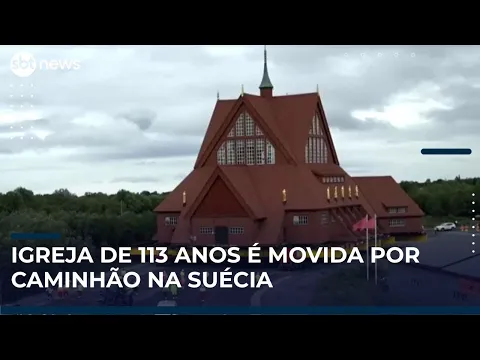
One of the most symbolic episodes occurred on August 20, 2025, when the Kiruna church, a wooden building of 113 years and 672.4 tons, was transported intact on special platforms over two days.
The operation gave the world a concrete image of what it means to relocate an entire city because of ore: temples, houses, and memories are moved in blocks, while the old ground is progressively released for the expansion of the underground pit.
In total, LKAB estimates that over 6,000 people and 2,700 homes will need to be relocated in the next stages, with an estimated cost of 22.5 billion Swedish crowns over ten years.
Residents receive the market value of their property plus 25% or the construction of a new home in the layout of the new city; about 90% have chosen the second option, reinforcing the perception that the relocation of the entire city has ceased to be a hypothesis and has become a fait accompli.
Disputes Over Land, Reindeer, And State Support
Despite the compensations, the operation is far from consensual.
The municipality of Kiruna faces difficulties in obtaining lands considered buildable from an administrative perspective.
Much of the territory above the Arctic Circle belongs to the Swedish state, which forces the city hall to negotiate directly with the central government.
In this process, conflicts arise with distinct agendas: reindeer husbandry and Sami people’s rights, national defense areas, environmental preservation, and mining interests.
The relocation of an entire city, with infrastructure, roads, and new neighborhoods, competes for space with territories traditionally used for grazing and sensitive natural protection zones.
Local authorities and LKAB are calling for more political and financial support from Sweden and the European Union to make viable the package of necessary compensations and permissions.
The president of the municipal council, Mats Taaveniku, describes the scenario as a “great dispute between the city hall, LKAB, and our own government”, while demanding that Brussels goes beyond rhetoric and participate directly in funding the transformation.
For him, it is not enough for the EU to recognize Kiruna’s minerals as critical; it is necessary to assume the social cost of relocating an entire city in the name of this strategy.
New City, Harsher Winter, And Comfort At Risk
The urban project of the new Kiruna incorporates densification principles and grid-pattern streets, but studies from the University of Gothenburg indicate that the chosen area accumulates cold air and can be up to 10 degrees Celsius colder in winter.
Tall buildings and narrow streets hinder the low Arctic sun from reaching the ground for several months of the year, further reducing thermal comfort.
Kiruna is already described as a winter city, with a long snow season and temperatures that rarely reach minus 35 degrees but can hit that level for periods in the middle of the cold season.
In a scenario of a new urban layout more exposed to cold air, the combination of winds, prolonged shade, and thermometers below minus 25 degrees for long intervals tends to make daily life even tougher, affecting both longtime residents and the next generations who will inherit the relocated city.
“We Live Off The Minerals”: Consent Or Collective Resignation?
Since its founding, the narrative of Kiruna has been built around the mine.
Taaveniku summarizes the local sentiment by stating that everyone in the city knows that, sooner or later, they will have to leave their homes because “we live off the minerals”.
For some of the population, it is a pragmatic pact: without LKAB, there would be no jobs, investments, or the prospect of a new city rebuilt with a more modern standard.
At the same time, residents express sadness when leaving homes occupied by two or three generations, entire neighborhoods, and landscapes that shaped the region’s memory.
Architectural heritage researchers have been monitoring the process for decades and point out a dilemma: the entire city agrees to move to ensure economic future, but pays the price of seeing streets, churches, and original squares replaced by a colder, denser version more exposed to corporate and state planning.
Kiruna As A Symbol Of The New Mineral Rush In The Arctic
The case of Kiruna is not isolated. The competition for essential minerals in the Arctic intensifies as the energy transition advances and governments seek alternatives to Asian supply.
Transforming An Entire City Into A Variable Adjusting A European Mineral Strategy makes visible the real cost of making electric cars, turbines, and cutting-edge technology without relying on geopolitical rivals.
For natural resource policy experts, what is at stake is not just the engineering of moving an entire city, but the decision-making model that places local communities at the forefront of sacrifices demanded by the global economy.
The way Sweden, LKAB, and the European Union manage compensations, conflicts with indigenous peoples, and climatic impacts in Kiruna is likely to become a reference, good or bad, for other high-intensity mining projects in the Arctic.
In the face of a Europe willing to displace an entire city to secure ore and rare earths, in your opinion, how far does it make sense to accept this kind of local sacrifice in the name of the energy transition and the continent’s mineral security?







-

-

2 pessoas reagiram a isso.