





 English
  Francês
  Alemão
  Italiano
  Japonês
  Norueguês
  Portuguese
  Spanish
  6 min of reading
  0 comments


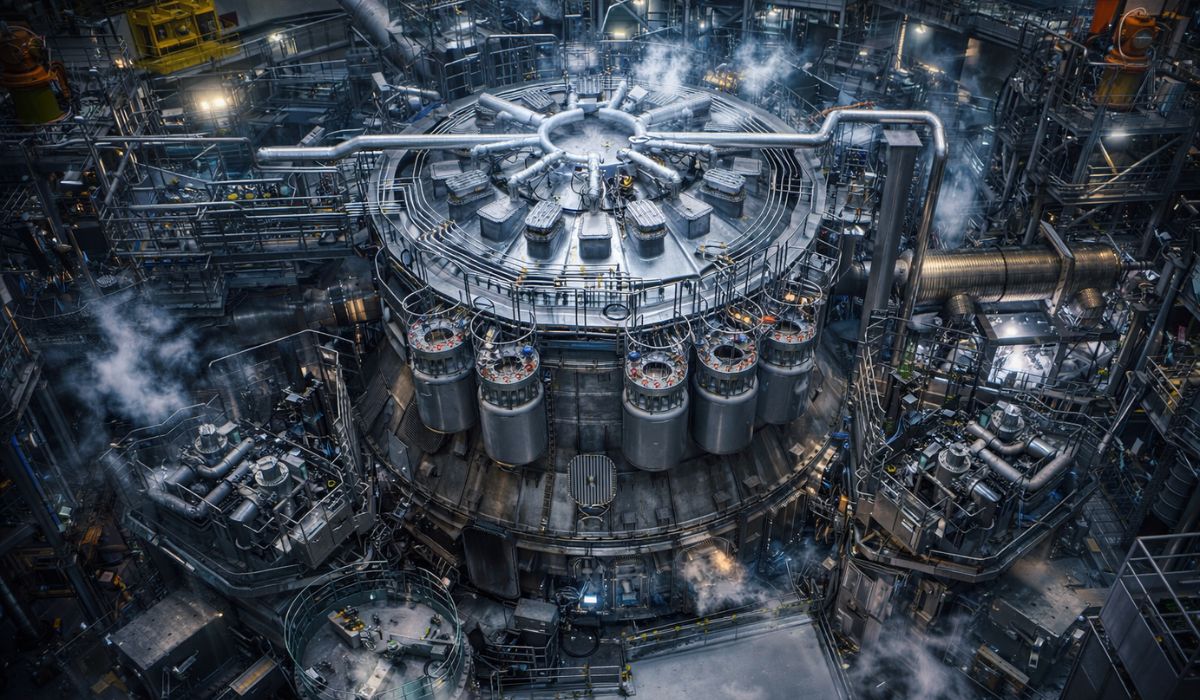
Japanese reactor enters new testing phase and expands the role of cooperation with Europe in a decisive phase of nuclear fusion research and the timeline that could influence the future of ITER.
The experimental reactor JT-60SA, installed in Naka, Japan, has entered a new stage of preparation for nuclear fusion experiments that are expected to scale up by the end of 2026.
The project, conducted in partnership between Japan and Europe, produced its first plasma at the end of 2023 and is now undergoing integrated commissioning to test systems added after this debut.
According to those responsible for the program, the expectation is to use the machine to advance in the control of larger, hotter, and more stable plasmas, on a timeline that directly supports ITER, the international mega-project of fusion under construction in southern France.
-
350-year mystery may have been solved: remains of a soldier who inspired the hero of The Three Musketeers found beneath a church in the Netherlands.

-
NASA photographed a nearly perfect square with 3 km sides on Mars, 13 times larger than the Great Pyramid of Giza, but the official explanation is natural erosion; still, no one has explained why the four sides have almost identical lengths.

-
Starlink breaks the barrier of 10,000 satellites in orbit and takes its expansion to an unprecedented level, with a direct impact on global internet, technological competition, and the race for space.

-
Japan finds an alternative to oil amid rising prices by transforming ocean balance into electricity with a new technology that maintains efficiency even when the sea changes.

The role of the JT-60SA is to connect the current stage of research to the future operation of more advanced reactors.
Although it was not designed for full campaigns with deuterium and tritium, as planned for the French reactor, the Japanese equipment was designed to study advanced plasma regimes, expand knowledge about magnetic confinement, and generate data for later projects, such as DEMO.
In practice, the machine functions as an intermediate platform between the tokamaks already in operation and the next generation of experimental reactors.
New phase of the JT-60SA and resumption of experiments
The JT-60SA was first powered on in 2023, when it performed initial low-power plasma operations.
After this stage, the machine was turned off to receive components and adjustments aimed at performance enhancement.
According to the Japanese agency QST and the European Fusion for Energy, the resumption phase began on February 27, 2026, with gradual testing of subsystems before the return of plasma operations at a higher level.

This process includes the verification of equipment installed inside and outside the vacuum chamber.
This set includes internal control coils, additional heating systems, access doors for instrumentation, cryopumps, and diagnostics aimed at monitoring plasma behavior in real-time.
The official forecast released by Europe and Japan indicates that the new campaign of experiments should begin at the end of 2026 and last about six months.
The machine has also been presented by the project leaders as the largest tokamak in the world in operation.
This reference gained strength after a result obtained in the first campaigns: the equipment achieved 160 cubic meters of plasma volume, a mark certified in 2024 by the Guinness World Records.
In previous technical materials, the value of 130 m³ appeared as a design reference.
The difference, in this case, lies between the capacity anticipated in the machine’s design and the volume effectively achieved in the operations reported after it began operating.
How the reactor supports the ITER project
The JT-60SA is a superconducting tokamak, meaning it is a device that uses intense magnetic fields to confine plasma in a toroidal chamber.
In this type of reactor, the goal is to reproduce, in a controlled manner, the conditions necessary for light nuclei to fuse and release energy.
In the case of the project conducted by Japan and Europe, the focus is on the physics and engineering of the process, rather than on demonstrating net energy gain at a power plant scale.
For this reason, the fuel used in the research stages of the JT-60SA is hydrogen or deuterium.
The use of deuterium allows for the study of a plasma with behavior close to that of a future deuterium-tritium mixture, but without reproducing the same neutron load associated with machines aimed at more advanced fusion stages.
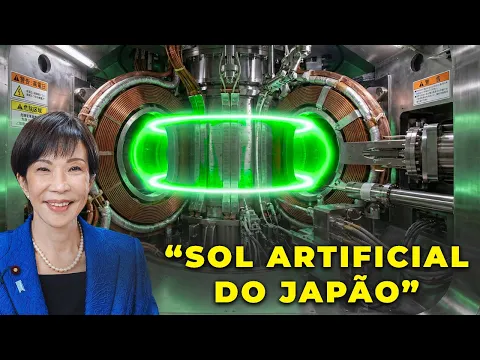

This difference helps explain why the Japanese reactor is treated as complementary to ITER, rather than as a substitute.
The latest official timeline of the French project reinforces this supporting role.
The ITER organization has revised the schedule and now indicates the start of research operations in 2034, with full magnetic power expected in 2036 and the start of the deuterium-tritium phase in 2039.
Until then, any advances in plasma stability, shape control, instrumentation, and sustained operation achieved at the JT-60SA are likely to be useful for the development of the French reactor.
Nuclear fusion engineering and plasma control
Among the interventions made after the first campaign, one of the most delicate involves internal coils developed to control the position of the plasma at high speed.
Two of them, in a ring shape and about 8 meters in diameter, were wound directly inside the machine.
These components are part of the effort to improve plasma control in more demanding regimes, a necessary condition for longer pulses and for operations closer to steady state.
In addition to magnetic control, measuring what happens inside the plasma remains at the core of the experimental program.
As conventional sensors cannot withstand direct contact with temperatures of tens or hundreds of millions of degrees, researchers rely on indirect methods.
One of these is Thomson scattering, a technique that uses lasers to measure the temperature and density of electrons from the light scattered in the plasma.
In the JT-60SA, this diagnosis was divided between Japanese and European contributions.
The plasma edge system was developed with the participation of institutions from Italy and Romania, under European coordination, while Japan is responsible for other parts of the measurement arrangement.

In 2025, the installation of components of the so-called Edge Thomson Scattering was treated by the responsible parties as a central step for the resumption of operations, because this set should help monitor critical regions of the plasma and assess its stability.
What the campaign should measure in the Japanese reactor
The next campaign is not limited to reactivating the equipment.
The goal is to bring the machine to more demanding conditions than those achieved in the 2023 debut, now with more heating systems, new diagnostics, and additional instrumentation.
Institutional documents associate this stage with the study of high-density regimes, the improvement of plasma control, and the acquisition of data that will help plan the operation of larger reactors.
There is also mention of the use of artificial intelligence techniques and computational tools to accelerate the plasma startup phase, a front that has been gaining traction in fusion research.
At the same time, the project continues as a platform for scientific cooperation between Japan and Europe.
More than 500 researchers and dozens of suppliers participated in its construction and evolution, in an arrangement designed to train personnel, test technologies, and reduce uncertainties before the more critical stages of ITER.
In this context, the expected results with the JT-60SA do not focus on an isolated experiment, but on the set of technical information that can guide the operation of an even larger and more complex machine.
The new phase of the Japanese reactor should, therefore, concentrate part of the international attention on the race for nuclear fusion, especially since the results obtained there could inform technical decisions related to ITER and future demonstration reactors.






Seja o primeiro a reagir!