





 Portuguese
  English
  Spanish
  4 min of reading
  0 comments


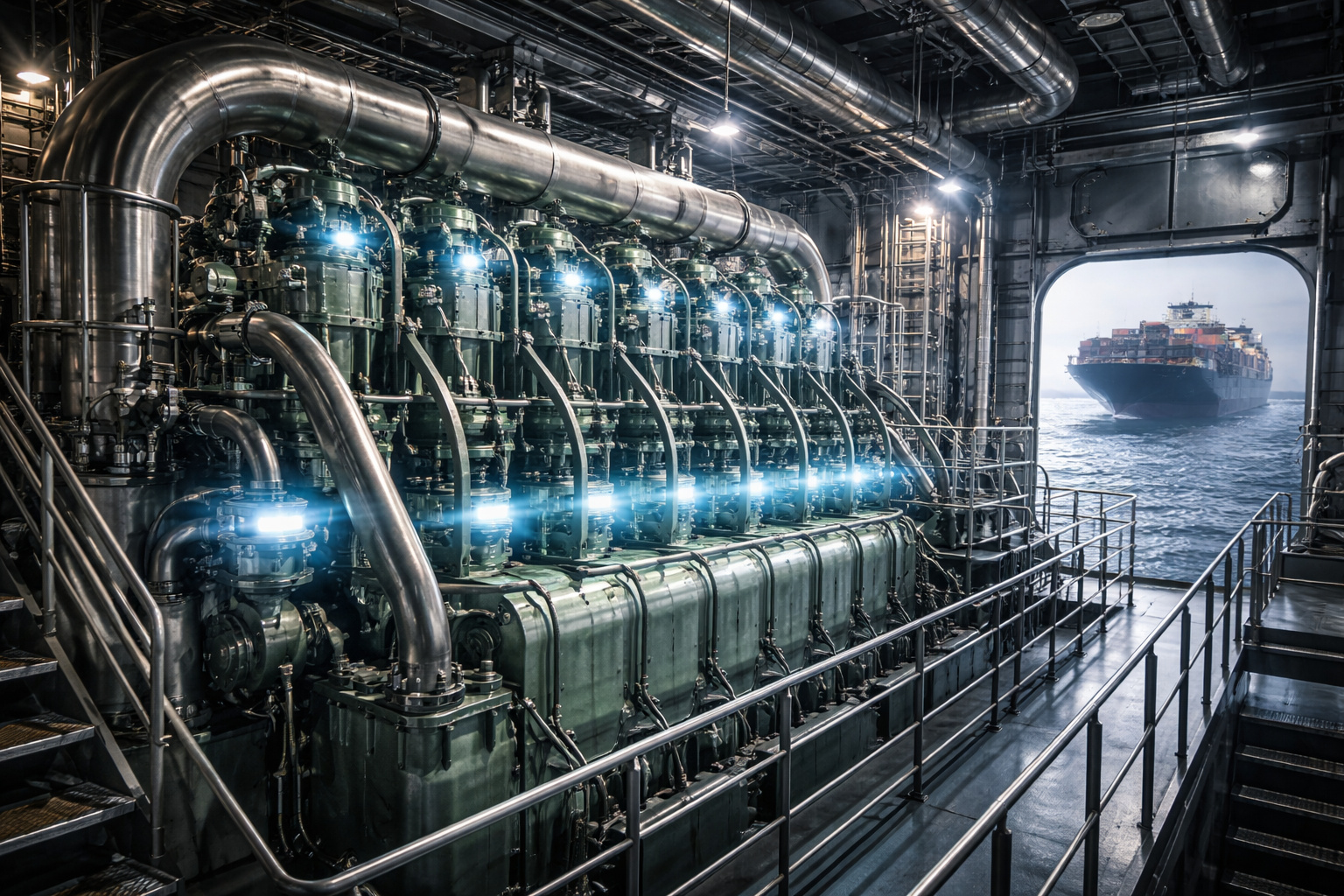
European project tries to create an ammonia-powered naval engine without auxiliary fuel and can accelerate ships without emissions in global maritime transport.
In 2025, a European consortium led by MAN Energy Solutions began developing a new generation of ammonia-powered marine engines, with a technical goal considered critical for the future of navigation: completely eliminating the need for auxiliary fuel for ignition. The project, known as NH3 Spark – FutureFlex, brings together companies and research institutions with support from European innovation programs, and aims to solve one of the main bottlenecks in the energy transition in the naval sector.
According to an official statement released by MAN Energy Solutions about the NH3 Spark – FutureFlex project, the central point is simple but complex in practice: ammonia engines still face technical limitations related to combustion, and the project seeks to develop an engine capable of operating 100% on ammonia, without the need for pilot fuel for ignition — one of the main obstacles to making this technology completely emission-free.
Ammonia emerges as a promising alternative to diesel in maritime transport
Ammonia (NH₃) has been gaining prominence as one of the main candidates to replace fossil fuels in maritime transport for a relevant technical reason: it does not contain carbon in its chemical composition.
-
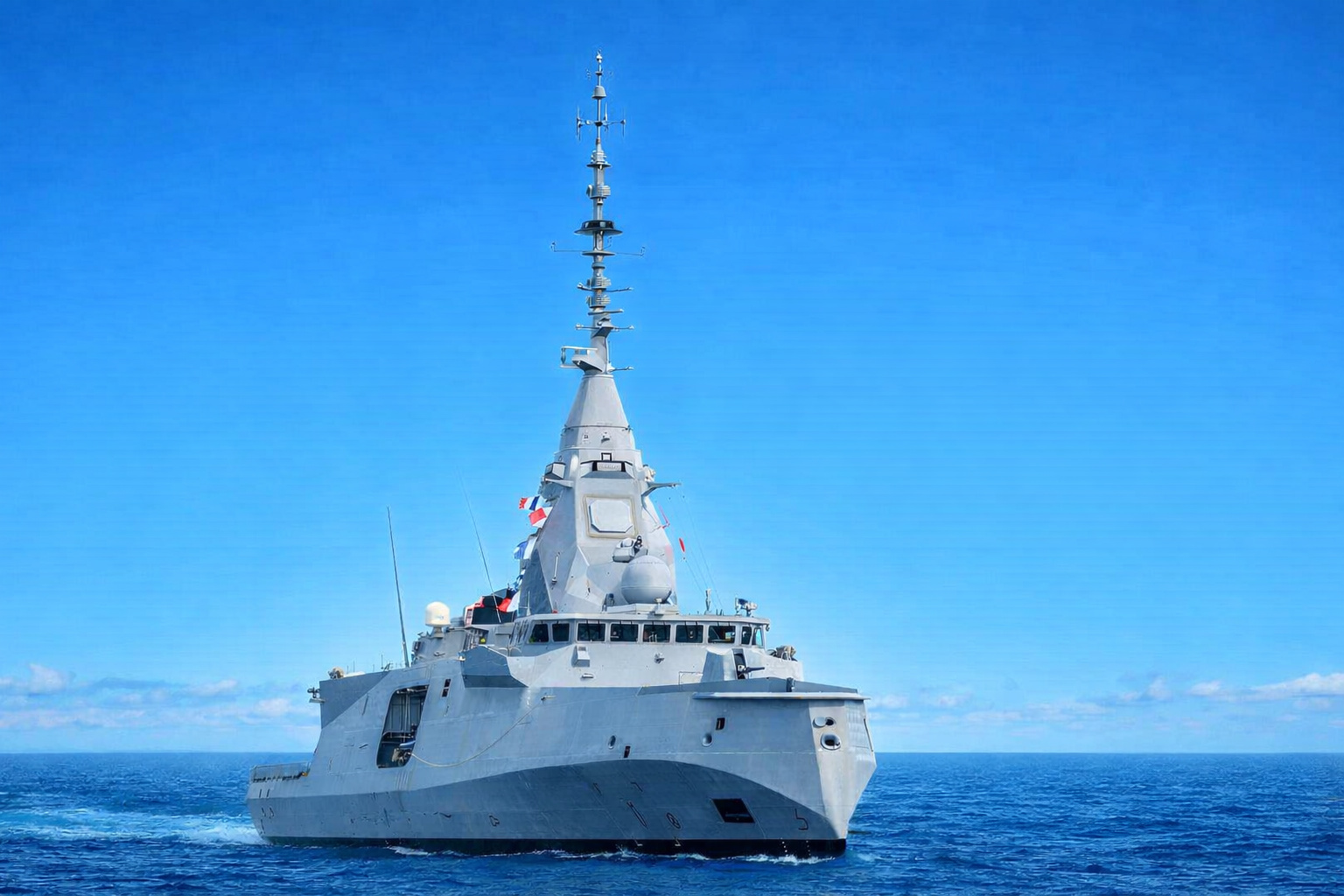
A 4,500-ton frigate with just over 100 crew members, state-of-the-art radar, and cruise missiles is being touted as the new standard of naval warfare in the 21st century.
-
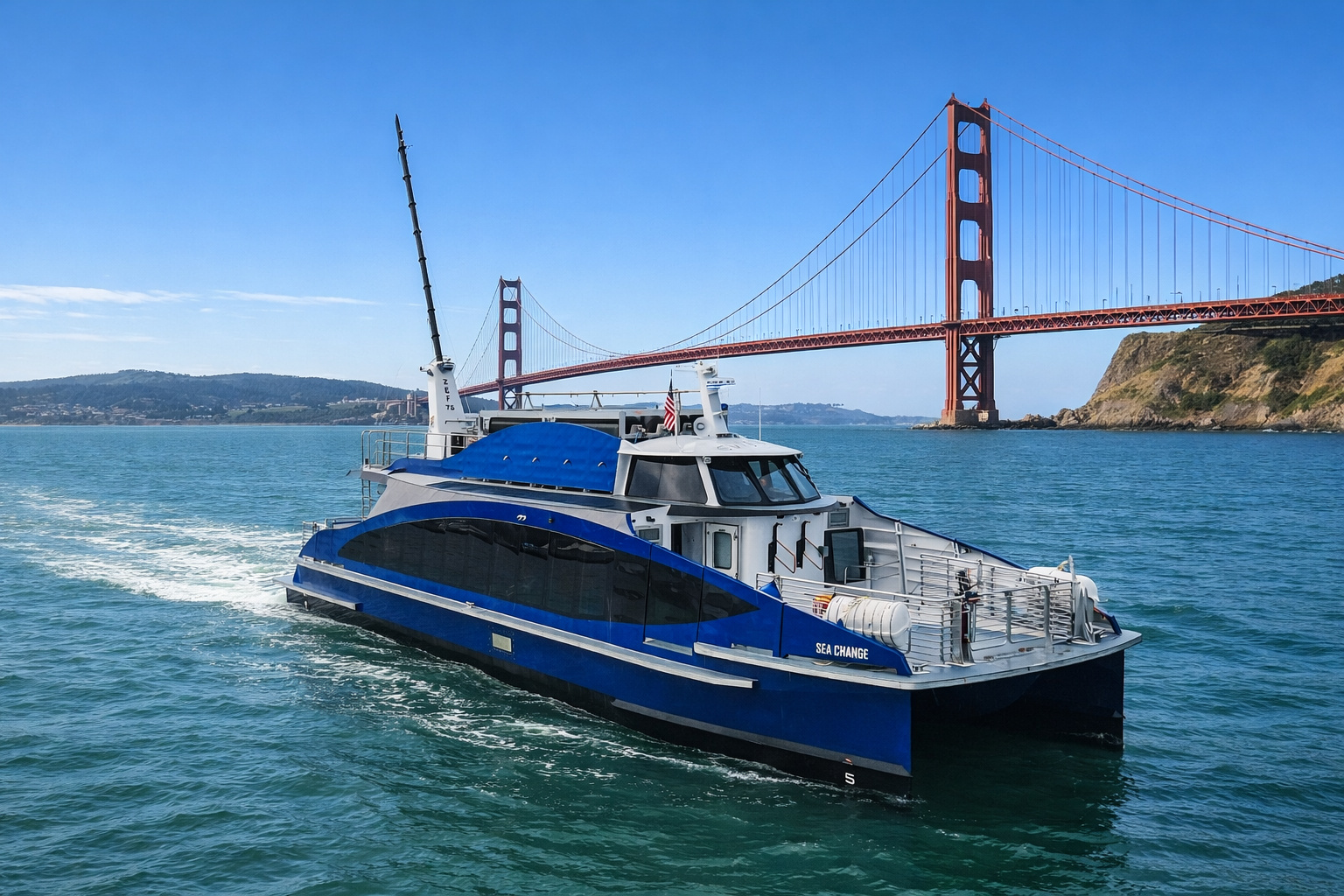
The first commercial hydrogen-powered ferry enters operation in the U.S., eliminates the use of diesel, uses fuel cells to generate clean energy on board, and transforms San Francisco Bay into a landmark of the new era of emission-free navigation.
-
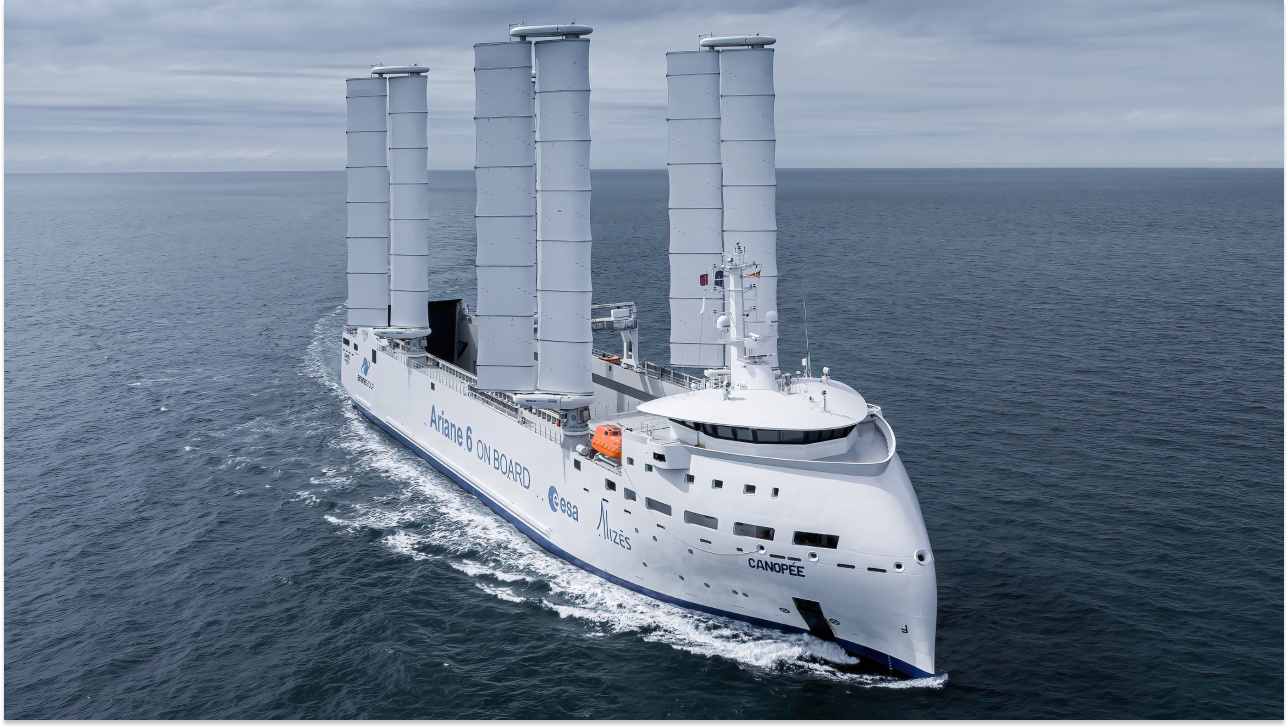
With a length of 121 meters and four rigid sails of 36 meters that automatically rotate to capture the wind, Canopée is the world’s first hybrid industrial cargo ship powered by wind, used to transport rockets and reduce fuel consumption by up to 30% on transoceanic routes.
-
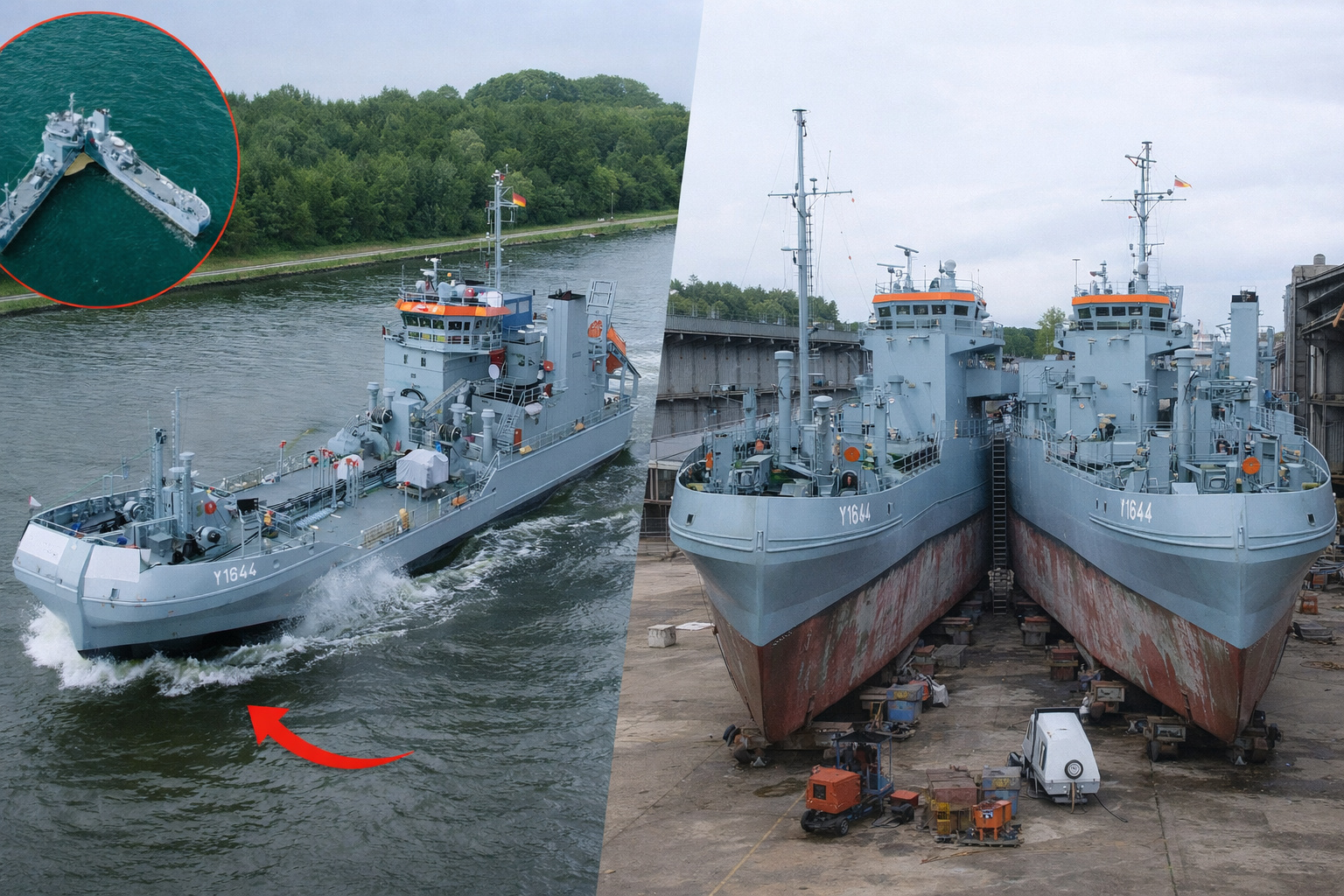
The German ship Bottsand splits its hull in two halves in the middle of the ocean to swallow spilled oil on the surface, separating the oil from the water inside a 790 cubic meter tank and then closing again. It is the only ship in the world factory-designed to split in half as part of normal operations, and the crew of six people who operate everything is civilian.

This means that when used as fuel, it does not generate CO₂ emissions, the main contributor to global warming.
Moreover, ammonia can be produced from green hydrogen, using renewable energy, which reinforces its potential as a sustainable fuel.
For these characteristics, ammonia is seen as one of the most viable alternatives for large ships, especially on long-haul routes, where electric batteries are still insufficient.
The main technical challenge is ignition without fossil fuel
Despite the potential, the use of ammonia as fuel faces a significant technical obstacle.
The substance has low flammability, which makes ignition in conventional engines difficult. For this reason, current systems use small amounts of diesel or another fuel to initiate combustion.
This detail prevents the engines from being considered completely emission-free, even if most of the energy comes from ammonia.
The European project aims precisely to eliminate this dependency, developing a system capable of operating exclusively on ammonia.
NH3 Spark project aims to create a completely carbon-free engine
The consortium led by MAN Energy Solutions is working on solutions to enable ammonia combustion without pilot fuel.

Among the approaches being studied are:
- Advanced ignition systems
- Precise control of the air-fuel mixture
- Optimization of pressure and temperature in the cylinder
The goal is to create an engine that operates 100% on ammonia, without the need for fossil fuel support.
If successful, the project could represent a significant advance in the decarbonization of maritime transport.
The naval sector faces increasing pressure to reduce global emissions
Maritime transport accounts for about 3% of global greenhouse gas emissions, according to data from the International Maritime Organization.
In light of this scenario, the IMO has set goals to drastically reduce these emissions in the coming decades.

This has driven investments in alternative fuels and new propulsion technologies, including hydrogen, ammonia, and electrification.
Projects like NH3 Spark are part of this global effort to transform one of the most challenging sectors to decarbonize.
Ammonia allows for more viable storage than hydrogen on ships
Another factor favoring ammonia is its logistics. Unlike hydrogen, which requires storage under extremely specific conditions, ammonia can be stored and transported more easily, using existing infrastructure in part of the chemical industry.
This reduces costs and facilitates the adaptation of ships and ports, making the technology more viable on a global scale.
While smaller vessels can adopt electric solutions, large ships, such as freighters and tankers, require energy sources with high energy density.
In this context, fuels like ammonia become essential. The expectation is that ammonia engines will be used in ships that travel thousands of kilometers, where alternatives like batteries are still not viable.
Europe tries to lead the technological race for future maritime fuels
The development of the NH3 Spark engine positions Europe as one of the main innovation hubs in the area of alternative maritime fuels.
Companies, universities, and governments are investing in solutions that could redefine the sector in the coming decades.
The competition is not only technological but also economic and strategic, as the country or region that leads this transition could influence global standards in the shipping industry.
The European project represents a concrete attempt to solve one of the biggest challenges of clean maritime propulsion.
If the technology can completely eliminate the use of fossil fuels in ignition, ammonia-powered ships could operate with virtually zero emissions, paving the way for a new generation of maritime transport.
More than an isolated innovation, the advancement could mark the beginning of a structural transformation in one of the most important sectors of the global economy.








Seja o primeiro a reagir!