





 Portuguese
  English
  Spanish
  4 min of reading
  6 comments


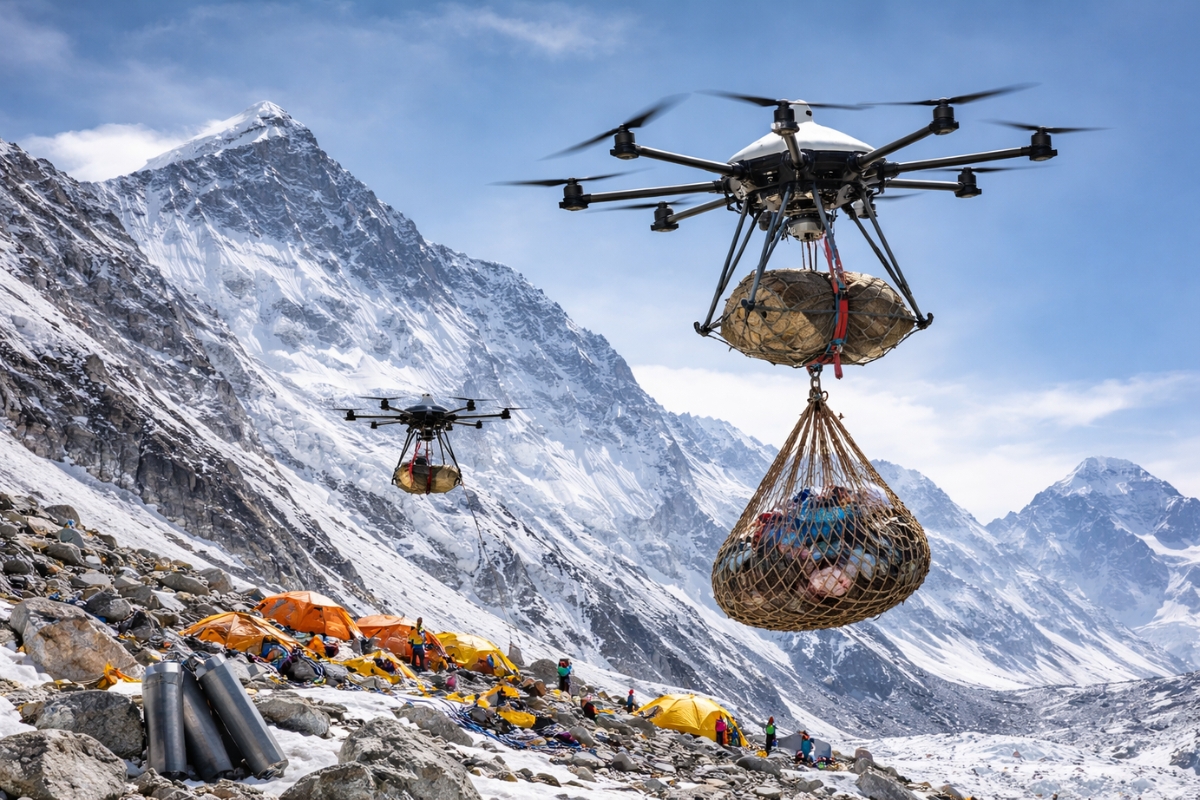


Nepalese Company Uses Drones on Everest to Transport Supplies and Remove Waste in High-Risk Area, With Direct Impact on Operation Safety
The Everest has become a symbol of overcoming challenges for climbers worldwide, but it has also been burdened by a problem that has been growing for years. Amidst the snow, ice, and climbing routes, the mountain has accumulated empty cylinders, ropes, packaging, and other waste left by successive climbing seasons.
Now, a new operation is trying to change this reality with the help of technology. Cargo drones are already being used to carry equipment and remove trash from one of the most dangerous sections of the mountain, shortening transport time and reducing human exposure in an area marked by unstable ice and constant risk.
The Most Dangerous Section of Everest Has Begun to Receive Air Support
The operation focuses between the base camp and Camp 1, in a range that passes through the Khumbu Icefall. This sector is known for its deep crevasses, moving ice blocks, and sudden changes in terrain.
-
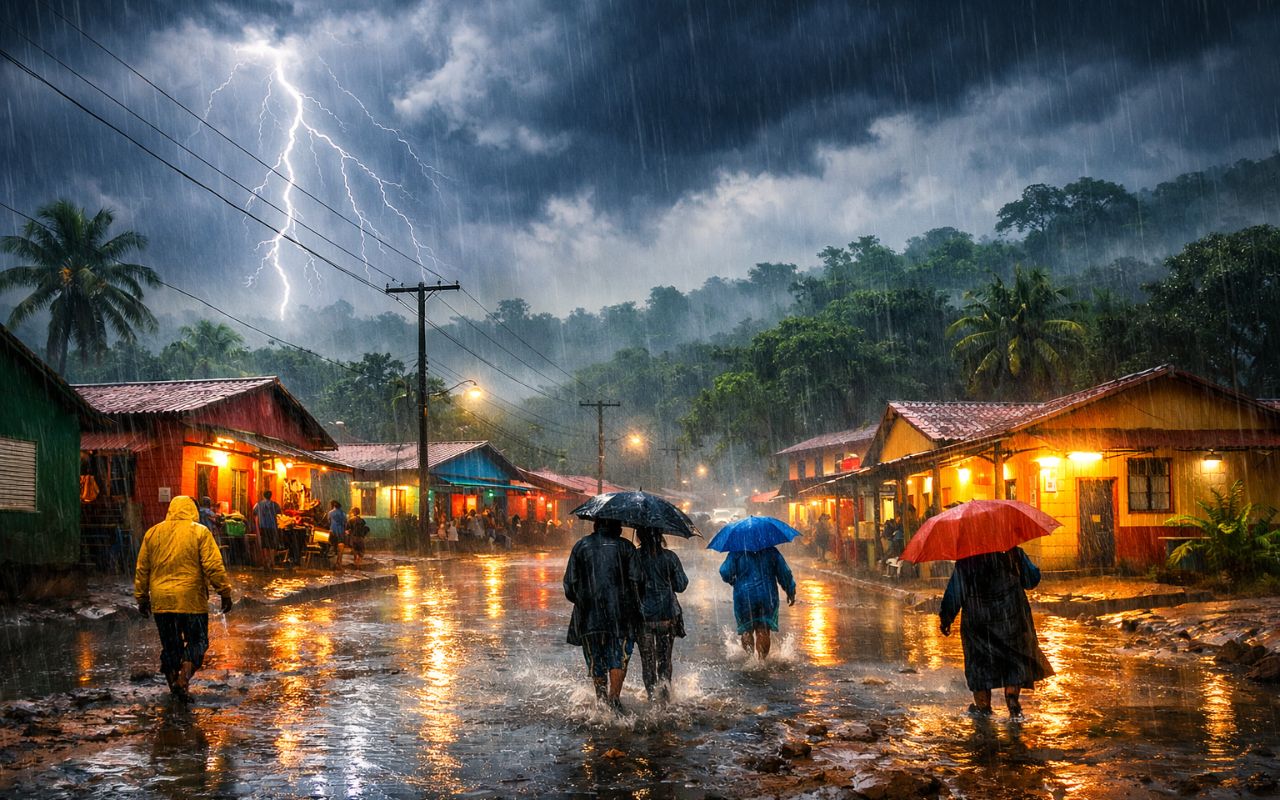
It seems to have come out of a science fiction movie: A Brazilian city where it rains almost every day, recording over 4,000 mm per year, driven by climatic factors — a direct result of its strategic location in the Amazon.
-
The water crisis that could change everything this year has already begun; it’s not just about the climate, it affects technology, raises product prices, and can halt entire companies without warning.

-
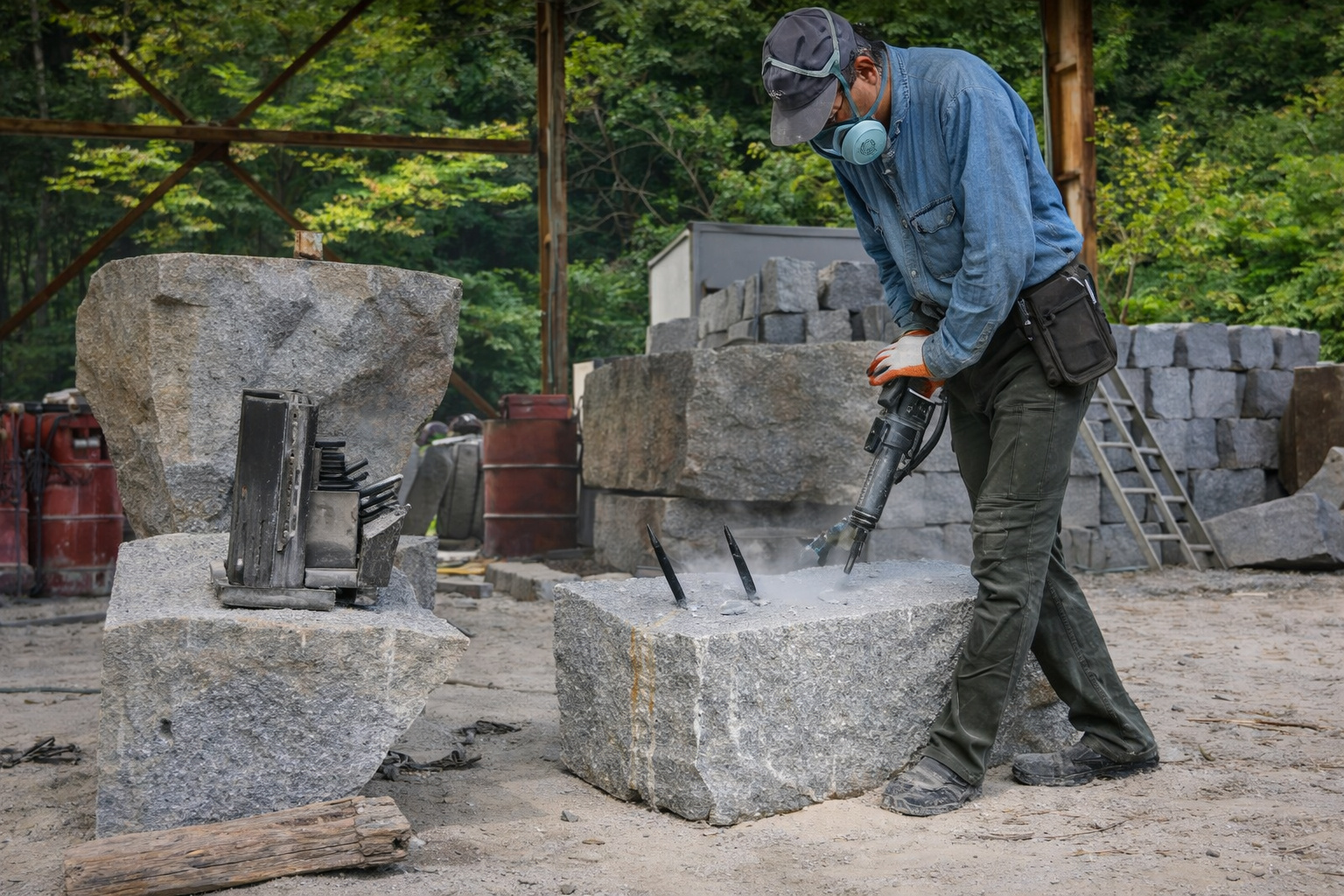
A Japanese mason transforms raw granite into small cups and handcrafted utensils, collects giant stones, cuts with precision, and impresses with detailed manufacturing and finishing.
-
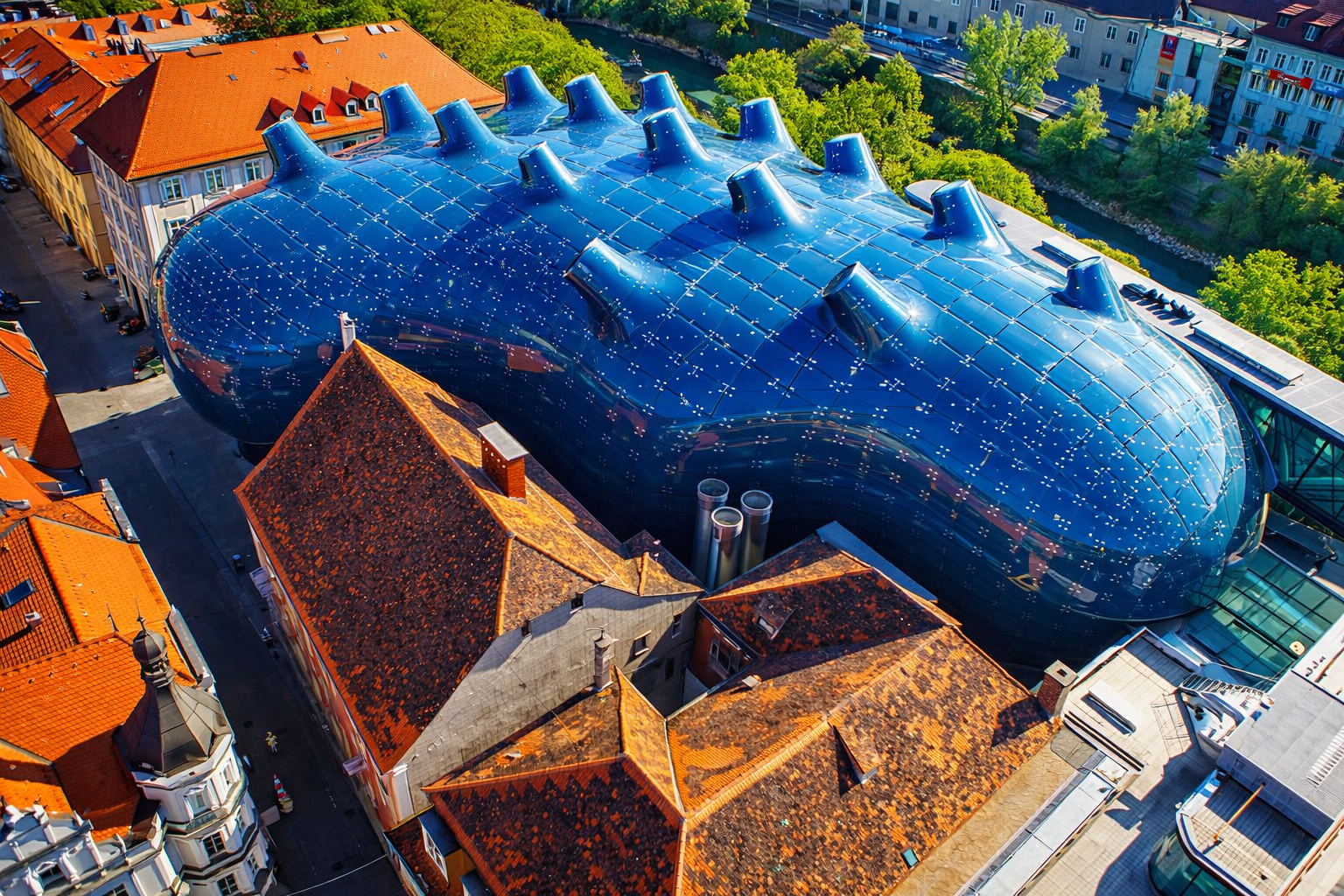
With 1,066 acrylic panels, the building known as the friendly alien is supported by a steel skeleton, has a façade that functions as a giant screen, and impresses the world without any internal columns.

In practice, this means that any transport mission is slow, heavy, and dangerous. A journey that can take about 4 hours on foot is now done in about 6 minutes by the drones, changing the working logic in one of the most sensitive points of the mountain.
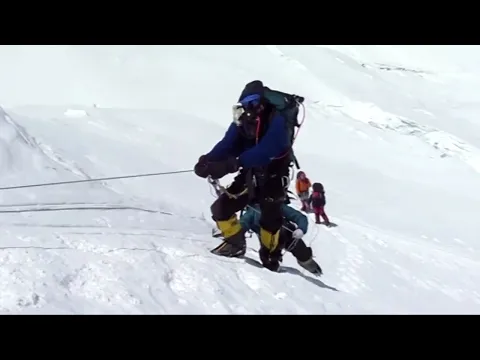

Cargo Goes Up, Trash Goes Down, and the Risk for Sherpas Decreases
The use of drones is not limited to a one-time demonstration. They are now being used to carry oxygen cylinders, ropes, ladders, and other necessary items for preparing the ascent route.
On the way back, these aircraft descend with accumulated waste from the mountain. This detail is crucial because the manual removal of trash on Everest requires extreme effort, in addition to exposing sherpas to a journey that combines high altitude, unstable terrain, and heavy loads.
What the Numbers Show in the Climbing Season
According to Reuters, an international news agency with global coverage, the drones operated by the Nepalese company Airlift Technology transported over 280 kilograms of waste between mid-April and mid-May of 2025, with support from the local organization that manages cleaning on Everest.
In another phase of the operation, two heavy drones removed about 300 kilograms of trash from Camp 1 during the spring season. The same technology also helped carry materials used by the teams that install and maintain the climbing route.
The Advancement Moved from Testing to Regular Use
The change gained momentum after a successful delivery on Everest in 2024 with the transportation of three oxygen bottles and more than 1.5 kilograms of supplies to Camp 1. That phase opened the door for more continuous use in the following year.
With the evolution of the operation, the technology has ceased to be treated purely as a high-altitude experiment. In 25 days, the system managed to move 1,259 kilograms of supplies and waste, showing that air support can take on a real logistical role in an extreme environment.
The Mountain Has Accumulated Waste for Decades and the Problem Has Become Permanent Pressure
The accumulation of waste on Everest is not new. Over the years, cleaning campaigns have collected tons of material left behind by expeditions, as well as items abandoned in camps and climbing sections.
In 2019, a major cleaning effort collected 11 tons of trash and also recovered four bodies in the area. Before that, Nepal had already implemented a rule that requires climbers who go beyond base camp to descend with at least 8 kilograms of waste, risking the loss of a deposit of US$ 4,000.
Less Snow, More Rock, and an Even More Difficult Cleaning
The situation has become more delicate with the visible changes in the mountain’s environment itself. The Everest has shown less snow in certain areas and more exposed rock, a scenario that increases the sense of deterioration of the landscape and makes old waste even more visible.
This situation also complicates manual removal. With the ice being less stable and the crevasses becoming more problematic throughout the season, cleaning requires even more attention, more time, and greater physical strain on the teams.
Drones Still Don’t Solve Everything, But They Are Changing the Operation
Despite the progress, drones still do not fully replace human labor on Everest. The weather changes rapidly, wind can interrupt flights, and altitude imposes important technical limits, especially in the higher camps.
Even so, the impact is already clear. Between base camp and Camp 1, the technology has created a third route between helicopter and manual transport. This reduces time, decreases physical effort, and improves safety in a corridor where every movement can be very costly.
What is underway on Everest goes beyond a curious innovation. The most famous mountain on the planet has begun testing a practical solution to a problem that has lasted for decades and affects both the environment and the safety of those who work there.
If this operation gains scale in the coming seasons, the result could be significant for all logistics in the Himalayas. Drones, trash removed more quickly, and less human risk change the perspective on how high-altitude operations can be conducted from now on.





Então agora da pra fazer resgates de pessoas né?
Mais pra frente servirá para salvar as pessoas, drone vai até o alpinista que estará sinalizado com GPS emitindo socorro e resgata.
Era isto que estava faltando. Muitas vidas seriam salvas caso essa ideia tivesse surgido tempos atrás. Muito boa.