





 English
  Francês
  Alemão
  Italiano
  Japonês
  Norueguês
  Portuguese
  Spanish
  4 min of reading
  1 comment


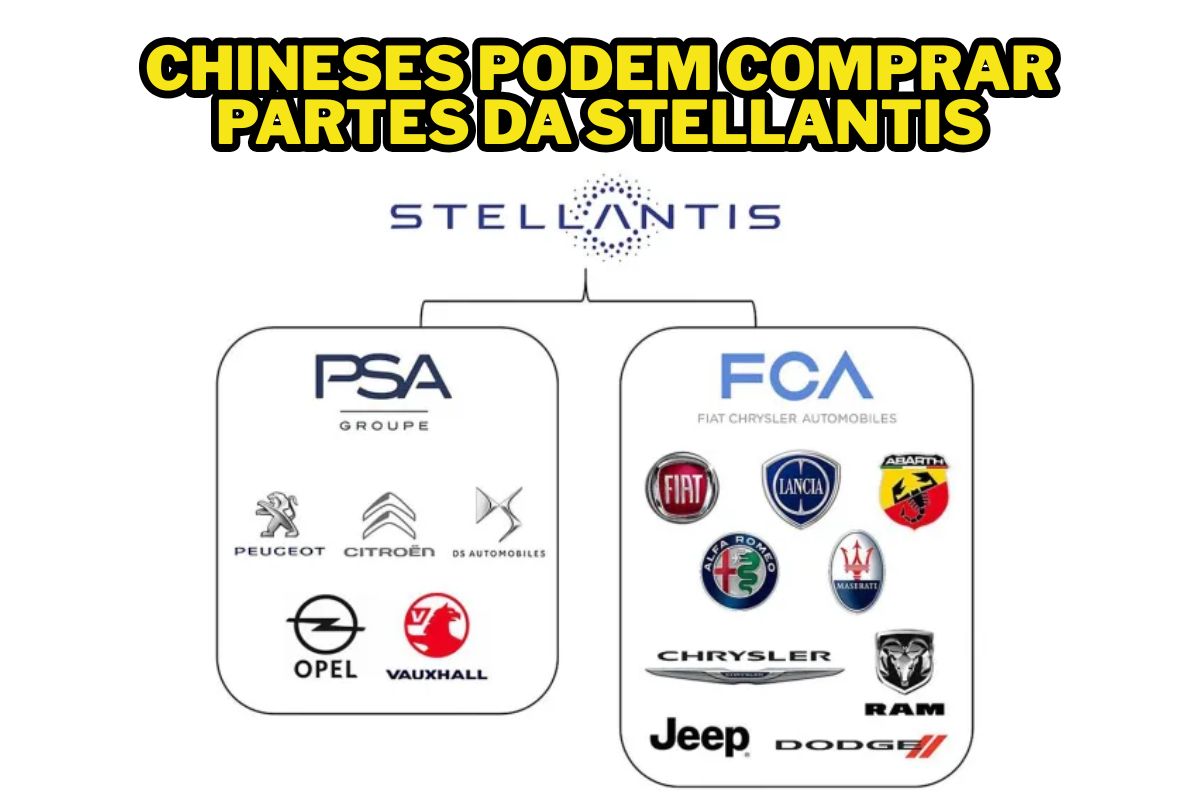


Former Stellantis CEO Carlos Tavares Warns That the Giant Formed by Fiat Chrysler and PSA May Be Split, With Chinese Automakers Taking Over Operations in Europe and Brands Like Jeep and Ram Falling Under American Control
The possible division of Stellantis has reignited a debate about the future of large automotive alliances amid the transition to electric vehicles. The warning came from Carlos Tavares, who left the group’s leadership in December 2024 and, in his new book, suggests that the company may be heading for a structural split.
Formed in 2021 by the merger between Fiat Chrysler Automobiles (FCA) and the PSA Group, Stellantis brings together 14 global brands, including Fiat, Peugeot, Citroën, Jeep, and Ram. According to Tavares, the delicate power balance between Italy, France, and the United States is at risk of shattering following his departure from leadership.
Geopolitical Division and the Advance of Chinese Automakers
In the book, the former executive expresses concern about the future of the tripartite structure of Stellantis, especially in light of increasing competitive pressure from Chinese automakers.
-
Chinese giant worth nearly R$ 4 billion that manufactures cables for electric cars, solar energy, and robotics wants to open a factory in SC.
-
Many employers do not know, but the law guarantees domestic workers a 25% increase in salary during trips, 50% for overtime, 20% for night shifts, and 17 additional benefits that can lead to labor lawsuits if not paid.
-
Gasoline prices soar and the question arises: is ethanol more advantageous? The 70% rule reveals the limit with gasoline.
-
The government has made a decision and is starting a test with more ethanol in gasoline, anticipating a mixture of up to 35%, diesel with 25% biodiesel, and a study to assess the impacts on engines.
For Tavares, there is a possible scenario in which the European assets of the company would be sold to manufacturers in China, while the American operations would regain full control of the Jeep, Dodge, Chrysler, and Ram brands.
This division, he argues, could redefine the landscape of the automotive industry, concentrating European strength in electric vehicles and American strength in combustion SUVs and trucks.
China, in turn, would gain industrial presence within Europe, circumventing the European Union’s import tariffs and accelerating its entry into mature markets.
From Strategic Leader to Critic of His Own Legacy
Carlos Tavares was the main architect of the merger that created Stellantis and is recognized for implementing an aggressive policy of cost reduction and acceleration of electrification.
However, this same strategy led to internal resistance and external criticism following the decline in profitability at some brands.
The former CEO now admits that he underestimated the pace of electric vehicle adoption in Europe, which resulted in planning revisions.
He acknowledges that the full transition to zero-emission vehicles has been slower and more costly than expected, especially in markets where consumer purchasing power has declined.
“Perhaps I should have done a lot of things differently,” Tavares writes.
Brands in Transition and the Weight of Political Decisions
Among the most pressured brands within Stellantis, Alfa Romeo is at a decisive moment.
Originally planned to phase out combustion engines and adopt fully electric platforms, the Italian manufacturer is now reevaluating its strategy to once again include hybrid and gasoline versions, following the revision of the European Union’s environmental goals.
Opel, on the other hand, shows more solid performance but is also a central part of a broader commercial maneuver.
Internal sources suggest that Stellantis may use the German brand as a showcase to sell Chinese electric models from Leapmotor, producing them on European soil to escape EU tariffs.
This operation would allow cost reduction and preservation of competitiveness in an increasingly hostile market for imported vehicles from China.
Pressure for Results and Governance Challenges
Tavares’ replacement by Antonio Filosa marks the beginning of a restructuring phase in the conglomerate, focusing on profitability and operational stability.
Analysts point out that the new leadership faces the challenge of maintaining cohesion between decision-making centers in Europe and America, in a scenario where industrial nationalism and protectionist policies are on the rise.
The fragmentation of Stellantis would be an unprecedented event since the merger, with direct effects on factories, jobs, and global supply agreements.
Experts assess that, even if unlikely in the short term, Tavares’ warning exposes real internal tensions, exacerbated by technological competition and pressure for higher margins in the electric market.
What Is at Stake for the Future of Stellantis
The hypothesis of a division shows that the automotive megamerger model is facing its biggest test since 2020.
Stellantis, which was born as a symbol of global integration, now finds itself divided among national interests, electrification challenges, and rising production costs.
If the group’s political and financial balance collapses, the impact will be global.
Iconic brands like Fiat, Peugeot, and Jeep could take distinct paths, and the Chinese advance in Europe could accelerate the redistribution of industrial power in the automotive sector.
Do you believe that Stellantis will withstand the political and economic pressures threatening its global unity or that a division between Europe and the United States is just a matter of time?







Clear examples and step-by-step actions. Very handy, thanks!