





 Portuguese
  English
  Spanish
  3 min of reading
  0 comments


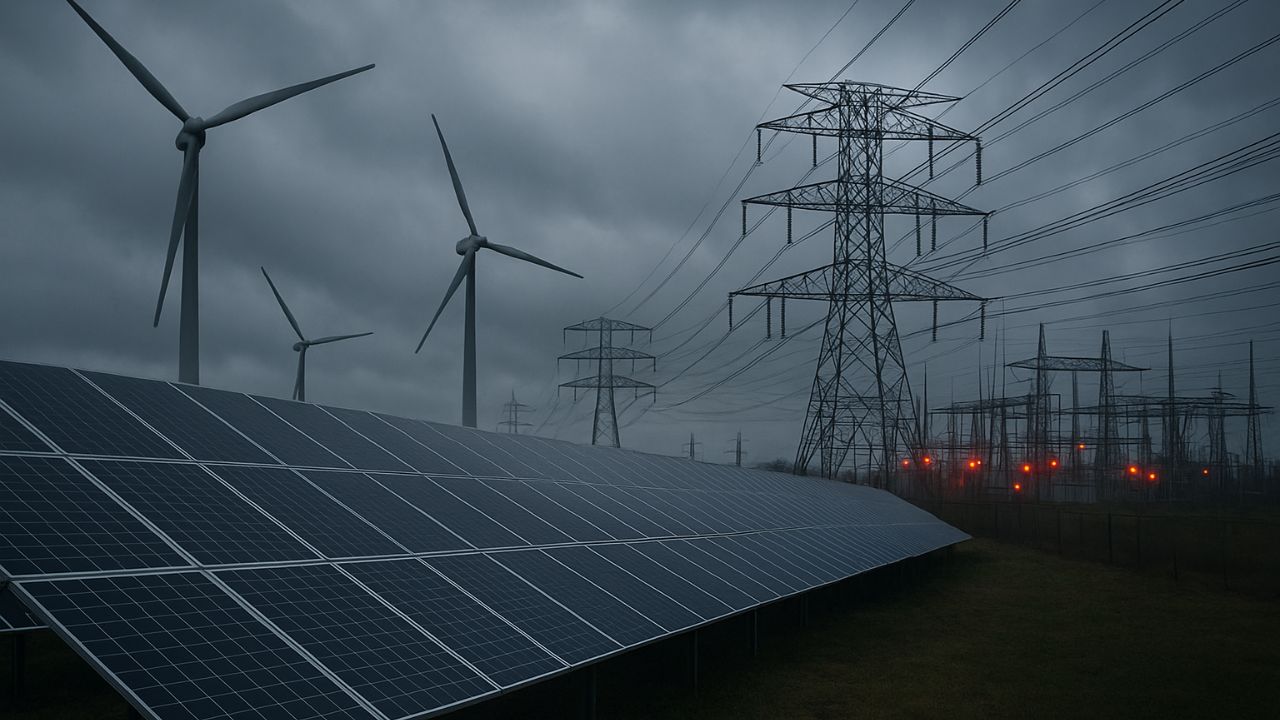
ONS Expands Curtailments and Cuts 37% of Wind and Solar Generation Due to Excess Energy, Resulting in Losses Totaling R$ 1.1 Billion.
The National Electric System Operator (ONS) intensified interruptions in renewable energy production in Brazil in October.
The reason was excessive supply, which led to the need to reduce wind and solar generation by 37% to avoid overload in the electrical system.
According to a survey by consulting firm Volt Robotics, the cuts — known as curtailments — caused losses exceeding R$ 1.1 billion in the month.
-
Renewable energy advances over protected areas in Brazil, and a survey by the Energy Transition Observatory reveals silent impacts that challenge environmental conservation and pressure sensitive traditional territories.

-
Rio Grande do Sul accelerates energy transition: State invests in renewable technologies and consolidates decarbonization strategies and pathways to attract billions in new industrial investments.

-
With 160,000 m² of collectors, an area larger than 20 football fields, Silkeborg, in Denmark, hosts a solar thermal plant that heats 19,500 homes and could become the largest solar heating plant in the world.

-
A study reveals the expansion of renewable energy procurement in Brazil and shows how companies are taking advantage of opportunities to reduce expenses, ensure energy efficiency, and strengthen strategic environmental commitments.


This measure is the third consecutive one since August when the country reached records for forced reductions in clean energy.
The situation raises concerns among companies and experts, who point to structural imbalances in the distribution and control of renewable production.
Wind and Solar Plants Suffer Million-Dollar Losses
According to data from Volt Robotics, the solar plants had 37% of their capacity interrupted, representing over 1.3 thousand GWh unused and a loss of R$ 192 million.
The wind plants faced cuts of 37.1%, with nearly 4.6 thousand GWh not distributed and R$ 741 million in losses. In total, 5.9 thousand GWh were not generated just in October.
This volume is equivalent to the energy needed to power millions of homes for weeks, revealing the economic and environmental impact of the imbalance between supply and demand.
Curtailments: The Challenge of Balancing Sun, Wind, and Consumption
The phenomenon is known in the sector as curtailment, a term used to describe the controlled interruption of energy generation.
ONS needs to ensure that the amount of electricity produced is exactly equal to the national demand at all times.
When there is excess sun and wind, the production from wind and solar plants can exceed consumption, requiring immediate cuts to avoid overload and potential collapses.
An emblematic episode occurred on Father’s Day, August 10, when the high volume of renewable generation nearly brought the electrical system to a momentary collapse.
Most Affected Regions and Growth of Distributed Energy
The states of Rio Grande do Norte (43.8%), Ceará (34.9%), and Minas Gerais (30.8%) were the most impacted by energy cuts.
These regions concentrate a significant portion of the country’s wind and solar plants, which depend on adequate infrastructure to evacuate production.
Part of the problem lies in the rapid advancement of micro and mini distributed generation — solar energy systems installed on rooftops and solar farms that inject electricity directly into the grid.
As ONS does not control the input of this distributed energy, the sudden increase in supply forces it to reduce the production from large centralized plants to balance the system.
Lack of Transmission Lines Worsens the Situation
Another critical point is the lack of energy transmission lines. Many wind and solar plants operate in regions with limited evacuation capacity, which restricts the transmission of electricity to other areas of the country.
Therefore, even with a high production potential, a significant portion of the clean energy generated ends up being wasted.
The consultancy points out that, between January and October 2025, 20.4% of Brazil’s renewable generation was curtailed, reinforcing the warning about the urgent need for investments in infrastructure.
Sector Demands Structural Solutions
Companies and experts argue that the expansion of the energy matrix must be accompanied by logistical and technological planning.
In addition to new transmission lines, digital and storage solutions could minimize curtailments and better utilize the production from renewable sources.
Meanwhile, Brazil sees its leadership in wind and solar energy threatened by bottlenecks that compromise the efficiency of the system.
The challenge now is to transform excess energy into opportunity, with a more modern, balanced, and sustainable electrical system.









-

Uma pessoa reagiu a isso.