





 Portuguese
  English
  Spanish
  3 min of reading
  1 comment


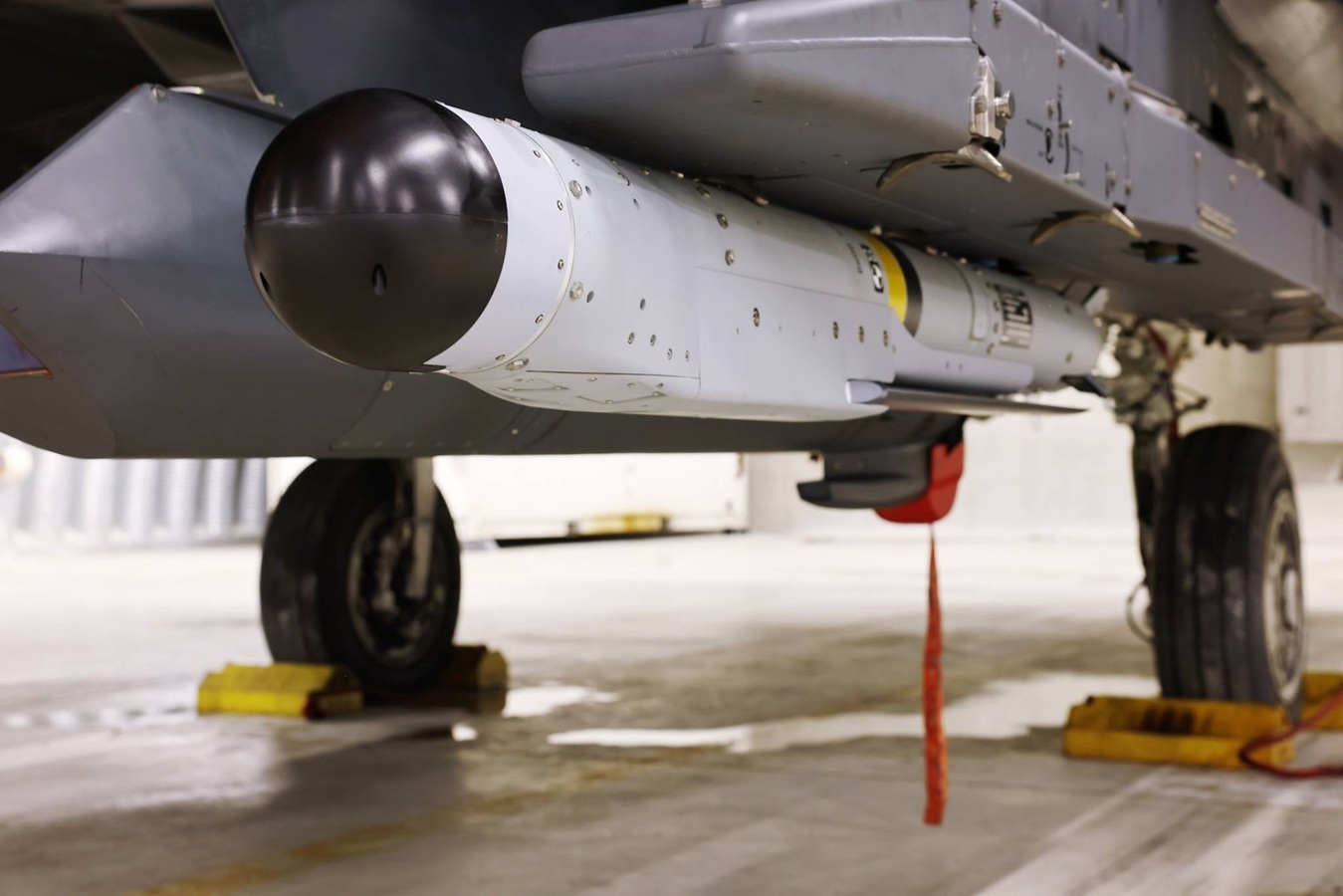

During an unprecedented military exercise, Norway took control of an American bomb in mid-air. The operation, called Jotun Strike, marked an advancement in the use of networked smart weapons, redefining military cooperation among allied countries.
The Norwegian army took a historic step in the military field. During the Jotun Strike exercise, the Norwegians took control of an American bomb in mid-air.
The device, launched by an F-15E fighter jet from the United States, was remotely piloted by Norwegian operators until it reached the designated target.
This feat is not just a technical innovation. It symbolizes a new stage in how allied countries interact in combat situations.
-
China has created a mass-produced hypersonic missile that costs the same as a Tesla, and this is changing everything in modern warfare because the United States cannot defend itself without spending millions.

-
100% Brazilian technology transforms agricultural waste into a meat-scented ingredient using fungi from the Amazon rainforest. The process does not use excessive water or chemicals, and it also increases the nutritional value of the final product.

-
Psychology reveals that adults who avoid conflicts at all costs are not balanced individuals, but rather children who learned in the worst way that expressing emotions brought punishment and now live paralyzed by the fear of expressing themselves.

-
Goodbye pet hair on clothes: a washer with an internal filter promises to remove up to 5 times more hair than regular machines and uses an XL trap dryer system to capture what remains.


The control of the American bomb occurred on May 14, 2025, off the coast of Andøya, and involved munitions of the GBU-53/B StormBreaker type, capable of operating even in challenging weather conditions.
Most importantly, this was the first time the United States allowed another country to take control of real weapons in a live operation.
Until then, only simulations were known. The success of the maneuver paved the way for closer collaboration between the two countries.
How A “Networked” Weapon Works
The GBU-53/B StormBreaker is not a common American bomb. Unlike traditional munitions, it can receive commands after being launched. This is possible thanks to a technology that connects it to military communication networks.
Developed by Raytheon, this American bomb features radar, infrared, and laser sensors.
These sensors allow it to identify and track moving targets, even in fog or darkness.
Additionally, the onboard system can select the most relevant threat without relying on a human operator all the time.
Another essential point is the use of the Link 16 channel, which allows real-time communication.
Through it, Norwegian military personnel were able to change the bomb’s trajectory or cancel the attack, even after launch. Therefore, control became much more flexible.
In addition to the F-15E fighters, the operation was supported by the P-8A Poseidon aircraft. This plane provided navigation data for the bombs, ensuring accuracy. This proved that different aircraft, even with varied missions, can operate together effectively.
Norwegian Technology Shapes New Military Doctrine
Norway had been preparing for this shift since 2019. The NOBLE group, linked to the Norwegian operational command, created a system that allows control of weapons from different origins.
The difference lies in the software that synchronizes data from multiple platforms, without needing to purchase new equipment.
Therefore, instead of investing in larger arsenals, the Norwegians invested in integration. This allows, for example, the use of F-35 fighters or existing missiles with the new system.
With this, Norway can carry out complex attacks without being entirely dependent on other nations.
According to the Opex360 portal, the operation showed that Norway not only masters the technique but also proposes a new model of military action.
A country with limited military resources, but with good networks and a clear strategy, can stand out on the global stage.
A Turning Point for Military Alliances
The Jotun Strike represents more than a successful mission. It demonstrates how modern warfare increasingly relies on connectivity.
By allowing the remote control of weapons by allied countries, a new form of cooperation within NATO is created.
According to the Norwegian Armed Forces, this experience marks the beginning of a new era. Weapons and data now go hand in hand.
Trust among allies translates not only into agreements but into systems capable of operating integrated, with distributed decisions and faster responses.
Therefore, the Norwegian initiative not only confirms its military autonomy but also reinforces the collective efficiency of Western forces. In a global scenario where information and rapid response are determinants, this advancement could change the course of future operations.










Mais um golpe duro no INVASOR RUSSO.