





 Portuguese
  English
  Spanish
  3 min of reading
  3 comments


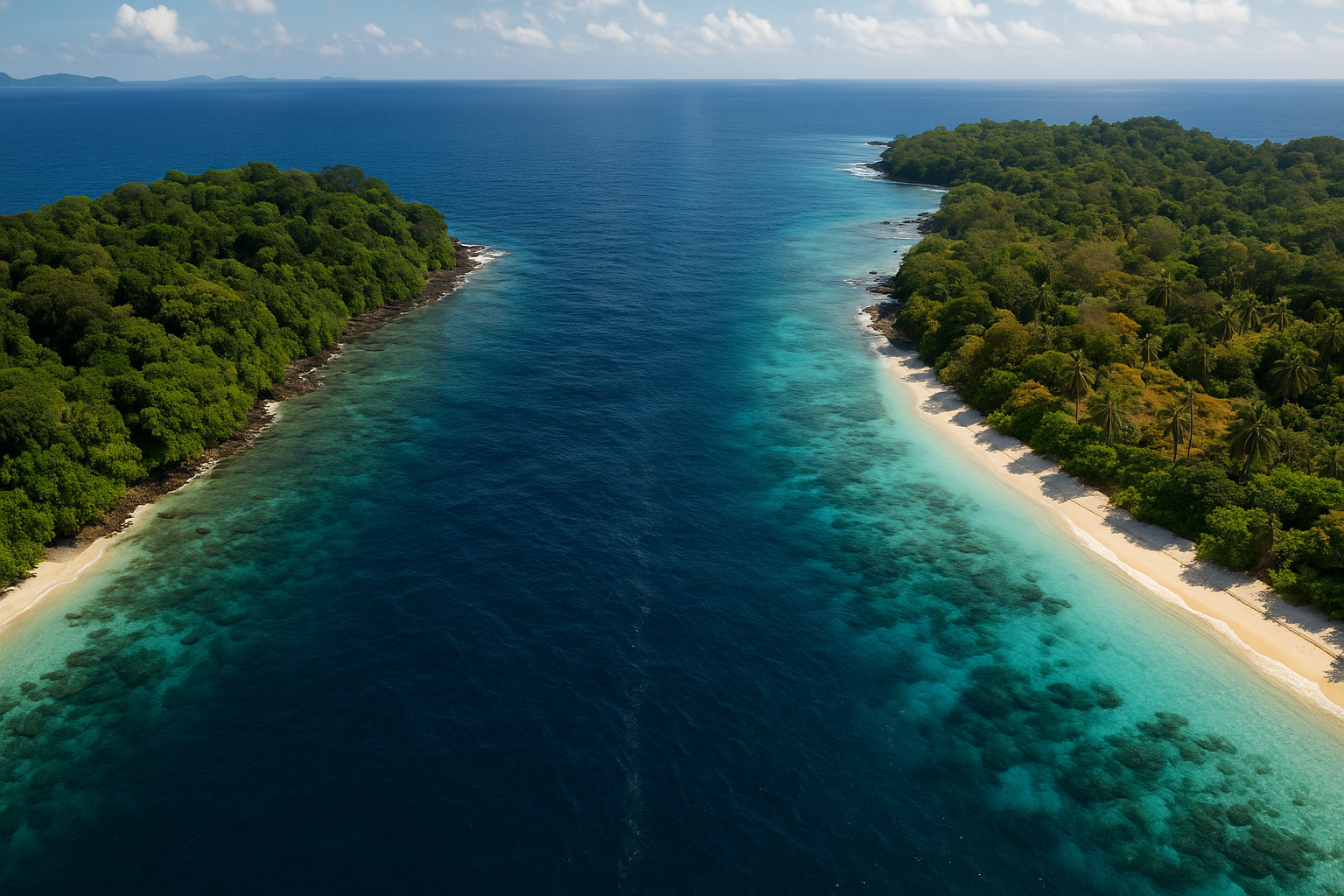


This Happens Even When The Islands Are Just A Few Kilometers Apart
There is an invisible line in the ocean where nothing crosses, and this division is known as the Wallace Line.
It highlights one of the most remarkable biological boundaries on the planet.
This rupture was identified in 1859 by Alfred Russel Wallace, a naturalist and co-author of the theory of natural selection with Charles Darwin.
The line separates Asian fauna from Australasian fauna, even when the islands are surprisingly close.
As a result, species from neighboring regions show profound differences.
This reveals the strength of this evolutionary barrier.
-
Archaeologists have discovered a colossal submerged wall in the Atlantic, dating back 7,000 years and weighing 3,300 tons, regarded as the largest prehistoric submerged structure ever found in France.
-
Scientists have discovered a gigantic magnetic anomaly hidden beneath the soil of Australia that mirrors the shape of the entire continent and holds geological records of two and a half billion years that could change what we know about the Earth.
-
The heatwave that has been affecting Brazil in recent weeks is coming to an end: a cyclonic vortex is moving in during Holy Week with heavy rains, and a cold air mass is already threatening to lower temperatures in the South starting in April.
-
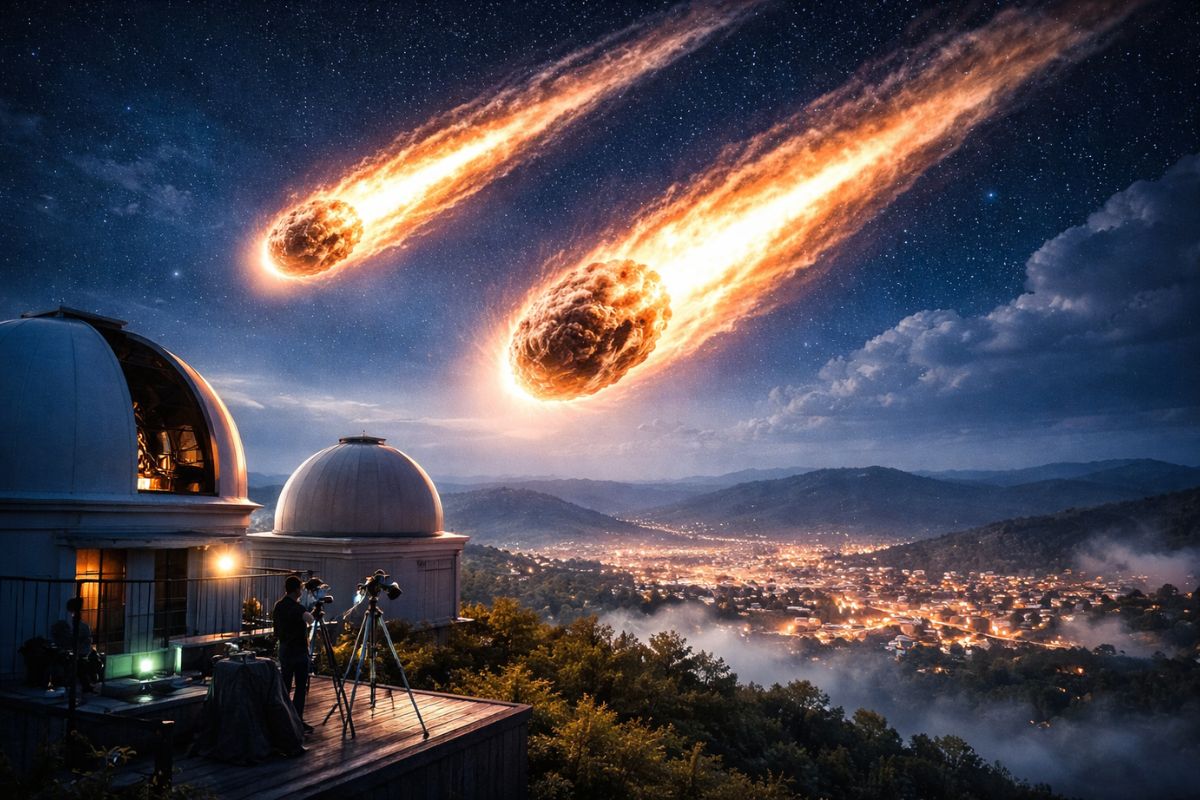
(VIDEO) Cameras from an astronomical observatory captured two meteors falling over Santa Maria in Rio Grande do Sul with only a one-minute difference and such close trajectories that scientists are now investigating whether the two objects have the same origin.

Therefore, this discovery remains essential to understanding biological patterns formed during the Ice Ages.
It also demonstrates how separation has shaped species over millions of years.
When Asia Meets Australasia, But Doesn’t Mix
The Wallace Line passes between Bali and Lombok.
It also divides Borneo and Sulawesi.
This creates an abrupt transition between two faunistic groups.
The change is sudden, even with extremely short distances between the islands.
Fauna West of the Wallace Line (Asia)
- Placental mammals, such as tigers, monkeys, and rhinoceroses.
- Typical regional birds, such as woodpeckers.
Fauna East of the Wallace Line (Australasia)
- Marsupials, such as kangaroos and cuscuses.
- Colorful birds, such as cockatoos and birds of paradise.
Thus, just a few kilometers separate two completely distinct evolutionary worlds.
This division highlights the uniqueness of this biological boundary.
Geology Explains The Isolation That Has Persisted For Millions Of Years
The strength of this barrier is linked to the geology of the region.
The Wallace Line coincides with a deep ocean trench, positioned between two tectonic plates.
During the Ice Ages, sea levels dropped significantly.
This decline allowed land bridges to connect the Asian continent to the islands of Bali and Borneo.
These connections formed ancient Sundaland.
However, the depth of the trench prevented the passage between other islands from emerging.
This happened even during periods of lower sea levels.
As a result, water remained a permanent barrier.
This barrier prevented contact between faunas for millions of years.
Thus, species on each side evolved in isolation.
This isolation created incompatible ecosystems, despite geographical proximity.
Evolutionary and Ecological Impacts of This Deep Separation
This isolation shaped unique evolutionary trajectories.
Asian fauna developed with predators and placental mammals.
Meanwhile, Australasian fauna evolved with marsupials and very distinct birds.
Therefore, even with islands so close, species never mixed.
This division demonstrates how geology determines the fate of entire ecosystems.
Thus, the Wallace Line remains one of the most impressive examples of natural isolation recorded by science since 1859.
The Wallace Line And Its Global Relevance
The boundary serves as a reference for researchers studying evolution and species distribution.
It shows how the sea creates divisions that are more rigid than visible borders.
Therefore, the Wallace Line continues to guide modern studies on biogeography and tropical ecosystems.
It reveals how small geographical variations can generate gigantic impacts on biodiversity.
If an invisible line can divide two such close animal worlds, how can other natural boundaries still influence life on the planet?






Muito interessante!
Aqui no Brasil temos as águas que não se misturam, Rio Negro e Rio Solimões.
Isso é muito, importante de se aprender, uma linha que separa , dois mundos….. gosto de estudar isso..
Sim