





 Portuguese
  English
  Spanish
  3 min of reading
  0 comments


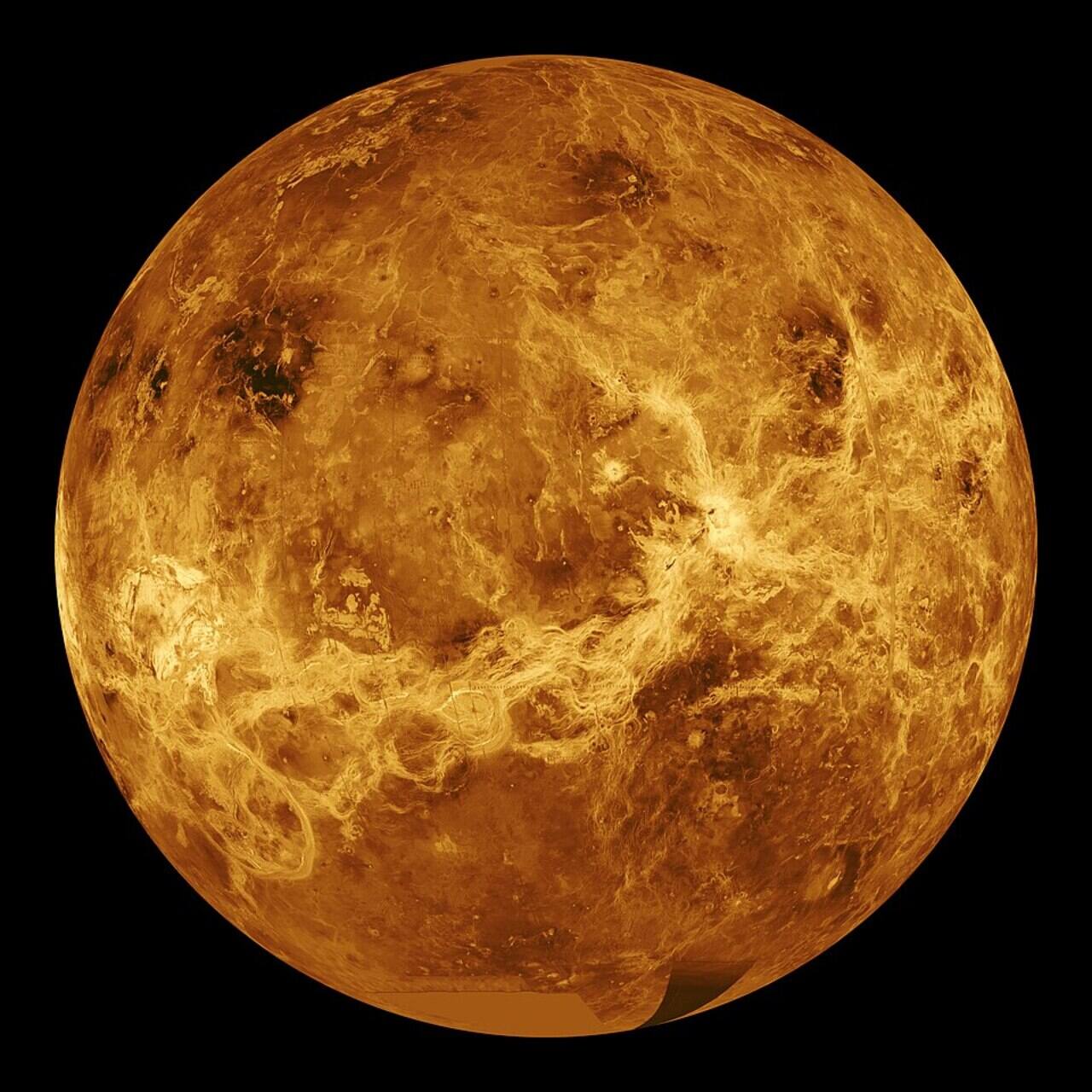
With Retrograde Rotation, Stifling Atmosphere, and Extreme Heat, Venus Defies the Standards of the Solar System and Intrigues Scientists for Decades
Among all the planets of the Solar System, Venus draws attention for following a very different path. While most planets rotate from west to east, Venus does the opposite.
This retrograde movement, combined with an extremely slow rotation and a stifling atmosphere, makes the planet one of the most mysterious and studied by science.
To understand what makes Venus so different, just look at its rotation. While Earth rotates in less than 24 hours, Venus takes about 243 Earth days to complete a single turn on its own axis.
-
End of the stove: new technology from Xiaomi promises to retire the old stove with a smart pot that prepares up to 16 servings in 24 minutes and has 10 automatic levels controlled by an app.

-
If Ormuz closes, the world freezes: the 1,200 km Saudi Petroline transports oil from the Gulf to the Red Sea, operates near 7 million barrels/day, and becomes a geopolitical weapon in the crisis with the US.
-
Scientists restore seagrass meadows in the open sea.

-
Scientists find about 1 million giant live eggs hatching in an active underwater volcano, discover a natural furnace on the ocean floor, and reveal one of the most unlikely nurseries ever seen in the ocean.
This means that a single Venusian day is longer than its own year, which lasts about 225 days. And in addition to being slow, the spin occurs in the opposite direction to that of most planets.
What Is Retrograde Rotation
This phenomenon is called retrograde rotation. In simple terms, if someone were on the surface of Venus, they would see the Sun rise in the west and set in the east — the opposite of what happens on Earth.
This characteristic makes Venus an exception among its spatial neighbors and raises many questions among researchers.
The explanation for this different rotation is not solely attributed to ancient events, such as possible collisions with large celestial bodies.
Recent studies show that the atmosphere of Venus plays a fundamental role in this behavior.
It is an extremely thick layer, composed mostly of carbon dioxide, with a bit of nitrogen.
This atmosphere is about 90 times denser than that of Earth. The pressure felt on the surface of Venus would be equivalent to that found more than a kilometer deep in the Earth’s ocean.
Moreover, temperatures reach 464 degrees Celsius, making the environment completely hostile to life as we know it.
How the Atmosphere Affects Rotation
Research published in 2023 reveals that this dense atmosphere exerts considerable force on the planet. The friction caused by winds and the circulation of gases directly influences the rotation.
In other words, the behavior of the atmosphere can alter the way the planet spins, without relying solely on external factors such as impacts.
Extreme Heat and Lack of Water
These conditions affect more than just the movement of the planet. Due to the slow rotation, the surface of Venus remains exposed to the Sun for a long time, accumulating heat intensely.
This contributes to maintaining high temperatures across the surface, with little variation between day and night.
Another curious point is that, even being so close to the Sun, Venus does not exhibit tidal locking.
This phenomenon occurs when a celestial body always shows the same face to the star it orbits, as the Moon does with Earth.
On Venus, the interaction between the planet and its atmosphere prevents this behavior. The result is a more complex dynamic, with storms and winds spreading across the surface.
Additionally, there are no seas or oceans on Venus. The massive presence of gases and the extreme heat do not allow for the existence of liquid water.
All of this reinforces the idea that Venus is a planet with very distinct characteristics, unlike anything seen in the Solar System.
Venus: Constant Target of Scientific Research
The interest in Venus does not stop. Research continues, and new space missions are being planned to better understand the effects of the atmosphere on the planet’s movement.
The absence of tidal locking, the influence of atmospheric pressure, and retrograde rotation are topics that still generate debates among scientists.
For all these reasons, Venus remains one of the most fascinating planets. Its combination of extreme heat, dense atmosphere, and unique rotation ensures an important role in investigations about the formation and behavior of celestial bodies in the Solar System.
With information from Correio Brasiliense.









Seja o primeiro a reagir!