





 English
  Francês
  Alemão
  Italiano
  Japonês
  Norueguês
  Portuguese
  Spanish
  3 min of reading


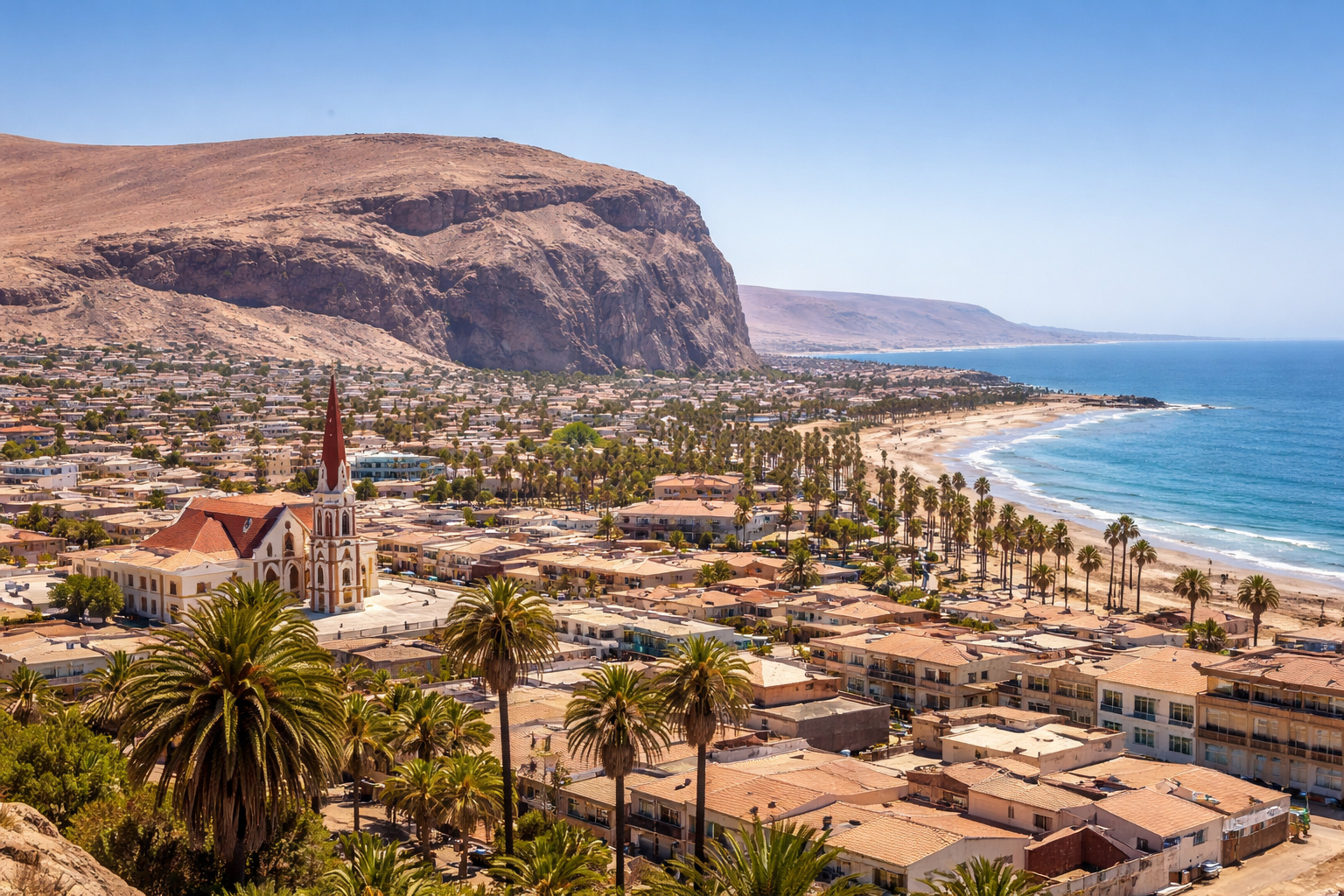
Located in the Atacama Desert, in Chile, Arica is known for recording decades without significant rain and for being one of the driest regions on the planet.
Imagine living in a place where rain is practically absent from daily life.
For many, this seems impossible. However, there is a city that has become a global symbol of extreme aridity.
We are talking about Arica, located in the far north of Chile, near the border with Peru.
The city is situated in the famous Atacama Desert, considered one of the driest places on the planet.
The Driest Desert in the World
The Atacama Desert spans an extensive stretch along the Pacific coast.
According to climate studies widely cited by scientific institutions, parts of the region can go years — and even decades — without measurable precipitation.
-
Seen from space, a colossal ‘Y’ cuts through the largest desert in China, blending a jade-filled river, red and white mountains, and revealing the absurd scale of the transformation of the Taklamakan surrounded by a green wall with billions of trees.

-
The Pacific Ocean reveals what the cliffs of Big Sur have hidden for millennia: Pfeiffer Beach, in California, features swirling purple sand formed by garnet crystals and displays a stone arch that is illuminated by the sun in winter for just a few days each year.

-
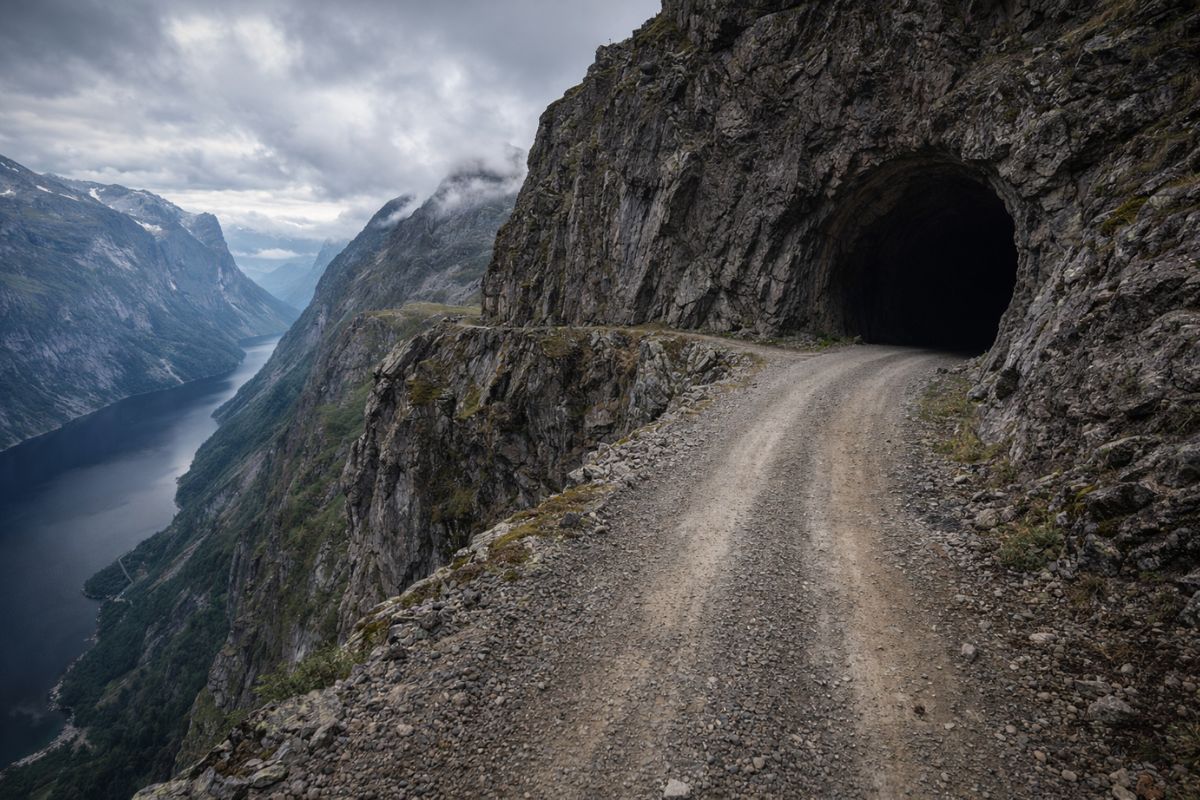
Aursjøvegen in Norway is a 100-kilometer gravel road that crosses chasms and dark tunnels carved into the rock at an altitude of 947 meters in the fjords and is only open for four months a year.
-
With about 4,000 m², the building constructed in a traditional neighborhood in France looks like a rainbow, has a colorful facade, mixes vibrant glass, and creates one of the most unusual visuals in Bordeaux.

Moreover, the phenomenon does not occur by chance. The local geography plays a decisive role.
On one side, the Andes Mountains block moisture coming from the Amazon. On the other, the cold Humboldt current reduces evaporation and the formation of rain-bearing clouds.
As a result, the combination of these factors creates a natural barrier to the formation of rain.


Arica and the Historical Record of Drought
Throughout the 20th century, Arica became known for long periods without significant rainfall.
According to meteorological data released by official Chilean agencies, the city went decades without recording significant precipitation.
While very light drizzles may occasionally occur, many historical records indicate entire years without measurable rain.
This condition led Arica to receive the nickname “city of eternal spring.”
This is because, in addition to the absence of rain, the climate usually maintains mild temperatures for most of the year.
How the Population Lives Without Rain
Faced with this extreme scenario, the city had to develop specific solutions.
The water supply does not depend on local rainfall.
The region utilizes underground aquifers and collection systems from Andean areas.
In addition, desalination technologies and water management have become essential.
Historically, pre-Columbian peoples who inhabited northern Chile already mastered techniques for adapting to the arid climate. They built irrigation systems and made the most of available resources.
Therefore, living in an almost rain-free environment is not a recent phenomenon for the region.
A Natural Laboratory for Science
Precisely due to its extreme aridity, the Atacama Desert has become the subject of international scientific studies.
Researchers use areas of the desert to simulate conditions similar to those on Mars.
The low humidity, mineral soil, and lack of organic matter create an environment considered analogous to the red planet.
Furthermore, astronomical observatories have been installed in the region. The absence of clouds and the atmospheric stability favor deep sky observation.
Thus, what might seem like merely a climatic curiosity has turned into a strategic scientific advantage.
Climate Change and Rare Events
Although Arica is known for its lack of rain, exceptional events can occur.
On rare occasions, atypical climatic systems have caused unexpected precipitation in northern Chile. However, these episodes remain uncommon compared to other regions in the world.
Still, experts monitor the possible impacts of global climate change.
Changes in atmospheric patterns may slightly alter the climatic behavior of the region.
A City Marked by Singularity
The fame of Arica is not only in its arid landscape or almost always blue sky.
It represents an example of human adaptation in the face of extreme natural conditions.
While much of the world associates rain with daily life, Arica has built its identity around scarcity.
Therefore, when asking if there is a city where it has never officially rained, the answer points to northern Chile.
There, in the heart of the Atacama Desert, the climatic history defies common sense and reinforces how the planet still harbors surprising extremes.








Seja o primeiro a reagir!