





 Portuguese
  English
  Spanish
  5 min of reading
  0 comments


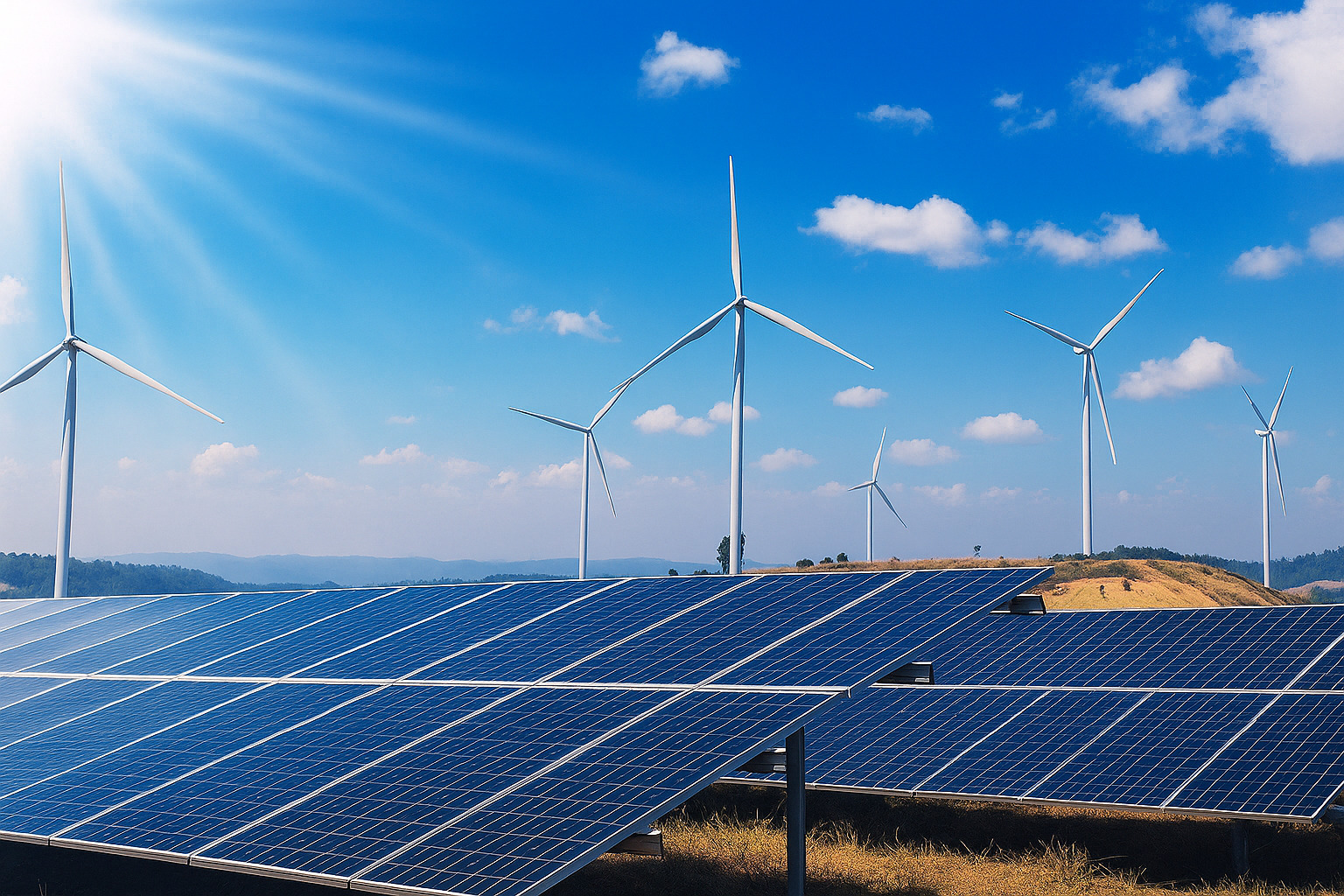
Brazil Advances In The Expansion Of The Electricity Matrix With A Focus On Solar And Wind Energy
The expansion of the electricity matrix in Brazil reached new heights in July 2025, driven mainly by renewable sources, such as solar and wind. Therefore, this growth reflects a constant movement towards diversification and sustainability in energy generation. An effort that has consolidated over the past decades in the country.
This process does not happen by chance. Over the years, Brazil has sought to strengthen its energy security, in the face of climate and economic challenges that directly affect the electricity sector. The need to diversify the generated energy sources, therefore, has become a priority to ensure reliable and sustainable supply.
The Advancement Of Renewable Energy And Its Impacts
Since the beginning of the 21st century, Brazil has heavily invested in alternative sources, especially by leveraging the favorable natural conditions for solar and wind energy generation.
-
The Brazilian state accelerates industrial competitiveness with a focus on the extraction of strategic minerals to boost the energy transition in Goiás.

-
A Canadian retiree creates a hydroelectric system on a real river, generating energy continuously throughout the day and demonstrating how the power of water can supply a house with stability even in a simple structure.

-
Petrobras reaffirms its commitment to the market and ensures that it will carry out the energy transition safely to maintain national sovereignty.

-
Researchers discover a possible hydrogen deposit of up to 46 million tons beneath an ancient coal basin, and the volume could exceed half of the entire global production.


In July, four new plants began operation: three wind farms, with 61 megawatts (MW) of installed capacity, and one photovoltaic solar plant, with 45 MW. As a result, these ventures marked the month as a period of prominence for renewable energies.
Throughout 2025, the country added 4,211.13 MW to the electricity matrix. Of this total, more than half came from 11 thermoelectric plants, particularly the GNA II plant in Rio de Janeiro, which added 1.7 gigawatt (GW) in May.
Nevertheless, clean sources maintain a leading role in geographical and technological expansion.
Additionally, states like Rio de Janeiro, Bahia, and Minas Gerais stood out in the commissioning of new plants. Rio led with 1,672.60 MW, followed by Bahia with 687.70 MW and Minas with 553.25 MW.
In June, for example, Minas experienced the greatest growth with the inauguration of the Pedro Leopoldo I solar park.
The expansion of the matrix is not limited only to energy generation. It also brings important socioeconomic impacts to the regions where the plants are implemented, such as the generation of direct and indirect jobs, as well as stimulating local development.
Regional Overview And Diversity Of The Electricity Matrix
The regional diversification of the matrix also deserves emphasis. From January to July, plants in 14 states began operation.
In addition to large plants, smaller projects such as small hydroelectric power plants (95.85 MW) and hydroelectric generating plants (4.70 MW) expanded the generation network, thus strengthening energy resilience.
In July, 88 plants entered operation in testing, totaling 3,063 MW. Among them were 45 wind plants, 33 photovoltaic solar plants, six thermoelectric plants, two small hydroelectric power plants, one hydroelectric generating plant, and one traditional hydroelectric plant.
These data indicate, therefore, not only the diversity of sources but also the intensity of oversight and monitoring of the sector.
According to data from SIGA (Generation Information System of ANEEL), the total capacity of centralized plants reached 212.6 GW at the beginning of August.
Of the total monitored, over 84% of the installed capacity came from renewable sources, which reinforces Brazil’s prominence in the energy transition.
This significant capacity demonstrates the country’s commitment to investing in infrastructure that supports sustainable growth. Continuous investments in technology and innovation in the electricity sector ensure the modernization of the grid, increasing efficiency and integration between different sources.
History Of Energy Transition In Brazil
Brazil has a long tradition in the use of hydraulic sources, which once accounted for over 90% of national generation.
However, starting in the 2000s, with the growth in demand and the need to reduce dependence on hydropower subject to climate variations, the country began to stimulate new sources.
Not by chance, wind energy began to gain momentum starting in 2009, with the implementation of specific auctions for the sector.
Solar energy began to expand more intensively starting in 2012, after improvements in incentive policies, such as increased technological competitiveness and the decline in equipment costs.
In addition to these sources, Brazil has been studying the potential of other renewable alternatives, such as biomass and biogas, which can complement the generation system and contribute to reducing carbon emissions.
Thermoelectric plants, while not renewable, play a strategic role in providing base and energy security.
On the other hand, the country’s focus remains on the expansion of the clean matrix, with coordinated actions between the public sector and private investors.
The trajectory shows that the Brazilian electricity matrix is increasingly diversified, less vulnerable, and prepared for future challenges in the sector.
Monitoring And Access To Information
The ANEEL conducts rigorous oversight of each ongoing project. To this end, tools like the RALIE panel, updated monthly, facilitate access to data from new plants, thus enhancing transparency for society and sector planning.
This panel presents detailed information by year, region, type of source, and stage of construction.
Through the Electricity Generation Projects Monitoring Report (Rapeel), companies provide field data, which are evaluated by technicians from the regulatory agency.
Thanks to these mechanisms, control and analysis offer a comprehensive view of the expansion of the electricity matrix and allow tracking of the sustainability and modernization targets of the Brazilian electric system.
This transparency is essential for society to understand progress and for investors to have confidence in the legal and economic security of the projects.
The Future Of The Expansion Of The Electricity Matrix
The path of the expansion of the electricity matrix in Brazil points to a future where renewable sources will have an even greater weight.
In this sense, the ability to integrate new technologies, such as battery storage and smart grids, will be key to consolidating this progress.
Additionally, hybrid projects that combine sources like solar and wind in the same location are also emerging as a trend.
The decentralization of generation with smaller plants close to consumption centers should enhance energy security and reduce losses in distribution.
Furthermore, public policies that ensure regulatory predictability and financial incentives will continue to be essential to attract long-term investments.
Indeed, stability in rules and clarity in licensing processes define the speed of growth of the matrix.
Investing in technical training and innovation will be a competitive advantage for Brazil in the global scenario, as well as allowing the country to advance in the agenda of environmental and energy sustainability.
The expansion of the electricity matrix in Brazil in July 2025 reaffirms a historical movement in favor of clean, efficient, and regionally diversified energy.
With the support of public policies and the engagement of the private sector, the country advances in the construction of a more resilient, modern system aligned with global sustainability goals.
Therefore, this progress represents not only numbers in megawatts but rather a concrete step towards ensuring the continuous supply of energy in a more balanced, sustainable manner adapted to the climatic and economic realities of the 21st century.









-

Uma pessoa reagiu a isso.