





 Portuguese
  English
  Spanish
  9 min of reading
  0 comments



The Invisible Weapon That Could Bring Modern Civilization Back to the Middle Ages in Seconds Without Directly Killing Anyone
On July 9, 1962, at 11:15 PM Hawaiian time, the sky over the Pacific exploded with colors. Witnesses from Honolulu to New Zealand saw what they described as “stripes of rainbow” and an artificial aurora lighting up the tropical night. It was beautiful. It was terrifying. And it was happening 400 kilometers above their heads. Seconds later, 300 streetlights in Oahu, Hawaii, went out simultaneously. Burglar alarms went off all over Honolulu. Phone systems collapsed. A new microwave link that the phone company had installed to improve communication between the islands was instantly destroyed. All of this more than 1,400 kilometers from ground zero.
The name of the operation: Starfish Prime. The culprit: an electromagnetic pulse (EMP) generated by a 1.4 megaton nuclear bomb detonated in space, the first real demonstration of a weapon that could wipe out modern civilization without directly killing anyone.
Today, more than 60 years later, this weapon is no longer experimental. It is real, present in arsenals around the world, and represents one of the most frightening threats to modern infrastructure that few truly understand.
-
Motorola launched the Signature with a gold seal from DxOMark, tying with the iPhone 17 Pro in camera performance, Snapdragon 8 Gen 5 that surpassed 3 million in benchmarks, and a zoom that impresses even at night.

-
Satellites reveal beneath the Sahara a giant river buried for thousands of kilometers: study shows that the largest hot desert on the planet was once traversed by a river system comparable to the largest on Earth.

-
Scientists have captured something never seen in space: newly born stars are creating gigantic rings of light a thousand times larger than the distance between the Earth and the Sun, and this changes everything we knew about stellar birth.

-
Geologists find traces of a continent that disappeared 155 million years ago after separating from Australia and reveal that it did not sink, but broke into fragments scattered across Southeast Asia.

What Is an EMP Bomb and Why Is It Invisible
An electromagnetic pulse (EMP) is a brief burst of electromagnetic energy that can be generated in three ways: by a nuclear explosion at high altitude, by specialized conventional devices, or naturally by solar storms.
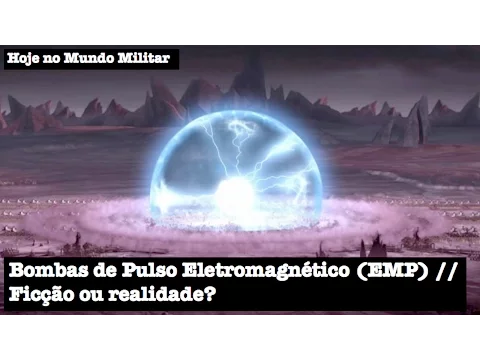

The most devastating and feared version by military planners is the nuclear explosion at high altitude, known as HEMP (High-altitude Electromagnetic Pulse).
Here Is What Makes Nuclear EMP So Unique and Terrifying:
Invisible and Silent: The bomb detonates at an altitude of 30-400 km, in space or in the upper atmosphere. From the Earth’s surface, you might see a flash of light on the horizon, as witnesses saw in Starfish Prime, but there is no audible explosion. There is no nuclear mushroom. For most people within the area of effect, the weapon would be completely invisible.
Continental Range: A single bomb detonated at 400 km in altitude can create an electromagnetic pulse with a radius of up to 2,500 km. To put this in perspective: a bomb over the center of the United States could affect the entire country. One over Central Europe could cover most of the continent.
Three Waves of Destruction: The EMP occurs in three distinct phases, called E1, E2, and E3. The E1 phase lasts nanoseconds but delivers voltage spikes stronger than a direct lightning strike, frying electronic circuits instantly. The E2 phase, which lasts milliseconds, is comparable to a lightning strike and can damage already weakened equipment. The E3 phase, which can last minutes, is similar to solar geomagnetic storms and can damage power transformers and the electrical grid.
Does Not Kill Directly: Here lies the chilling paradox: an EMP attack does not immediately kill anyone. There is no deadly radiation on the surface. There is no physical destruction of buildings. But the chaos that follows can be more lethal than a conventional nuclear explosion.
How It Works: The Physics Behind the Devastation
When a nuclear bomb detonates at high altitude, it releases an explosion of gamma rays in the middle stratosphere, which ionizes as a secondary effect, and the resulting energetic electrons interact with the Earth’s magnetic field to produce an EMP much stronger than is normally generated in denser air at lower altitudes.
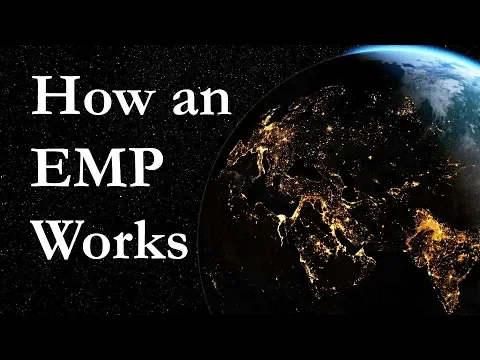
In simpler terms: the nuclear explosion generates gamma radiation that reaches the upper atmosphere. This radiation strips electrons from the atoms of air, creating a massive electric current. The Earth’s magnetic field interacts with this current, amplifying it and directing it to the surface as a wave of electromagnetic energy.
A detonation at 30 km can create a pulse with a radius of 600 km, essentially a lightning strike that could cover the states of Washington, Oregon, and Idaho combined. A detonation at 400 km, the altitude of the Starfish Prime test creates a much larger effect.
What makes this particularly effective as a weapon is that the EMP is generated far from the explosion itself. For high-altitude nuclear explosions, much of the EMP is generated when the gamma radiation from the explosion hits the upper atmosphere — potentially thousands of kilometers from the detonation point.
The Day the World Discovered: Starfish Prime
On July 9, 1962, at 09:00:09 UTC, the Starfish Prime test was detonated at an altitude of 400 km. The actual yield of the weapon was very close to the design yield of 1.4 to 1.45 Mt.
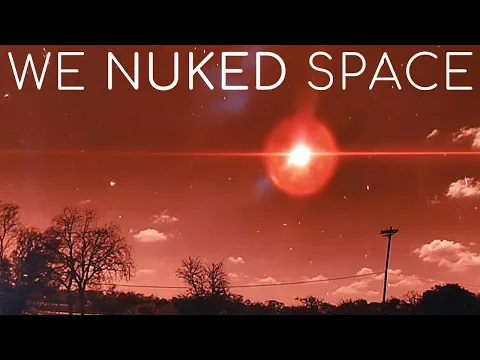
The electromagnetic pulse from Starfish Prime also made these effects known to the public by causing electrical damage in Hawaii, about 1,445 km away from the detonation point, disabling approximately 300 streetlights, triggering numerous burglar alarms, and damaging a microwave link.
But the damage didn’t stop there. There was a lot of uncertainty and debate about the composition, magnitude, and potential adverse effects of the radiation trapped after the detonation. The weapon designers became quite concerned when three low-orbit satellites were disabled. In the following months, these human-made radiation belts eventually caused the failure of six or more satellites, including Telstar 1, the first commercial communication satellite.
At the time, there were only two dozen satellites in orbit. Starfish Prime damaged about a third of them. Today, there are over 10,000 active satellites — 400 times more.
The Most Shocking: Scientists did not expect such widespread effects. The electromagnetic pulse from Starfish Prime was much larger than expected, so large that it took much of the instrumentation off the scale, making it very difficult to obtain accurate measurements.
What an EMP Attack Would Do Today: Scenario of Civilizational Collapse
Imagine waking up one morning to find that all the electronic devices around you are dead. Your cellphone won’t turn on. Your car doesn’t work. There’s no electricity. There’s no internet. There’s no radio or TV.
But it’s not just you; it’s everyone within a 2,500 km radius.
For large explosions at high altitudes (higher than 5 km above ground level), the electric fields generated by the high-altitude EMP are complex and can exist over a large area (perhaps the size of Nebraska or larger), damaging or disrupting unprotected electronic devices.
Here Is What Would Happen:
Power Grid Collapse: The E3 phase of the EMP acts like a massive geomagnetic storm, inducing massive electric currents in power transmission lines.
These disturbances can damage or destroy both electronic control equipment and the power transformers associated with the distribution of the electrical grid. Large high-voltage transformers are particularly vulnerable and many take years to replace because they are custom-made.
Transportation Systems Paralyzed: Cars with electronic ignition systems and ignition chips are also vulnerable. Modern airplanes, which heavily rely on solid-state electronics, could fall from the sky. Modern aircraft are heavily dependent on solid-state electronics that are very susceptible to EMP blasts.
Telecommunications Destroyed: Telecommunications equipment can be highly vulnerable, and receivers of all varieties are particularly sensitive to EMP. Therefore, radar and electronic warfare equipment, satellite, microwave, UHF, VHF, HF, and low-band communication equipment and television equipment are all potentially vulnerable.
Computerized Systems Fried: Commercial computer equipment is particularly vulnerable to the effects of EMP. Computers used in data processing systems, communications systems, displays, industrial control applications, including road and rail signaling, and those embedded in military equipment, such as signal processors, electronic flight controls, and digital engine control systems, are all potentially vulnerable.
Critical Infrastructure Compromised: Hospitals without functional backup power. Water and sewage systems paralyzed. Banks unable to process transactions. Food supply chains disrupted. Nuclear power plant cooling systems potentially compromised.
The Threat Is Real: Who Has This Capability?
China views HEMPs as a critical cyber weapon in its information-centric warfare strategy that emphasizes maintaining superior reconnaissance, communication, and intelligence capabilities in a conflict.
North Korea possesses Super-EMP nuclear weapons. North Korea’s tendency to sell anything to anyone, including missiles and nuclear technology to rogue nations like Iran and Syria, makes the possession of Super-EMP nuclear weapons by Pyongyang especially concerning.
Any missile, including short-range missiles that could deliver a nuclear warhead at an altitude of 30 kilometers or more, could carry out a catastrophic EMP attack on the United States, launched from a ship or freighter. In fact, Iran has practiced ship-launched EMP attacks using Scud missiles.
The most concerning scenario: An EMP attack launched from a ship, as Scuds are common and a warhead detonated in outer space would leave no bomb debris for forensic analysis, could allow rogue states or terrorists to destroy U.S. infrastructure without leaving traces.
How Much Damage Would an EMP Bomb Really Cause?
Here is where the debate gets complex and controversial. A HEMP attack by an adversary with basic nuclear capabilities and missiles may be disruptive on a regional scale but is unlikely to cause catastrophic damage to the U.S. electrical grid on a continental scale.
Adversaries with highly developed nuclear capabilities could cause widespread damage to U.S. infrastructure with complex HEMP attacks in the context of an escalating international conflict.
Based on the full range of U.S. governmental and international studies, hardware vulnerability testing in laboratories, and U.S. experience, it is important to note that due to the statistical nature of the field characteristics, most conventional computers and low-voltage electronics are likely not to be affected and would be available to be reactivated if the operation of the electrical grid could be restored.
In other words: not everything would be destroyed. Many small electronic devices that are not connected to the electrical grid at the moment of the pulse may survive. But damage to the power infrastructure would be the real problem.
The Cascading Effect: How Deaths Occur
Experts call electromagnetic weapons “civilization killers”. According to the U.S. EMP Task Force on National and Homeland Security, China views HEMPs as a critical cyber weapon.
The real danger is not immediate death, but systemic collapse:
Days 1-7: Initial chaos. Panic. Runs on supermarkets. Emergency systems overloaded.
Weeks 2-4: Shortages of food and water. Refrigerated medications exhausted. Hospitals operating at minimum capacity. Dramatic increase in deaths among critical patients.
Months 2-6: Collapse of social order. Waterborne diseases. Widespread hunger in urban areas. Millions of people trying to migrate from cities to rural areas.
Years 1-5: Slow reconstruction of infrastructure. Hundreds of thousands (or millions) of deaths from indirect causes: lack of potable water, hunger, disease, violence, lack of essential medications.
The systemic effects that HEMPs would have on critical infrastructures would place millions of American lives at risk.
Protection Is Possible But Expensive
The good news: Protection against EMP is technically possible. Electromagnetic shielding provides excellent protection against the direct absorption effects of the E1 and E2 phases of HEMP. Several metals and other materials with different weights, sizes, and costs can provide very high levels of electromagnetic wave attenuation to protect equipment.
The basic technology is relatively simple: Faraday cages, which use metal mesh or sheets to block electromagnetic fields. The most common metal used in shielding is copper. However, other metals can be used, such as aluminum or steel.
The U.S. Department of Defense takes this seriously. In 2015, the DoD expanded its recommendations to require EMP protection for “all mission-critical facilities”, and announced its plans to reopen, upgrade, and reoccupy the Cheyenne Mountain military complex due to its intrinsically EMP-protected features.
The bad news: Protecting the civil electrical grid of an entire country would be incredibly expensive and complicated. It requires shielding transformers, replacing vulnerable components, and implementing quick disconnect systems.
Estimated costs to protect just the U.S. electrical grid range from tens to hundreds of billions of dollars.
The Weapon That No One Wants to Use But Everyone Fears
A single nuclear weapon detonated at high altitude would generate an electromagnetic pulse that could cause catastrophic damage across the contiguous United States to the critical infrastructures of electric power, telecommunications, transportation, banks and finance, food, and water that sustain modern civilization and the lives of 310 million Americans.
The EMP is the ultimate weapon of the information age. It does not destroy cities; it destroys the very infrastructure of modern civilization. And it does so quietly, invisibly, from hundreds of kilometers away.
The Starfish Prime test in 1962 was a warning. The bomb detonated at 400 km altitude, nobody saw it directly, and yet it turned off lights 1,400 km away and damaged satellites that we had barely started placing into orbit.
Today, with our absolute dependence on electronics, satellites, computerized networks, and electricity, a modern EMP bomb would be much more devastating. And unlike in 1962 when there were 24 satellites in orbit, now there are over 10,000, many of them critical for communication, GPS navigation, weather forecasting, and military operations.
The invisible weapon that explodes in space, that no one sees or hears, but could wipe out an entire continent in seconds is not science fiction. It is a real threat, present in the arsenals of multiple nations, and one of the greatest vulnerabilities of modern technological civilization.








-

Uma pessoa reagiu a isso.