





 Portuguese
  English
  Spanish
 3 min of reading
  0 comments


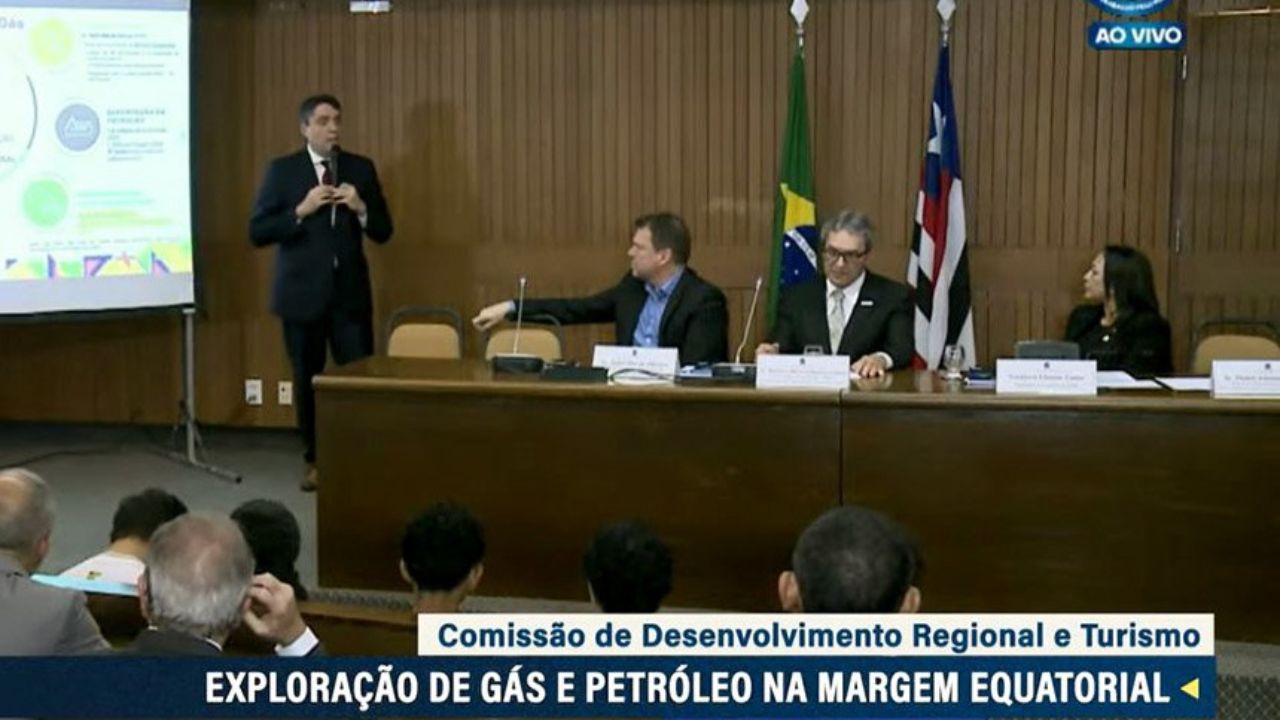
Oil and Gas Exploration in the Equatorial Margin, Including Maranhão, Could Attract Billions in Investment, Generate Jobs, and Transform the Local Economy, According to Experts.
The oil and gas exploration in the Brazilian equatorial margin — a strip that includes the coastline of Maranhão — returned to the center of national discussions this Monday (14), during a seminar held at the Legislative Assembly of Maranhão, in São Luís.
The event, promoted by the Rural Development and Tourism Commission (CDR), brought together authorities, experts, and representatives from the energy industry to discuss the future of the sector and its potential economic and social impacts in the region.
According to participants, the approval of exploration in the equatorial margin could attract investments exceeding US$ 50 billion, generate over US$ 200 billion in revenue, and create thousands of jobs. For Maranhão, this could represent a historic change in its economy.
-
A study confirms that the natural gas sector will reduce greenhouse gas emissions in Brazil by 0.5% and accelerate the energy transition by 2026.

-
Petrobras implements a severe adjustment and confirms a 55% increase in the price of aviation kerosene with a proposal for installment payments for the companies.

-
The rise in oil prices could ensure an extra revenue of R$ 100 billion for the Federal Government, indicates a recent economic study.

-
Naturgy begins an investment of R$ 1.6 million to expand the gas network in Niterói and benefit thousands of new residences and businesses.


Maranhão Could Benefit from Economic Leap and Job Creation
Senator Eliziane Gama (PSD-MA), who led the seminar, enthusiastically supported the initiative, highlighting the transformative potential of oil and gas exploration.
“I am optimistic [about the] exploration of gas and oil, which will forever change the economic reality of the state of Maranhão,” she stated.
The so-called equatorial margin, which stretches from Rio Grande do Norte to Amapá, may contain 10 to 30 billion barrels of oil. Maranhão, strategically located in this area, stands out as one of the major beneficiaries of future exploration.
Pietro Adamo Sampaio Mendes, the Secretary of Oil, Natural Gas, and Biofuels at the Ministry of Mines and Energy, reinforced the federal government’s support for exploration, emphasizing that the initiative could help combat energy poverty and promote social justice.
“There is no incompatibility between oil exploration and production and environmental protection,” he argued.
Mendes also warned that the country could lose up to R$ 3.9 trillion by 2055 if it does not advance with new investments in oil and gas. According to him, it is possible to balance energy development with environmental preservation.
Environmental Licensing is an Obstacle to the Advancement of Exploration
Despite the potential, exploration in the equatorial margin faces obstacles in environmental licensing. According to Maria Abelha Ferreira, superintendent of the National Agency of Petroleum (ANP), 25 exploratory blocks are suspended due to lack of environmental authorization.
“The expectation is that we will see a gigantic increase in energy consumption worldwide, and not necessarily only renewable energies will be able to meet this need,” the superintendent warned.
She advocated for the acceleration of licensing processes, ensuring legal security and sustainability.
Presence of Authorities Reinforces Strategic Importance for Maranhão
The seminar was attended by representatives from Petrobras, the state government, and academic and business institutions. Among them were the general manager of Exploration at Petrobras, Marcos Galvão, and the president of the Maranhão Gas Company, Allan Kardec Duailibe.
All emphasized the need to advance with the responsible exploration of oil and gas in Maranhão, highlighting the benefits for energy sovereignty and the strengthening of the regional economy.
With the potential to transform its economic matrix, Maranhão is facing a strategic opportunity.
If released and conducted with environmental responsibility, oil and gas exploration in the equatorial margin could ensure job creation, increased revenue, and improved quality of life for the population.
While awaiting approval from the Executive, the state continues to mobilize political and institutional forces to ensure that natural resources become synonymous with sustainable development and social inclusion.







Seja o primeiro a reagir!