





 Portuguese
  English
  Spanish
  4 min of reading
  1 comment


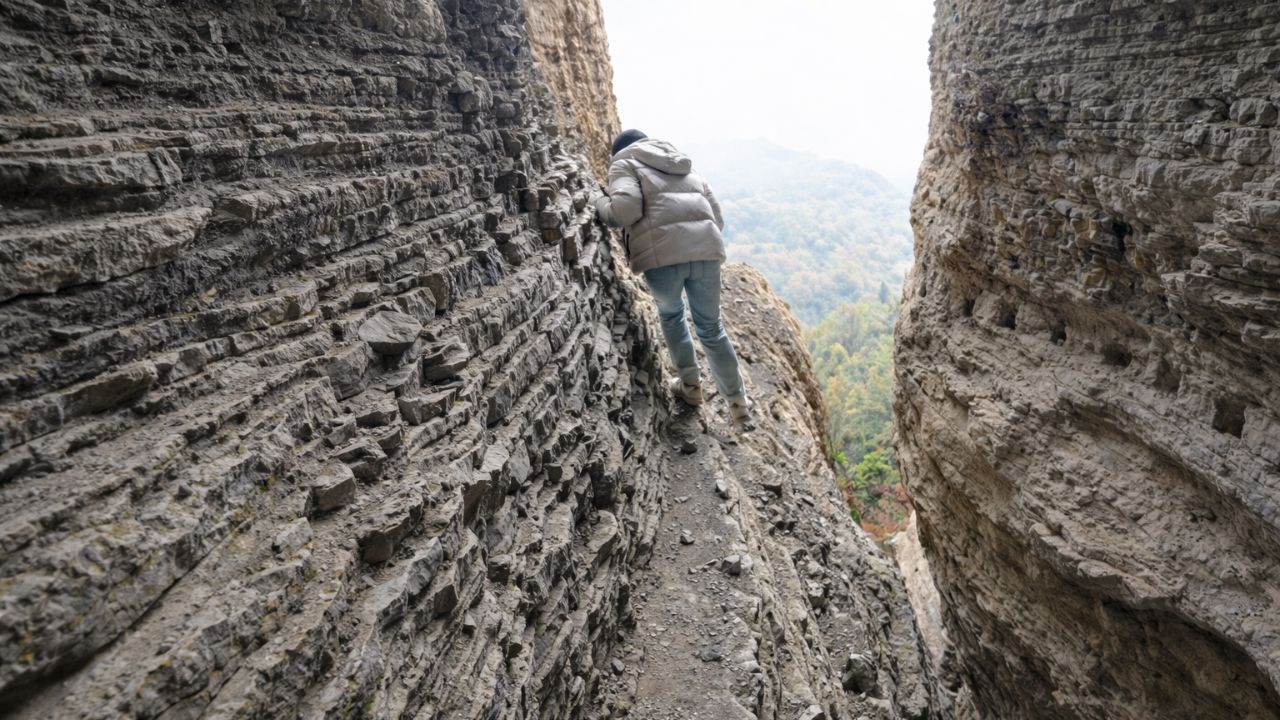


The Ancestral Cave Hidden in Hubei Appears as a Slit in the Vertical Mountain, Holds Historical Vestiges, Incrusted Stone Structures, and a Narrow Path That Seems Made to Test Courage.
If they hadn’t seen it with their own eyes, the team says they wouldn’t believe it. The journey begins in the mountains of Hubei Province, where a nearly perfect cliff, resembling a knife-cut wall, hides a surprise that does not appear to those looking from afar: an ancestral cave hidden in Hubei, nestled in the rock, deep and mysterious.
The shock is not just from the discovery. What truly impresses is the access. To reach the ancestral cave hidden in Hubei, the group faces a narrow trail on the edge of the cliff, stone steps carved into the mountain, and stretches suspended over an abyss that forgives no mistakes.
A Vertical Cliff and an Entrance That Looks Like a Slit in the Rock
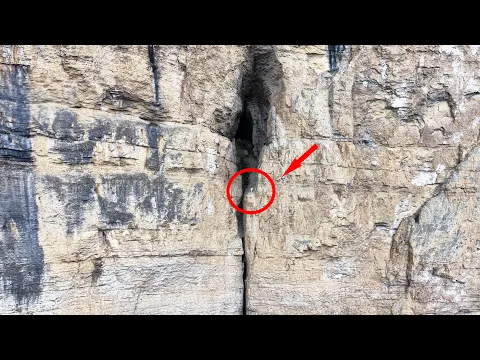

The entrance to the cave is described as a slit that advances into the face of the cliff. From a distance, the place goes unnoticed. Only when the camera gets close does the wall “open” and reveal the passage.
-
The Argentine government celebrates the lowest poverty rate in 7 years, but experts warn that the methodology has changed, real wages have fallen, unemployment has risen, and the number of people on the streets of Buenos Aires has increased by 57% since Milei took office.

-
7.8 magnitude earthquake in Indonesia frightens the population, triggers tsunami alert, and hits an island with over 200,000 inhabitants this Thursday.

-
Google will finally let you change that embarrassing Gmail address you created in your teenage years without losing any accounts, logins, or old emails: the feature is already available in the United States.

-
Heading to Brazil in a Bonanza F33 single-engine aircraft: a couple departs from Florida on a visual flight, makes technical stops in the Caribbean to refuel and organize paperwork, and begins the staged crossing until they reach the country.


According to reports, the sensation is one of immediate mystery. The cliff acts as a natural barrier, completely isolating the site from the outside world and leaving the impression that the mountain has kept it hidden on purpose.
The Tujia Legend and Historical Records Linked to the Cave
Local residents associate the site with the Tujia people and claim that it was once home to a revered figure, King Xiang, mentioned as a hero in folklore. The cave is called Baiyan Cave, and within it, there are traces of human habitation and stone walls.
The text also mentions historical records that link the site to events during the Jiaqing period of the Qing Dynasty, when troops from the White Lotus Rebellion are said to have been stationed there.
It is this type of detail that transforms the cave into more than just a landscape, as it fits the place into a narrative of memory and survival.
The Deadly Trail Suspended Over the Abyss to the Ancestral Cave Hidden in Hubei

Getting close is already difficult. In some sections, the path is so narrow that it forces one to walk right on the edge of the cliff, with loose gravel and parts crumbling.
The team comments that the route seems little used and would be nearly impossible to locate without help from locals.
Then comes the most tense part. Stone steps appear that seem hand-carved, an improvised wooden bridge, stretches completely suspended in the air, and spots where “there is nowhere to place your feet,” requiring support in mid-step.
The constant sensation is of hanging in the void, with the abyss right below and the risk of falling rocks at any moment.
Structures of Incrusted Stone in the Mountain and Signs of Ancient Construction
Along the way, the camera shows walls and stone mounds embedded in the rock, as if the site had once been a larger structure.
There are observations of grooves on the sides of the cliff, interpreted as marks that could have supported beams or parts of ancient constructions.
On the outside and in the surroundings, the team also sees areas that seem like walkways along the edges of the cliff, broken parts, and observation platforms.
What remains indicates that the original scale may have been much greater than the current ruins suggest.
Inside the Cave: Sign, Incense, Dripping Water, and Heavy Mud
Inside, the group finds a sign with an inscription associated with a “divine position” linked to Xiang Wang, and an incense burner that, according to interpretation, may have been used by residents of nearby villages.
The cave is described as large and humid, with water dripping from various points, forming puddles, mud, and a slippery floor.
The exploration advances to a part where a wooden ladder emerges, but it is broken. The team hears a rumble and hypothesizes about an underground river further ahead.
Even so, they decide not to enter because they are not speleology experts and consider the risk high. Caution becomes a rule inside the cave, as a wrong step could lead to tragedy.
The Final Warning About the Real Danger of the Place

Upon exiting, the report reinforces that beauty and danger coexist. There is mention of the risk of falling gravel and the unstable nature of certain stretches, as well as signs of wildlife presence.
What remains is the image of a rare place: the ancestral cave hidden in Hubei, embedded in a thousand-meter-high cliff, with legends, human marks, and a path that seems to have been built “piece by piece” up the vertical mountain.
Would you have the courage to face the suspended trail to see up close an ancestral cave hidden in Hubei, or would you just watch from afar through the camera?








Muito bacana e emocionante, o mundo é pra ser desbravado e parabéns aos bravos.