





 Português
  Inglês
  Espanhol
  2 min de leitura
  0 comentários


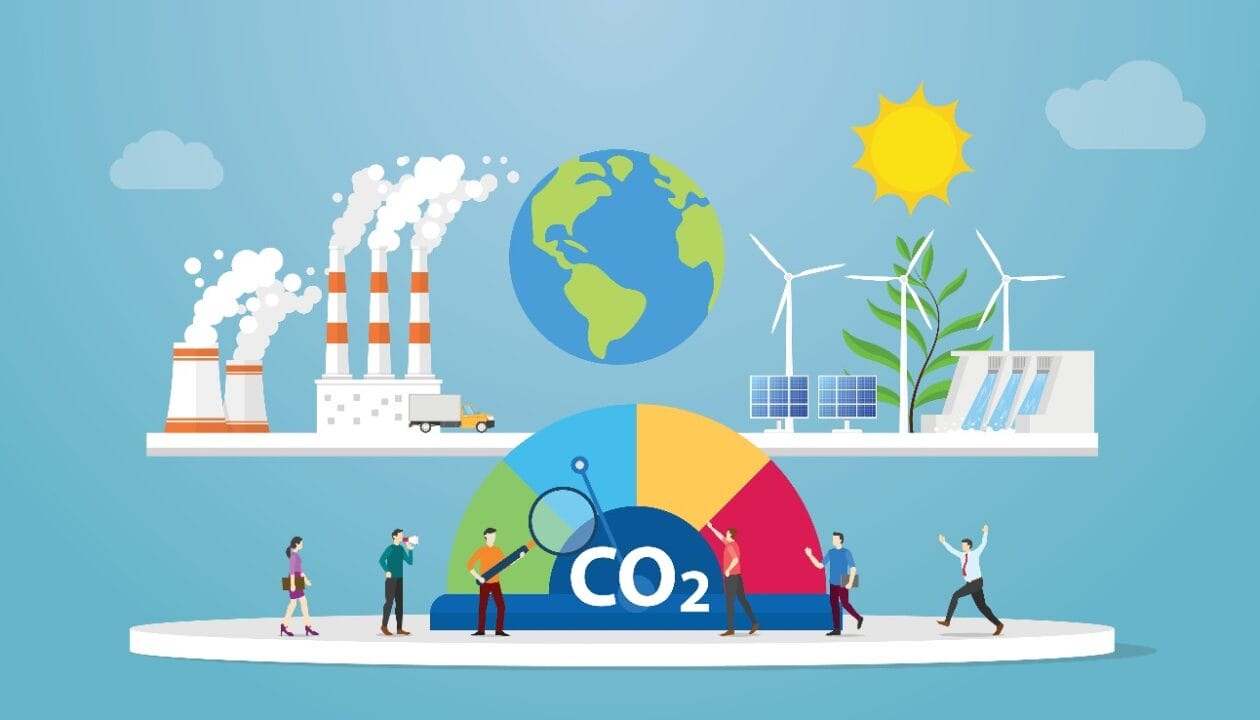
The Transformative Impact of the Carbon Market in Brazil
Brazil, under the imminent presidential sanction of Bill No. 412/2022, is about to experience a significant transformation in the carbon market. According to Marcelo Sarkis, Risk Superintendent at Banco BV, this legislative change aims to set limits on carbon dioxide (CO2) emissions by companies. Approved by the Federal Senate and awaiting presidential sanction, the bill promises to place Brazil at the forefront of environmental regulation. It’s not just about mitigating gas emissions, but also about discovering substantial economic opportunities.
Understanding the Carbon Market and Its Objectives
The carbon market, a mechanism designed to offset greenhouse gas (GHG) emissions, creates a system for buying and selling carbon credits. One credit is equivalent to one ton of gas. Companies that reduce their emissions below the established limit can sell the excess credits to other organizations or governments that need to meet GHG reduction targets. The first step to participating in this market is to calculate the company’s carbon footprint, followed by implementing strategies that result in credits for trading.
Strategies for Emission Reduction and Capture
To reduce or capture CO2 emissions, companies can invest in renewable energy projects, energy efficiency, reforestation, or even advanced carbon capture technologies. It is essential that credit-generating projects undergo a rigorous verification process, ensuring the authenticity and quality of carbon credits.
-
Found in one of the most radioactive places on Earth, this Chernobyl fungus may be doing something with radiation that no one has been able to explain to this day.

-
A bright yellow mushroom imported from Asia escaped from a cultivation farm in the United States in 2010 and is now aggressively spreading across 25 states, destroying entire communities of native fungi in American forests.

-
Buried under China, a colossal machine weighing 20,000 tons began operating as the largest neutrino detector on the planet and, in just 59 days, surpassed results that science took half a century to achieve.

-
Iran enters the center of a climate alert after the war emitted 5.6 million tons of CO2 in two weeks, surpassing the annual pollution of entire countries.


The Financial Market and the Trade of Carbon Credits
The buying and selling of carbon credits follows a process similar to that of commodity trading in the financial market. Like any financial asset, the price of carbon credits is influenced by the relationship between supply and demand. Some companies are already anticipating and voluntarily acting by purchasing credits to offset their emissions.
The Transformations of the Carbon Market in Brazil
With the approval of the bill by the Federal Senate, Brazil is moving towards more sustainable practices, even with the exclusion of agribusiness from regulation. The proposal, after an agreement with the Parliamentary Front of Agriculture, excluded agricultural production and indirect emissions from input production from the SBCE regulation. To comply with the new legislation, companies will need to reduce their emissions or acquire carbon credits. This new market, full of potential, is emerging as a driving force for a more sustainable future.
Source: Marcelo Sarkis is the Risk Superintendent (Credit, Market, Liquidity, Socio-Environmental, Integrated, and Capital) at Banco BV.







Seja o primeiro a reagir!