





 Portuguese
  English
  Spanish
  3 min of reading
  0 comments


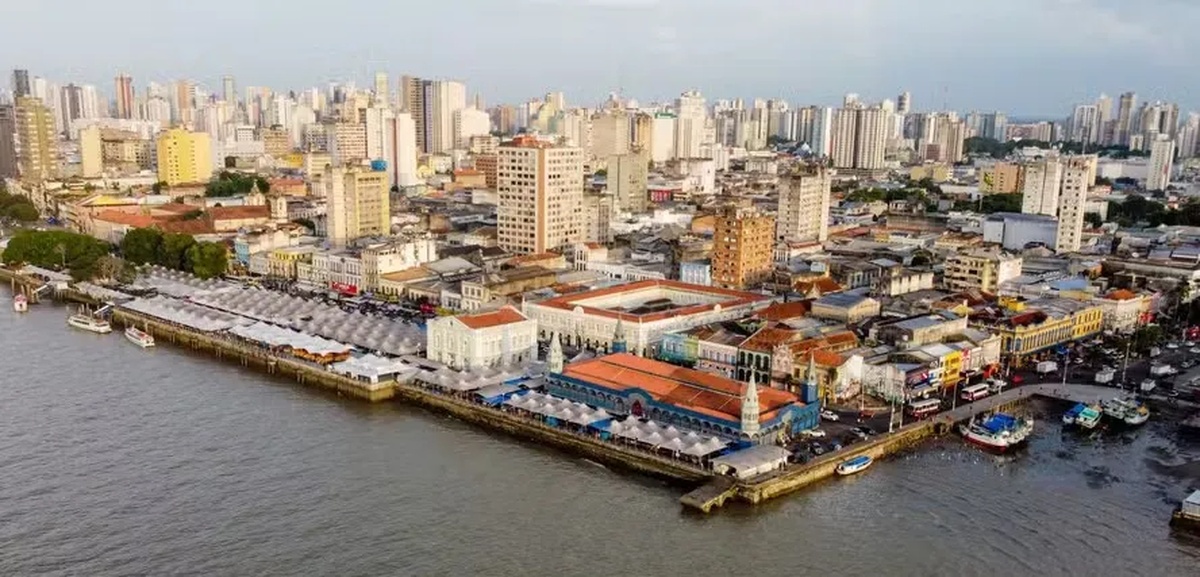
Delegations Push for Venue Change After Daily Rates Increase Up to Tenfold
International representatives formally requested the relocation of the COP30 from Belém, Pará. The reason was the significant increase in accommodation prices.
According to diplomat André Corrêa do Lago, president of COP30, some daily rates reached nearly ten times the normal value.
The statement was made on July 31, 2025. The event took place during a meeting with the UNFCCC, the United Nations Framework Convention on Climate Change.
-
Embrapa’s discovery reveals an unexpected advancement by allowing the production of seedlings from the caatinga using brackish water, opening a new frontier for farmers to face drought more efficiently.

-
6 sources of free fertilizer that you are throwing away every day and can transform your garden without spending anything.

-
With a water crisis on the radar, Sabesp invests in reclaimed water for data centers and transforms sewage treatment into a solution that saves millions of liters and protects public supply.

-
Foresea achieves 100% offshore waste reuse in 2025, eliminates landfill disposal, and consolidates sustainable strategy with 1,500 tons recycled.

Representatives from the federal government, the State of Pará, and agencies involved in organizing the conference were present.
Countries Denounced Excessive Prices
During the event, various nations publicly expressed their dissatisfaction with the prices. Several international delegations deemed the increase in daily rates disproportionate.
According to Corrêa do Lago, representatives from different regions requested the conference’s venue change. Belém’s hotel sector received the criticism.
While other COP editions recorded prices up to three times higher, in Belém, the daily rates increased by up to 1,000%.
Corrêa do Lago explained that Brazilian legislation does not allow for price controls. Therefore, the only option is to negotiate with hotels.


Developing Countries Lead Complaints
Although criticism came from all sides, the harshest remarks were from nations with lesser economic power, such as Haiti, Ethiopia, Maldives, and Nepal.
On the other hand, powers like China, India, and the European Union also expressed concern about the situation, especially regarding the failures in accommodating complete delegations.
In addition, logistical difficulties increased tensions among representatives, which hampered negotiations during the event.
Corrêa do Lago stated that, despite prior warnings, there was outrage over the insensitivity to the limitations faced by less developed countries.
Thus, he emphasized that prices directly impacted negotiations and created additional obstacles to international dialogue.
Even with organizational efforts, the high costs made full participation by many developing nations unfeasible.
Consequently, this has seriously concerned organizers, who are now seeking ways to mitigate the issue in future conferences.
Government Presents Fixed-Rate Accommodation Plan
In response to the criticisms, the Extraordinary Secretariat of COP30 presented an emergency plan to Poder360. The measure aims to keep the conference in Belém.
The team developed the proposal in conjunction with the UN and prioritizes delegations involved in official negotiations. The focus is on equitable participation.
According to the government, the plan provides 2,500 individual rooms with rates between US$ 100 and US$ 600. The prices were fixed to avoid abuse.
The structure was organized as follows:
- 15 rooms per delegation for 73 least developed countries (LDCs) and small island developing states (SIDs), with rates between US$ 100 and US$ 200;
- 10 rooms per delegation for other countries, with daily rates set between US$ 220 and US$ 600. The criterion was defined to enhance access.
The government stated that the measure aims to contain the crisis. In addition, it seeks to guarantee minimum conditions for holding COP30 in Brazil.
August Meeting May Determine COP30’s Fate
In light of the deadlock, a new meeting was scheduled for August 11, 2025, to discuss feasible alternatives.
Moreover, the meeting will continue negotiations on accommodation, security, transportation, and meals, as these points are essential for the climate event.
Therefore, discussions will seek to ensure the conference’s permanence in Brazil, while the adherence of delegations will be decisive for the final outcome.
However, it remains to be seen whether the proposed solutions will convince the countries most affected by exorbitant prices, as the fate of COP30 remains undefined.










Seja o primeiro a reagir!