





 Portuguese
  English
  Spanish
 4 min of reading
  0 comments


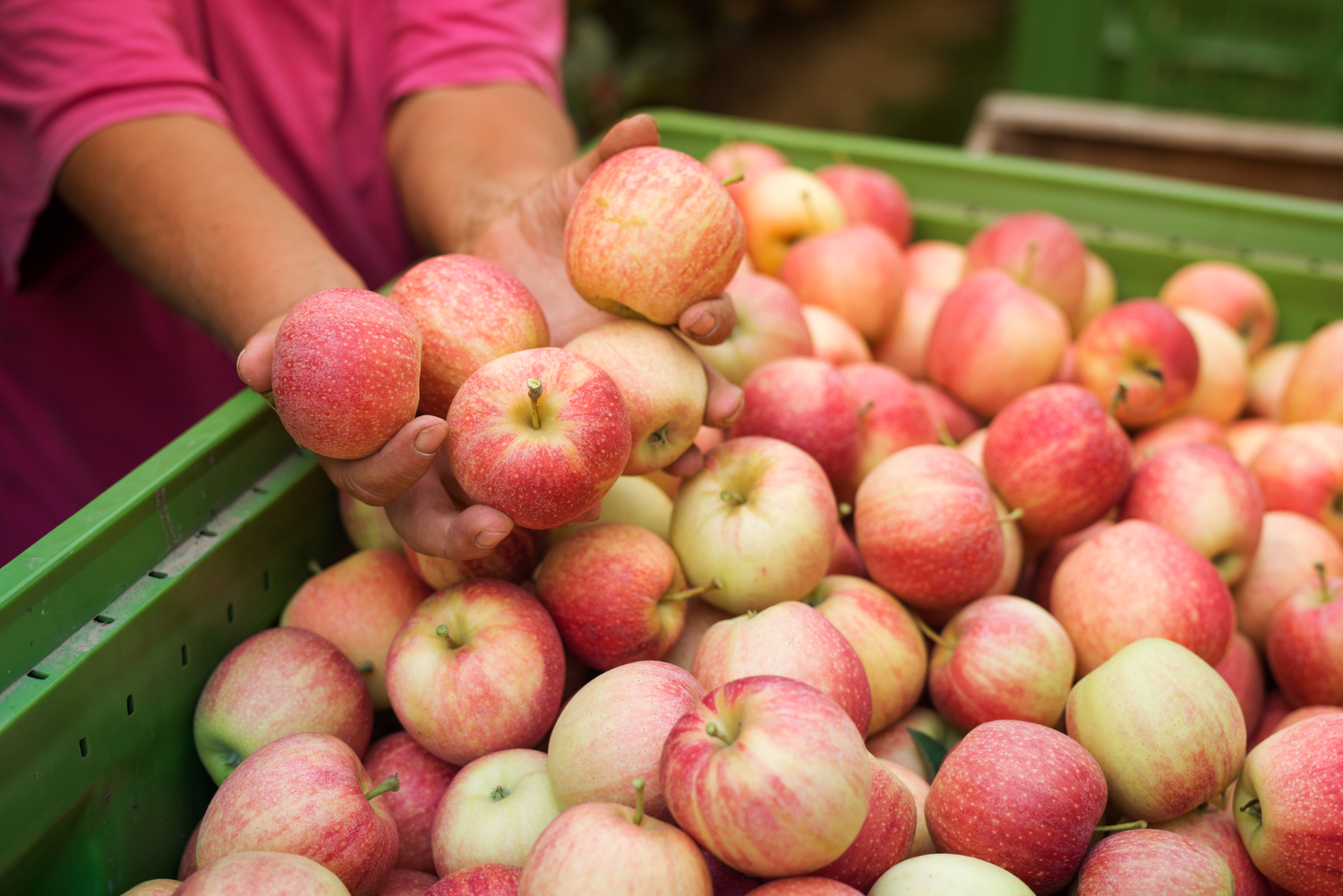
Research By Epagri Allows Export Of High-Quality Apples. Varieties Fuji And Gala, Budding Induction Technology And Post-Harvest Management Increase Productivity, Making Santa Catarina Stand Out As The Largest Producer, Generating Jobs And Income For Thousands Of Families
The export of apples is now a consolidated reality in Brazil, but this path was only possible thanks to the intense work of Epagri’s research over five decades, according to a report published.
Santa Catarina and Rio Grande do Sul, with the cold climate necessary for the blooming and fruiting of apple trees, have become strategic poles of national production.
Before the 1980s, the country depended almost exclusively on imports of the Red Delicious variety, known as “Argentinian apple”.
-
While Russia dominates the global wheat market, Brazil emerges as an unexpected competitor in the Cerrado, offering grain available in July and August when stocks in the Northern Hemisphere are at their lowest point of the year.

-
China returned almost 20 Brazilian ships with soybeans, but now everything could change: the country that buys 80% of the grain is considering relaxing regulations after impurities held up shipments of thousands of tons and caused million-dollar losses.
-
The drought of the cerrado was considered an enemy of wheat, but Brazilian scientists turned the lack of rain into a competitive advantage by creating a grain with quality that is already attracting the attention of international mills around the world.
-
THE OWNER of Brazil: a farmer who came from laundries, created an ’empire’ and today runs a company valued at R$ 42 billion after tripling its value in less than a year and receiving a billion-dollar investment from the USA.


The scientific effort to adapt and develop new cultivars completely changed this scenario, making Brazil self-sufficient in the production of high-quality apples and transforming it into an exporter, with fruits well-regarded throughout Latin America and the Middle East.
Epagri’s work was not limited to the field: it involves genetic improvement, plant propagation technologies, development of rootstocks, management of denser orchards, and disease control.
Each advance contributed to producing fruits of better quality, easier to manage, and with high productivity.
Today, more than one million tons of apples are produced annually, with highlights on the Fuji and Gala varieties, mainly grown in Santa Catarina and Rio Grande do Sul, ensuring internal supply and surplus for export.
Diversification Of Fuji And Gala Varieties Adapted To The Santa Catarina Climate Boosts Apple Export
One of Epagri’s main assets was the introduction of more than 500 foreign varieties, assessing their adaptation to Santa Catarina’s conditions.
From these studies emerged the Fuji variety, originating from Japan, and Gala, originating from New Zealand, which became the most produced in the country.
Additionally, three varieties developed by Epagri, identified with the Sambóa brand, are also grown in other countries.
The work involved years of research to find combinations that balanced productivity, resilience, and flavor, essential to meet domestic and international market demands.
The development of cultivars adapted to Brazilian conditions reduced dependence on imports and allowed the country to start exporting high-quality apples from 1998, the year exports surpassed imports for the first time.
Budding induction and post-harvest technologies ensure quality and competitiveness in apple export.
Another decisive advance by Epagri was the technology capable of compensating for the lack of cold in imported apple trees.
Even in Southern Brazil, natural cold is not enough to induce proper dormancy in plants, and the application of budding induction techniques made it possible to produce more than a million tons of apples annually.
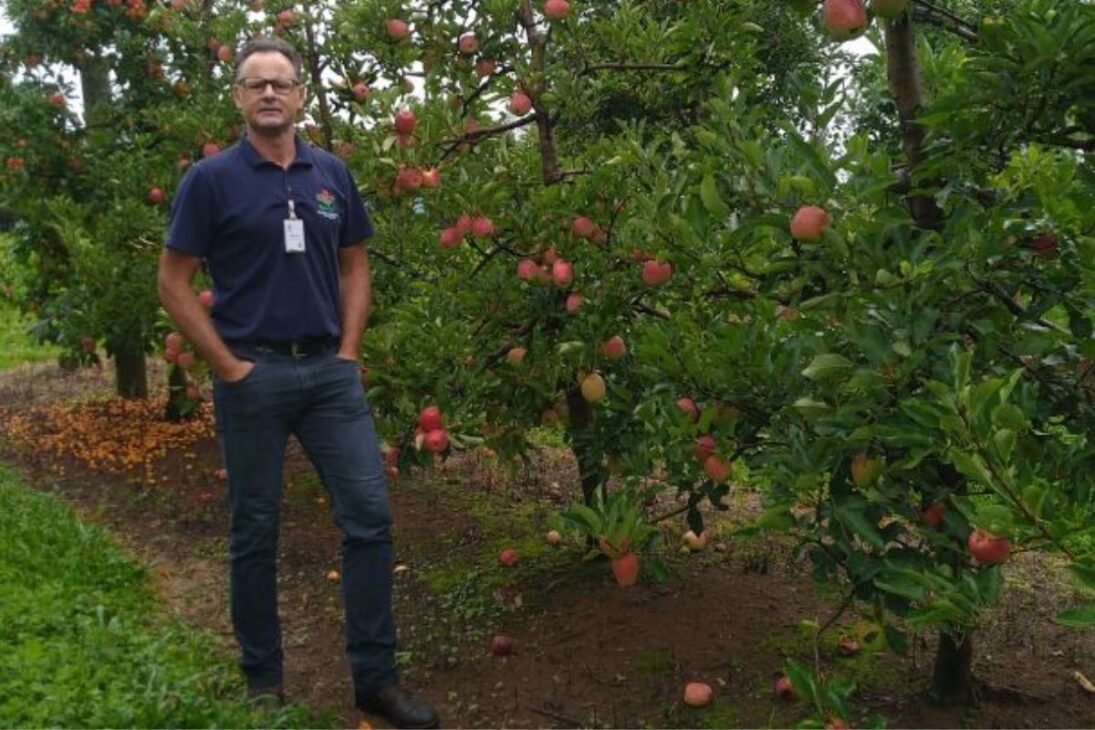
Additionally, Epagri invested in post-harvest technologies, phytopathological and entomological management, and ecophysiology, ensuring fruits with intense coloration and sweet flavor, essential attributes to conquer demanding markets.
These practices have allowed Brazilian apple export to consolidate, raising quality standards and strengthening the image of Santa Catarina fruit in the international scene.
Production In Santa Catarina, Productivity Data, And Economic Impact Of National Apple Export
Santa Catarina is the largest producer of apples in the country, with about 51% of national production, followed by Rio Grande do Sul, with 46%.
The 2024/25 harvest of the state reached over 482.2 thousand tons, with Gala responsible for 40.7% and Fuji for 57.3%. In 2023, Santa Catarina’s exports accounted for 43.7% of the total Brazilian, moving US$ 24.11 million.
The gross value of Santa Catarina’s production reached R$ 63.98 million, while the national total amounted to R$ 1.09 billion, equivalent to 1.7% of the gross value of agricultural production.
The cultivation of apples also generates significant employment, with about 200 thousand jobs directly and indirectly in Brazil, half of them in Santa Catarina.
Cities like Fraiburgo and São Joaquim exemplify the social impact: Fraiburgo stands out for modern corporate orchards, while São Joaquim hosts small producers organized in cooperatives that strengthen family farming.
Genetic Diversification, Climatic Challenges, And Innovation As Pillars Of The Future Of Apple Export
Despite the success in apple export, the sector faces significant challenges. The concentration on two varieties, Fuji and Gala, creates climatic vulnerability and genetic limitations, making production susceptible to temperature variations, pests, and market fluctuations.
Another critical factor is the decrease in available labor over the past twenty years, while labor costs are rising.
The future of Santa Catarina and Brazilian apples depends on the continuity of innovative research that promotes genetic diversification, sustainable management, and climatic technologies, ensuring consistent productivity and quality.
Epagri is already developing cultivars adapted to Brazilian conditions, such as SCS425 Luiza, which is even cultivated abroad. The strategy is to reduce economic dependence on a few varieties and minimize risks associated with climate change and labor shortages.
According to Marcus Vinicius Kvitschal, genetic improvement researcher at Epagri, the virtuous cycle of science and production transformed a previously imported fruit into a symbol of national quality and strength in the global agribusiness.
The combination of genetic improvement, technological innovation, efficient management, and public incentive policies will continue to be essential for keeping Brazil among the world’s top apple exporters.








Seja o primeiro a reagir!