





 Portuguese
  English
  Spanish
  4 min of reading
  0 comments


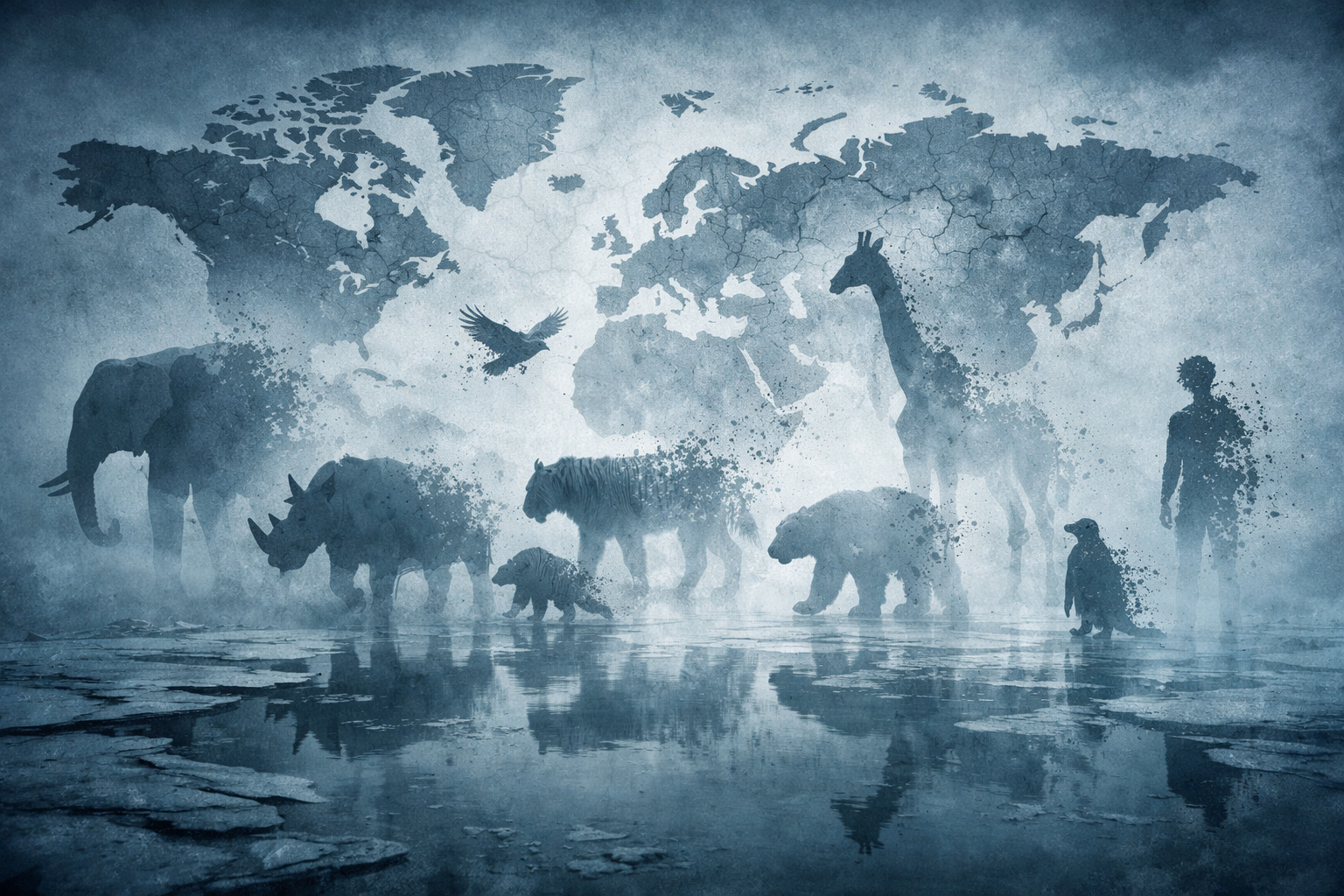
International Report Reveals Official Disappearance of Birds, Mammals, and Invertebrates and Reinforces That the Current Environmental Crisis Is Eliminating Species Before Humanity Even Recognizes Their Existence
The extinction of species in 2025 is no longer a distant projection and has definitively integrated global scientific records. According to the International Union for Conservation of Nature (IUCN), at least six animal species have been officially declared extinct this year, a milestone that highlights the accelerated pace of biodiversity loss on the planet. More than just numbers, each confirmation represents the irreversible end of a unique evolutionary trajectory.
Since 1964, the IUCN Red List has served as the primary thermometer of global conservation, compiling data on animals, plants, and fungi across all continents. For this reason, extinction is not declared hastily. For a species to receive this status, decades without reliable records are required, even after extensive searches in their historical habitats. Once a name enters the final list, there is no return possible.
-
With earth, bamboo, straw, and lime mortar, a specialist builds a house for just over $460 and draws attention for its cost being much lower than traditional construction.

-
Rodrigo de Freitas Lagoon advances in environmental recovery with sanitation, elimination of irregular sewage, and the resumption of water sports in Rio de Janeiro.

-
Sustainable housing gains strength with a nationally awarded project in Campo Grande, highlighting innovative solutions that combine sustainability, urban integration, and efficiency in the use of natural resources.

-
City Where Residents Live Underground to Escape 52°C May Be a Picture of the Future on an Increasingly Hot Planet


Currently, over 48,600 species are threatened with extinction, which corresponds to 28% of all assessed species worldwide. This scenario becomes even more severe when examining specific groups, such as reef-building corals, which exhibit risk rates higher than the global average. Thus, the confirmation of extinctions in 2025 does not arise as an isolated event but as part of a continuous and concerning trend.
Where Life Has Silenced Forever

Among the species declared extinct is the slender-billed curlew, a migratory bird that for centuries traversed regions of Eurasia and North Africa. With habits linked to wetlands and coastal areas, the species suffered greatly from habitat loss, human pressure in wintering areas, and indiscriminate hunting. The last confirmed record occurred in the mid-1990s. Since then, only silence.
Another symbolic disappearance involves the Christmas Island shrew, a small insectivorous mammal endemic to an Australian island. Last seen in the 1980s, the species succumbed to a combination of lethal factors, such as invasive species, introduced diseases, and the progressive alteration of the natural environment. Despite its unobtrusive nature, its absence marks a local collapse of ecological balance.
Additionally, Australia accounts for a significant portion of these recent losses. The IUCN also confirmed the extinction of three species of bandicoots, small nocturnal marsupials that are highly specialized. Although they have survived for thousands of years in extreme climates, they could not withstand the arrival of introduced predators, habitat fragmentation, and the accelerated changes in the landscape. It is no coincidence that the continent ranks among the global leaders in modern mammal extinctions.
The Invisible Impact on Oceans
The 2025 list also includes a marine invertebrate, the Conus lugubris, a cone snail unique to the coasts of Saint Vincent in Cape Verde. The last confirmed sighting dates back to the 1980s. Its extinction occurred mainly due to coastal habitat destruction, a recurring issue in islands and coastal regions under intense urban and tourist pressure.
Although less visible to the general public, marine invertebrates play essential roles in ocean ecosystems. They contribute to the balance of food chains, nutrient cycling, and the maintenance of local biodiversity. Still, they often disappear away from the spotlight, being recognized only when they no longer exist.
This information was released by the IUCN, according to official data from the Red List, and reinforced by analyses published in technical reports and international scientific communications throughout 2025.
What These Extinctions Say About the Future
The IUCN has been warning for decades that the current extinction rate is much higher than the natural rate, being driven almost exclusively by human activities. Among the main drivers are habitat destruction, the introduction of invasive species, overexploitation of resources, pollution, and climate change.
Moreover, many extinctions occur silently, without impactful imagery or immediate mobilization. Small mammals, rare birds, amphibians, and invertebrates often vanish before they even enter public debate. However, each loss weakens the functioning of entire ecosystems.
Therefore, the confirmation of the six extinctions in 2025 serves as a definitive warning. The planet is not only losing species but also essential ecological services vital for human survival. What seems distant today may, tomorrow, become an irreversible void.
How Many Species Must Still Disappear for Humanity to Realize That Protecting Biodiversity Also Means Protecting Its Own Future?










-

-

3 pessoas reagiram a isso.