





 Portuguese
  English
  Spanish
  3 min of reading
  0 comments


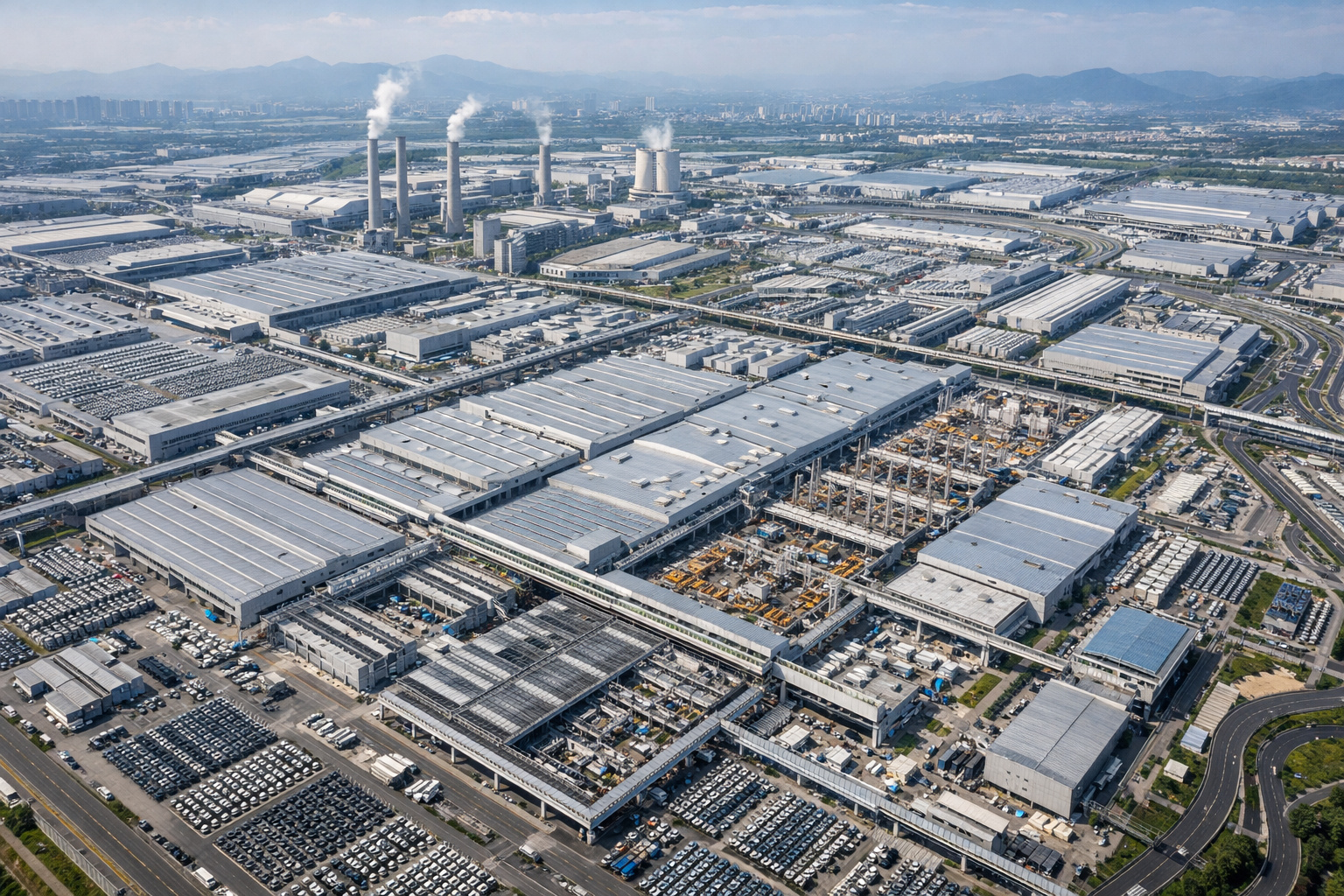
Installed in Zhengzhou, the BYD megafactory occupies 10.67 km², assembles 12 models simultaneously, and symbolizes Chinese advancement in the global electric vehicle market
The largest car factory in the world is no longer just an industrial symbol; it represents a new era of global electric mobility. Located in Zhengzhou, in Henan province, China, the BYD megafactory occupies an impressive 10.67 km², an area equivalent to more than 70 Maracanã stadiums. In addition, it currently employs about 57,000 workers and operates with a level of automation that redefines the standards of the global automotive industry.
This information was disclosed by specialized reports in the automotive sector and reinforced by content published on social media, including a video by influencer Felipe Fera on TikTok, which showed internal details of the industrial complex.
While many automakers face cost and logistical challenges, BYD bets on a highly strategic model. The company adopts vertical integration as a central pillar of its operation, producing internally about 70% of the vehicle components, including motors, batteries, and comfort systems. This way, the company reduces reliance on external suppliers and increases control over quality and costs.
-
With 74% of companies facing difficulties in hiring, technicians and engineers in renewable energy are becoming scarce in Brazil and are essential to support the expansion of solar, wind, and green hydrogen projects.

-
Historic bankruptcy of Centauro shocks the market, and the century-old company puts more than 500,000 products, machines, and complete infrastructure up for online auction.

-
New shoe factory in Ceará is expected to create 400 jobs and strengthen the local economy.

-
No one imagined it, but a mixture of sawdust with a mineral that fights fires surprises scientists with a result that changes the course of fire-resistant construction.


Moreover, the factory impresses with its level of automation. Robots perform approximately 98% of the productive tasks. In the welding area alone, nearly 2,000 robots work in coordination, ensuring precision and industrial standardization.
Vertical Integration and Automation Drive Record Efficiency in Electric Vehicle Production
The strategy of BYD is not just to produce more, but to produce better and with greater efficiency. Unlike many global competitors that heavily rely on outsourced supply chains, the Chinese automaker centralizes its production. Consequently, it manages to reduce logistical bottlenecks and speed up processes.
This approach allows the megafactory to assemble up to 12 different models simultaneously. The production lines are flexible and adaptable, which strengthens the company’s international competitiveness. Thus, BYD can quickly respond to global market demands.
Furthermore, the industrial environment was designed to combine advanced technology and safety. Industrial presses are protected by acoustic cabins, creating a quieter and more controlled environment for the human operators who remain on the production line.
Not by chance, BYD’s rise is directly linked to the growth of the Chinese automotive market. Since 2009, the Chinese government has invested over US$ 230 billion to stimulate the electric vehicle sector. As a result, in 2023, the country surpassed Japan and took the lead in global automobile exports.
Currently, China has 46 manufacturers dedicated to the development and export of electric vehicles. This competitive and innovative scenario further strengthens BYD’s strategic positioning.
Industrial City Consolidates Chinese Leadership in Sustainable Mobility
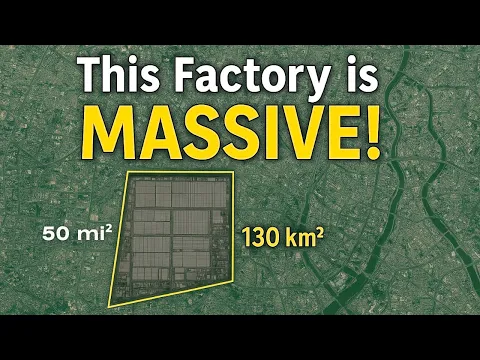

The BYD factory in Zhengzhou is not just a production unit; it is a true industrial city. With 57,000 employees, the complex operates as a technological ecosystem focused on sustainable mobility.
In addition to production volume, the focus on sustainability and innovation stands out. The strong automation reduces waste, improves energy efficiency, and maintains strict quality standards. Therefore, the megafactory has become an international reference in electric mobility.
The growth of Chinese exports, in turn, demonstrates how the national strategy has paid off. The billion-dollar investment initiated in 2009 laid the foundations for a robust and highly competitive industry. Consequently, China has consolidated its global leadership in the electric vehicle segment.
The next steps indicate continuous expansion. The technological infrastructure is expected to broaden, new electric models should emerge, and the global presence of Chinese automakers is likely to grow even more. In this scenario, factories like BYD’s will be central to meet the international demand for sustainable vehicles.
In summary, the largest car factory in the world symbolizes a structural transformation in the automotive industry. What was once dominated by traditional powers now has a new industrial epicenter: China.
Do you believe Brazil could develop an industrial complex of this size to compete in the global electric vehicle market?








-

Uma pessoa reagiu a isso.