





 Portuguese
  English
  Spanish
  9 min of reading
  0 comments


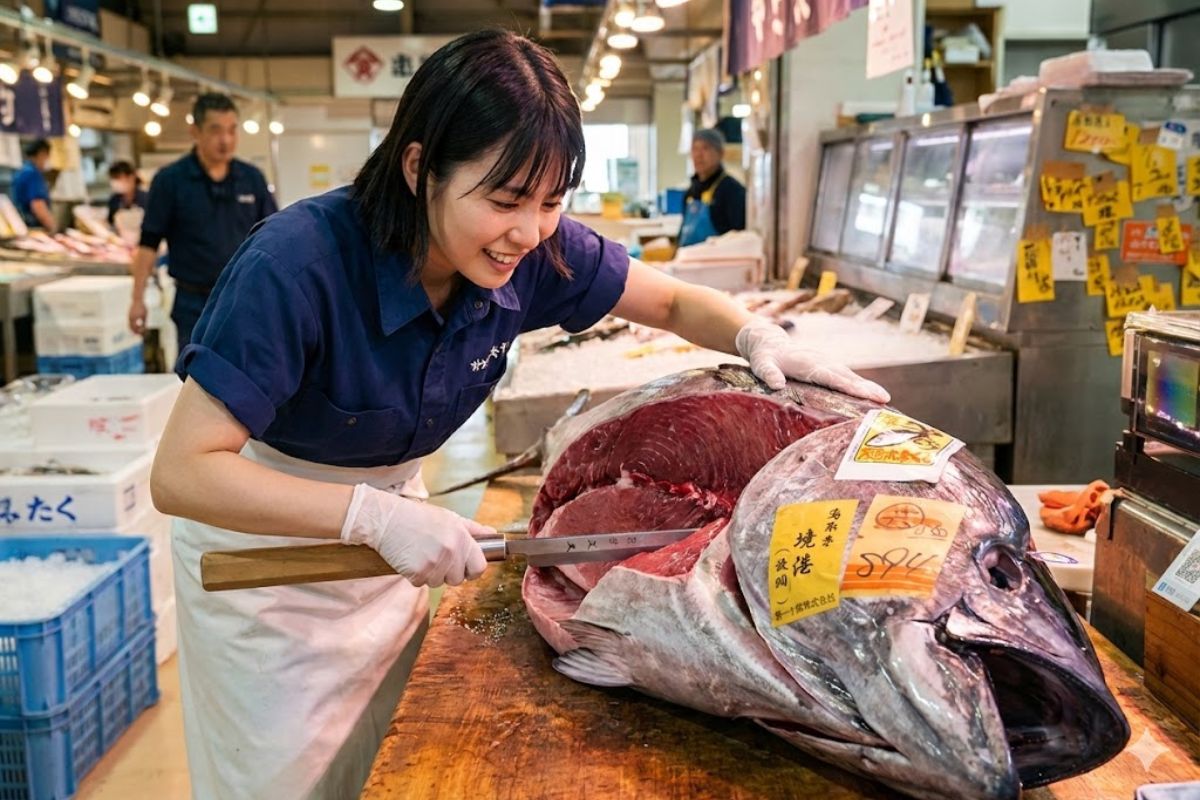
At Tsukiji Market in Tokyo, Newly Arrived Tuna from Toyosu Are Opened with a Saw, a Two-Person Long Cut, and a Spoon Scraping the Nakaochi. The Audience Crowds at the Counter, Buys, Tastes Right There, and Sees Cuts Like Nōten Disappear Before Lunch in a Quick Ritual.
What Seems Like Just Another Fish Display in Tsukiji Becomes, in Practice, a Precision Show Around Tuna Giants: Long Blades, Saw, Micrometer Cuts, and a Crowd Arriving Early to Secure Portions That Rarely Appear in Regular Restaurants.
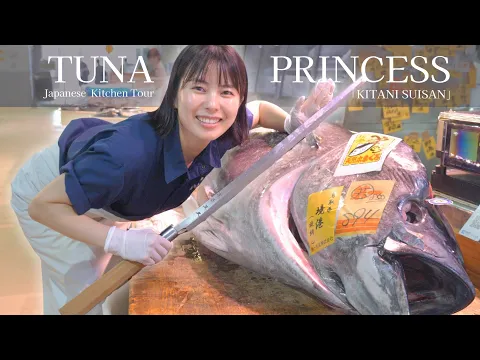
The Stage for This Routine Is Kitani Suisan, Where Rina, a Known Figure Among Customers and Colleagues, Transforms the Opening of Tuna into a Rite of Technique and Rhythm. Amidst the Tight Counter, Daily Orders, and Rare Cuts, What Disappears in Minutes Is Also the Distance Between Market and Plate.
The Morning Begins Before the Sun and Ends When the Line Disappears

The Routine That Culminates in the Crowded Counter Does Not Start at Lunchtime. It Begins When the City Is Still Dark and Many People Are Coming Home, Not Going Out. Rina Describes Days When She Arrives Around 4 AM and Others When She Is at Work at 3 AM, Because the Window for Purchasing, Preparing, and Selling Fresh Tuna Is Short and Requires Synchronization.
-
From sertanejo star to international investor: Ana Castela invests millions in a mansion in the USA, creates a themed accommodation in Orlando, and shows that the “boiadeira” also wants to grow away from the stage.

-
The 10 most stunning motorhomes in the world: a $3 million trailer with a rooftop nightclub and garage for a Ferrari, “palaces on wheels” with Italian marble, private cinema, and five-star hotel luxury for billionaires.

-
Trump wanted to spend $400 million on the White House, but the courts prohibited the million-dollar construction.

-
How the Egyptians erected giant structures like pyramids, temples, and obelisks without modern technology, cranes, or engines still amazes the world and reveals the power of engineering based on ramps, levers, ropes, and colossal organization.



Before Any Knife Touches the Fish, There Is What the Public Does Not See: Order Checking, Defining What Needs to Be Set Aside, Which Cuts Go for Quick Sales, and Which Become Immediate Preparations. Haste Is Not Rush; It’s Logistics. And, in a Market Where Freshness Is a Silent Argument, Each Delay Alters the Flow at the Counter.
Toyosu Supplies, Tsukiji Stages: How the Tuna Reach the Counter

Purchasing Tuna Happens in Toyosu, the Market That Concentrates Much of the Supply and Where the Scale Impresses Even Those Who Have Seen All Kinds of Fish. There, It Is Not Enough to Just Look.
It Requires Instinct, Knowledge of Species, Reading Texture, Color, and Fat Content, and a Practical Evaluation of What Makes Sense to Bring to Tsukiji That Day.
When the Selection Ends, the Tuna Is Loaded and Follows by Truck. On the Return, the Team Fits in Breakfast When Possible, Because the Heavy Work Comes After.
It Is on This Path That the “Show” Is Already Decided: If a Large Tuna Enters the Store, the Counter Feels It; If a Smaller One Enters, the Rhythm Changes and Cuts May Happen More Frequently. The Rule Is Not Aesthetic; It Is Availability.
The Cut Is Technique, Not Strength: Why the Blade Commands More Than the Arm

Those Who Watch from Afar Often Imagine That Opening Tuna Weighing Over 100 Kg Is an Exercise in Raw Strength. Rina Contradicts This Impression with a Detail That Changes Everything: The Strength Appears for a Fraction of a Second; the Rest Is Technique. The Blade Enters, Follows the Bones, Respects the Anatomy of the Fish, and Mainly, Avoids Waste.
The Process Involves Different Tools and Well-Defined Functions. There Is the Long Blade That Requires Two People to Handle It Safely and Precisely, and There Is a Sturdier Knife Used for Dealing with More Resistant Parts, Such as Cutting Bones or Skin. In Parallel, the Saw Comes in When the Size of the Tuna Requires Controlled Opening. It Is Not Improvisation: It Is a Work Choreography.
Nakaochi, Nōten, and Other Parts That Vanish Before Lunch
At the Counter, Certain Names Speed Up Sales Without Needing to Shout Promotions. The Nakaochi, for Example, Is the Flesh Scraped Near the Bones, Taken with a Spoon After Clean Cuts. The Result Is a Rich, Creamy Texture That Tends to Disappear Quickly Because It Combines Two Rare Things Together: Immediate Freshness and Limited Yield.
Another Point of Dispute Is the Nōten, a Rare Cut from the Top of the Head. Even in Large Tuna, It Is Small. This Explains Why Sushi Chefs and Customers Who Know the Market Treat the Appearance of the Nōten as a “Moment”: It Is Not That It Is Better for Everyone; It Is That It Almost Never Exists in Quantity. The Same Logic Applies to Cheek Meat and Other Internal Portions, Which Have a Different Fat and Tenderness Profile Than the “Standard” Cut Most People Know.
The Counter as Arena: Who Arrives, How They Buy, and Why They Wait

The Audience Is Not Homogeneous. There Are Professionals Who Know the Market Vocabulary, Curious Tourists, and Locals Who Return Because They Trust the Standard. What Unites Everyone Is the Physical Space: A Narrow Counter, People Cramped Together, Eyes Following the Knife, and the Sense That If You Hesitate, You Lose the Cut.
This Pressure Does Not Need to Be Stimulated. It Arises from the Very Nature of the Product: Rare Portions, Short Time, and Immediate Consumption. It Is Common for Someone to Buy to Take Home, but It Is Also Common to Taste Right There, Because the Idea of “Freshly Cut” Holds Weight.
Practically, This Means That the Flow Does Not Stop: The Cutting Happens, the Display Reorganizes, the Order Enters, the Bowl Leaves, and the Tuna Keep Being Portion Until Demand Decreases.
A Showcase of Variety: When Tuna Shares Space with Other Fish

Although Tuna Dominates Attention When They Enter Large, Tsukiji Is an Ecosystem of Diversity. In the Same Environment, Smaller Fish and Items That Showcase the Counter’s Knowledge Appear: Kohada, for Example, Is Mentioned as a Fish with Moist Texture, Subtle Sweetness, and Distinct Aroma, and Appears Among Rina’s Favorites.
Products That Stray from the “Classic Fillet” Also Appear, Such as Ankimo, as well as Shellfish and Other Market Items. This Matters Because It Helps Understand Why a Place Like This Does Not Live Only from the Show of Tuna. Credibility Is Built on Detail, on the Way Each Item Is Presented, and on the Fact That the Customer Can Buy Without Being a Professional.
What Makes a Cut “Clean”: Waste, Precision, and Reputation
A Phrase Summarizes What the Counter Values: Almost No Meat Is Left Behind. In a Tuna Weighing 130 Kg, This Principle Is Not Just “Detail.” It Is Money, It Is Respect for the Product, and It Is Reputation. Each Poorly Taken Portion Becomes Loss, and Recurring Losses Lead to Distrust.
Therefore, the Cleanliness of the Cut Serves a Dual Purpose. For Those Who Sell, It Means Yield and Consistency. For Those Who Buy, It Means Trust in Texture, Appearance, and Standard.
The Spoon That Scrapes the Nakaochi, for Example, Is Not Just a “Pretty” Step. It Is the Way to Recover a Valued Cut Without Turning the Rest into a Mess. It’s the Type of Detail That Separates Demonstration of Technique from Simple Showmanship.
Rina at the Center of the Counter
Rina Is Presented as Someone Who Has Become a Kind of Local Celebrity in Tsukiji, but This Type of Fame Works Differently from What You See Outside the Market.
Here, It Is Sustained by Routine, Repetition, and a Human Component That Customers Quickly Perceive: Constant Joy, Even Under Pressure, and Equal Treatment for Anyone at the Counter.
Her Journey Includes an Important Change: Born in Niigata, She Moved to Tokyo at Age 25 and Decided to Learn How to Handle Tuna Precisely Because They Are Large, Challenging, and Little Associated with the Image of “Women’s Work” in the Industry.
In the Beginning, She Faced Direct Rejections, Some Even Before She Finished Her Sentence on the Phone, Arguing That “It Would Be Difficult for Girls.” The Barrier Was Cultural, Not Technical.
The Chance That Becomes a Profession
The Turning Point Comes When a Manager, Described as Someone Willing to Listen, Proposes What Was Missing: To Try. Rina Relates That She Accepted on the Spot and that During That Same Period, She Reaffirmed That She Wanted to Work There. The Team, in Turn, Admits That They Weren’t Sure How She Would Do, but Highlights an Aspect Repeated by Those Who Interact with Her: She Really Gave It Her All.
This Kind of Environment, However, Is Not Romantic. It Demands Quickly. Rina Herself Acknowledges That She Ruined a Lot of Tuna Before Getting Better and That There Were Days of Crying Due to Frustration.
What Maintained the Learning Process Was an Internal Network That Allowed Repetition Instead of Blocking Mistakes: “Don’t Worry, We’ll Sell Anyway,” “You Won’t Learn If You Don’t Try.” That’s How a Technique Becomes Routine: By Making Responsible Mistakes Until You Get It Right Without Thinking.
The “Noise” of Success: When the Audience Becomes Part of the Work
Over Time, What Changes Is Not Just the Speed of the Knife, but the Relationship with the Audience. Rina Does Not Cut Just to Portion; She Cuts While Answering Questions, Welcoming Foreigners, Joking with Colleagues, and Keeping the Counter Functioning.
Making Customers Smile Is Also Work, Because Trust in the Market Has an Emotional Component: The Customer Returns When They Feel Welcomed, Not Just When They Think It’s “Good.”
This Energy Appears in the Details: The Loud Greeting That Echoes, the Way to Explain Why a Blade Is Flexible, the Way to Announce That a Tuna Is from the Morning Auction and Has Not Been Frozen. None of This Needs to Be Exaggerated to Work. In a Place Where the Product Speaks for Itself, Communication Becomes Service, Not Advertising.
Why Tsukiji Still Matters, Even with Toyosu in Charge of Purchasing
The Separation Between Toyosu and Tsukiji Creates a Curious Dynamic: Toyosu Concentrates Purchases and Volume; Tsukiji Concentrates Street, Counter, and Experience. For Many People, Tsukiji Continues to Be the Space Where the Product Becomes Accessible, Because There “Ordinary People” Can Buy, Not Just Professionals.
This Helps Explain Why a Restaurant or Store That Opens Tuna in Front of the Audience Becomes a Point of Attraction. It’s Not Just Tourism. It’s the Chance to See the Food Chain in Real Time, Understand What a Rare Cut Is, Compare Texture and Fat, and Perceive How the Market Organizes Value. What Is for Sale Is Not Just Fish; It Is Applied Knowledge.
What Disappears in Minutes and What Remains: Memory, Technique, and Open Door
Rare Cuts Disappear Quickly, but What Remains for the Customer Is the Impression of Having Seen Something That Usually Happens Away from the Eye of Those Who Eat. For Those Who Have Never Seen, Discovering That There Is a Specific Portion in the Head Called Nōten or That the Nakaochi Is Scraped and Valued Changes the Way They Think About Tuna on Their Plate.
For Those Who Work There, What Remains Is Another Kind of Legacy: Showing That a Woman Can Occupy the Center of a Traditionally Masculinized Trade and Still Be Recognized for Technique. Rina Talks About Opening Doors, Not as Discourse, But as Practical Proof: “Because I Succeeded, Anyone Can Try”, As Long as They Are Willing to Learn and Repeat the Basics Until Their Body Memorizes.
What to Observe If You Were at the Counter: Signs of Quality Without Promises
Without Turning the Market into a “Manual,” It Is Possible to Understand Why Certain Signs Draw Attention in Tsukiji.
The First Is the Organization of the Cut: Portions Separated by Section, Clean Removal, and Little Waste. The Second Is the Rhythm of the Counter: When There Is a Line and Constant Restocking, Rotation Favors Freshness.
The Third Is Clarity About What Is Being Served. When Someone Says a Tuna Was Cut Right There, and You See the Head Being Opened, the Statement Is Not Marketing: It Is Direct Observation.
Finally, There Is the Human Factor: A Counter That Functions Well Depends on People Who Maintain Standards Under Pressure. That’s What Transforms a “Scene” into a Reliable Routine.
What Seems Like a Show of Giant Knives Is, in Fact, the Visible Part of a System That Starts Before 4 AM, Goes Through Toyosu, Becomes Precision Cutting and Ends in Bowls Flying from the Counter.
The Tuna Impress with Their Size, but It Is the Technique That Sustains the Silent Promise of the Place: Clean Portions, Rare Cuts When They Appear, and an Experience Where the Customer Sees What They Are Buying.
And It Goes Beyond the Charm: There Is a Layer of Work Culture, Barriers Overcome, and Learning Repeated Until It Becomes Excellence.







-

-

-

-

12 pessoas reagiram a isso.