





 Portuguese
  English
  Spanish
  5 min of reading
  0 comments


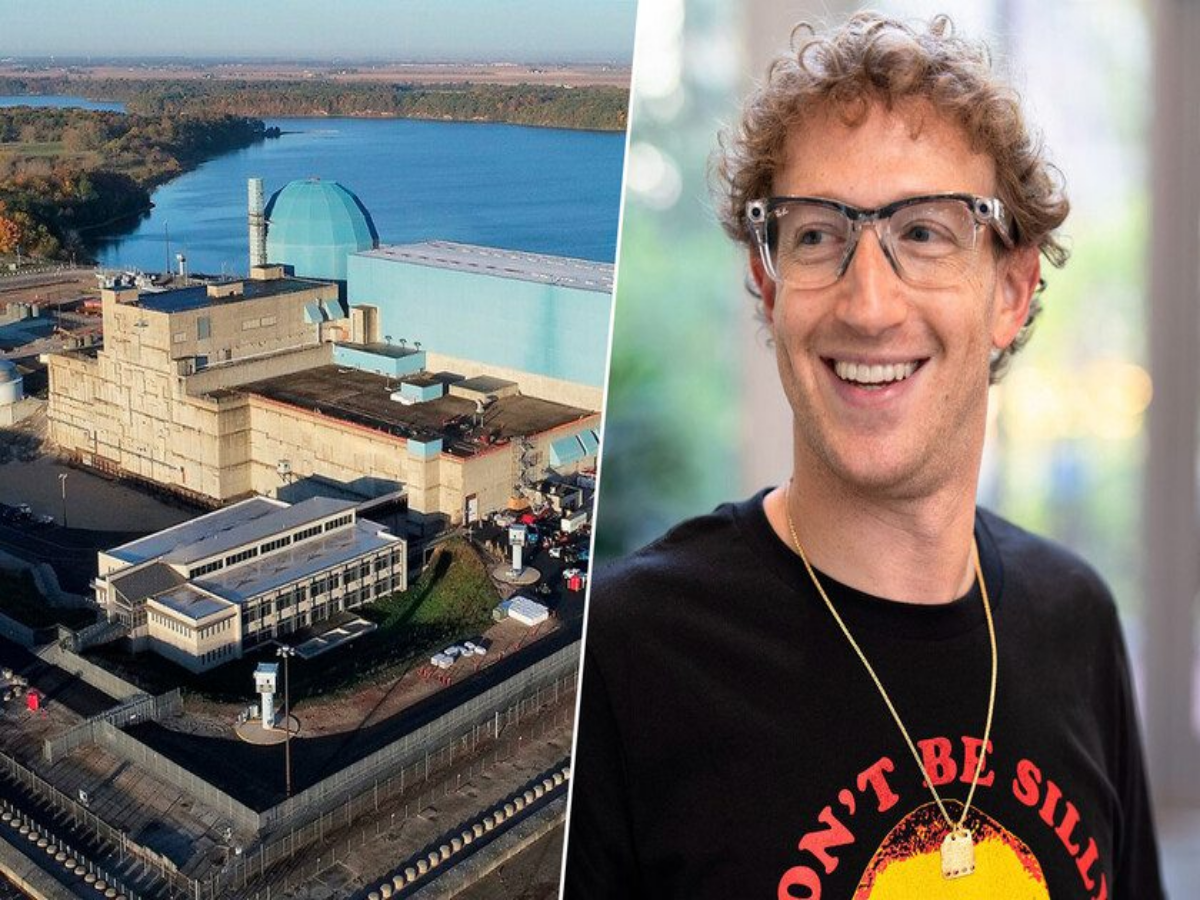
After Microsoft and Amazon, Zuckerberg ‘Saves’ Plant to Supply 1,121 Megawatts of Energy and Boost Facebook, Instagram, and WhatsApp AI
The race for artificial intelligence is leading big tech companies to make surprising decisions in the energy sector. The latest: Mark Zuckerberg, CEO of Meta, decided to save a nuclear plant in the United States that was about to be shut down. The reason? To ensure stable and clean energy to power the enormous data centers that train the AIs of Facebook, Instagram, and WhatsApp.
This decision marks a strategic shift in energy usage by tech companies. While contracts with renewable sources previously dominated, nuclear energy is regaining attention on these corporations’ radar. And all this is happening at a time when energy consumption by artificial intelligence is skyrocketing.
Plant in Illinois Receives New Lease on Life Thanks to Meta
The agreement was made between Meta and Constellation Energy Corp., the largest operator of nuclear plants in the United States. Under the contract, the Clinton plant, located in Illinois, will supply nothing less than 1,121 megawatts of energy directly to the company’s data centers. The partnership will take effect in mid-2027 and will last 20 years, until 2047.
-
Volcanic lava transforms into threads as fine as human hair that travel over 30 kilometers by wind and fall like cutting rain on roofs and backyards in Hawaii and Iceland.

-
NASA issues a warning for the feared Godzilla El Niño that could change the planet’s climate in 2026 with extreme warming of the Pacific capable of causing devastating droughts in some regions and historic floods in others simultaneously.

-
Archaeologists discover a 100-meter ship graveyard in a submerged Greek city, and what has appeared on the seabed of Libya could change what was known about this ancient port.

-
You buy the refrigerator and still have to see ads: Samsung starts displaying advertising on appliances and generates negative reactions among consumers.

Not coincidentally, 2027 is the year when the state subsidy that had kept the Clinton plant operating will end. Without this financial assistance, the plant was threatened with closure.
This situation recalls 2017, when the then-owner of the plant, Exelon, considered shutting it down because it could not compete with low natural gas prices and the expansion of renewable energies. Only a government intervention from Illinois, which approved a ten-year subsidy package, allowed the plant to survive.
Now, with the advance of artificial intelligence and the explosion in energy consumption, the situation has reversed: the demand from big techs has become the salvation of the plant.
The Energy Consumption of Big Techs Continues to Grow
Between 2019 and 2023, the total energy consumption of Meta has nearly doubled. Training and operating generative AI models requires colossal infrastructure, with data centers running at full capacity 24 hours a day.
It is at this point that the limitations of renewable sources become evident. While essential for a cleaner energy matrix, technologies such as solar and wind are intermittent and cannot guarantee a constant supply.
On the other hand, nuclear energy offers exactly what big techs need: a massive, stable, and low-carbon supply. Thus, companies like Meta can meet their climate neutrality goals and keep their AIs running without interruptions.
As highlighted in a recent Bloomberg report, this trend is expected to accelerate in the coming years.
Nuclear Energy Does Not Just Feed Facebook, Instagram, and WhatsApp; Giants Microsoft and Amazon Are Following the Same Path
Meta is not alone in this movement. Other giants in the sector have already made similar decisions.
In 2023, Microsoft struck a deal with Constellation Energy to reactivate Reactor 1 of the Three Mile Island plant in Pennsylvania, famous for the accident that occurred with Reactor 2 in 1979. Reactor 1 had been deactivated in 2019, but resumed operations to supply energy to the data centers of Azure, Microsoft’s cloud platform.
Meanwhile, Amazon Web Services went even further. In March 2024, the company spent US$ 650 million to acquire a massive data center next to the Susquehanna nuclear plant, also in Pennsylvania. The deal guarantees access to 960 megawatts of direct energy for AWS’s AI operations.
These moves make it clear that big techs are willing to invest heavily in nuclear energy to sustain the growth of artificial intelligence.
The New Energy Dispute Among Tech Companies
In the past two years, it has become clear that renewable energy purchase agreements, which dominated the last decade, are no longer sufficient to meet the sector’s new needs.
Now, big techs are focused on securing stable and predictable supply, something nuclear energy offers like few other sources. This shift has triggered a kind of “race” for contracts and agreements in the nuclear segment, as evidenced by the recent initiatives from Meta, Microsoft, and Amazon.
Additionally, the trend is that other players will follow the same path. According to analysts from Reuters, the nuclear energy market in the United States is expected to receive a new boost precisely due to the growing demand from artificial intelligence.
Zuckerberg Strengthens His Investment in AI with Energy to Power Facebook, Instagram, and WhatsApp
By securing nuclear energy for its data centers until 2047, Mark Zuckerberg reinforces Meta’s long-term strategy in the AI field. This will allow the company to expand its capabilities without facing energy limitations.
Moreover, as the operation of Facebook, Instagram, and WhatsApp increasingly relies on advanced AI resources, having a solid energy base becomes essential to maintain a competitive advantage.
The partnership with Constellation Energy is an important step in this direction, and it will likely inspire other companies to adopt similar solutions.
Nuclear Energy by Big Techs Is Expected to Solidify as a Global Trend
With the demand for AI only growing, and the limits of renewable sources evident, the use of nuclear energy by big techs is expected to solidify as a global trend.
At the same time, the need to ensure that these partnerships adhere to safety and sustainability standards will become increasingly critical, as organizations like the World Nuclear Association warn.
It will be interesting to see how companies like Meta, Microsoft, and Amazon will continue to shape the global energy landscape in the coming years.
And what do you think about this movement of big techs toward nuclear energy? Did you like the article? Leave your comment below and share this news with your friends so more people can learn about this curious and strategic movement in the tech market!







Seja o primeiro a reagir!