





 Portuguese
  English
  Spanish
  5 min of reading
  0 comments


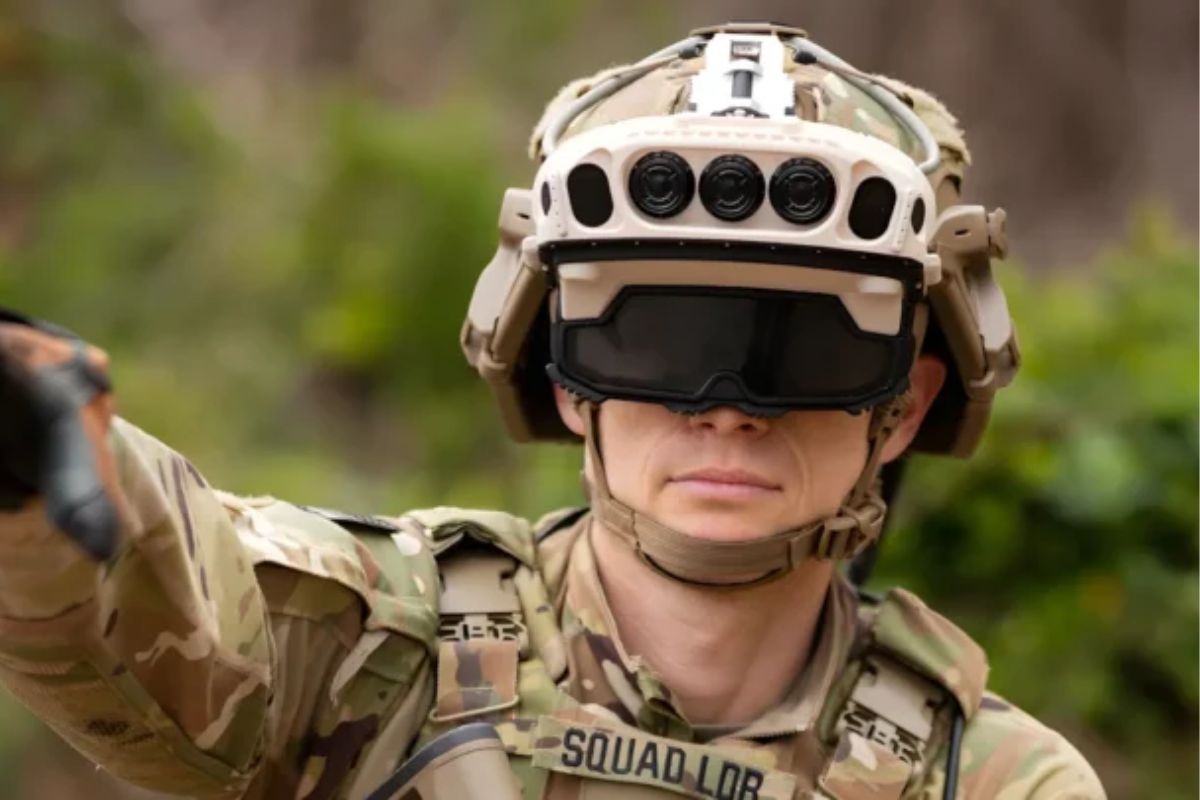
Metaverse Failure Forces Facebook to Redirect Billions in Partnership with Defense Company; Augmented Reality Becomes Strategic Focus.
Meta, known for running social networks like Facebook, WhatsApp, and Instagram, has taken an unexpected step into the U.S. defense sector. In a move that surprised analysts and reignited ethical discussions about the involvement of tech giants with the military apparatus, the company announced a strategic alliance with Anduril Industries. The goal? To develop extended reality (XR) solutions for military use, including a project called Eagle Eyes, aimed at enhancing perception and control on the battlefield.
This partnership not only expands the reach of XR technologies but also symbolizes the reconciliation between Mark Zuckerberg and Palmer Luckey, founder of Oculus and current CEO of Anduril, who had been ousted from Meta in 2016 over political issues.
A Political and Technological Reunion
The announcement marks the end of nearly a decade of estrangement between Zuckerberg and Luckey. Luckey was removed from Meta after it came to light that he had donated to a pro-Trump committee that financed billboards calling for Hillary Clinton’s imprisonment. The fallout was intense, and Luckey described the incident as a “social media assassination.” Since then, he distanced himself from the former company, focusing his efforts on applying cutting-edge technology in the defense sector through Anduril.
-
Motorola launched the Signature with a gold seal from DxOMark, tying with the iPhone 17 Pro in camera performance, Snapdragon 8 Gen 5 that surpassed 3 million in benchmarks, and a zoom that impresses even at night.

-
Satellites reveal beneath the Sahara a giant river buried for thousands of kilometers: study shows that the largest hot desert on the planet was once traversed by a river system comparable to the largest on Earth.

-
Scientists have captured something never seen in space: newly born stars are creating gigantic rings of light a thousand times larger than the distance between the Earth and the Sun, and this changes everything we knew about stellar birth.

-
Geologists find traces of a continent that disappeared 155 million years ago after separating from Australia and reveal that it did not sink, but broke into fragments scattered across Southeast Asia.

Now, with the official rapprochement, the two companies are working together on the Eagle Eyes project, aimed at creating XR devices capable of providing augmented vision and intuitive control of autonomous platforms for soldiers. In an interview with the podcast Core Memory, Luckey stated that his mission “has always been to turn fighters into technomancers — and the products we are building with Meta do exactly that.”
Zuckerberg, for his part, expressed to Tablet magazine that he was saddened by Luckey’s departure from the company, and Meta executive Andrew Bosworth even issued a public apology, which Luckey promptly accepted. This reconciliation coincides with Zuckerberg’s current rhetoric, which has advocated for a return to “Meta’s roots” focused on freedom of expression — although the portal Intelligencer questions whether this stance would hold if an executive supported an anti-Trump committee.
Heavy Investments, Uncertain Returns
Since changing its name and directing its strategy toward the metaverse, Meta has invested nearly US$ 100 billion in virtual reality (VR) and augmented reality (AR) technologies. Technical advancements have been significant, including improvements in wearable devices and optical research, but financial results have not followed suit.
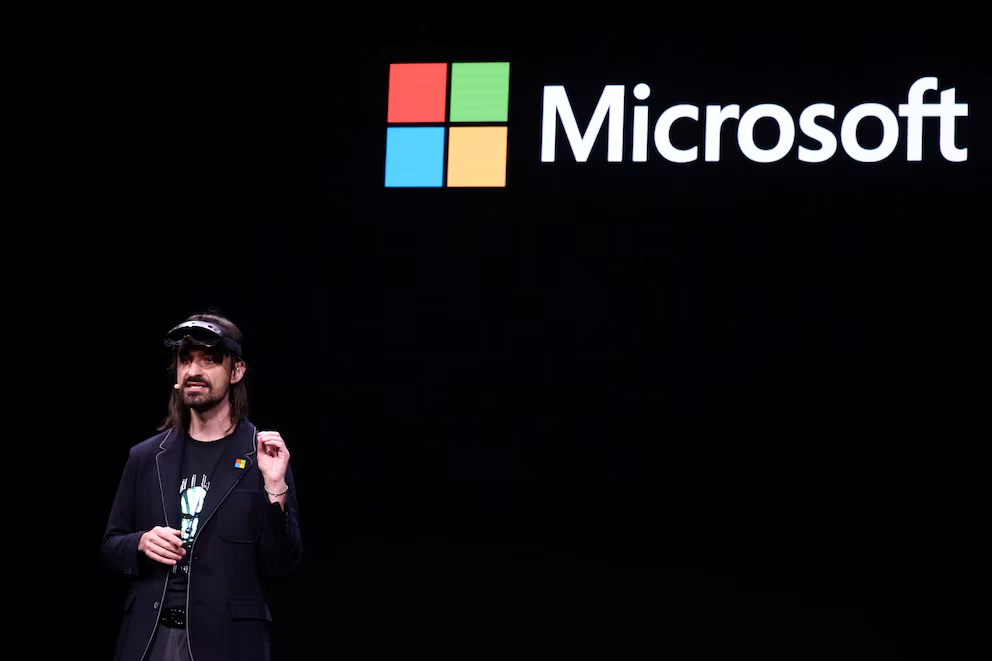
With this new partnership, Meta may finally monetize part of this technological output. The military application emerges as a strategic route amidst stagnation in the consumer sector. It is worth noting that Microsoft faced serious difficulties with the US$ 22 billion contract that called for the delivery of HoloLens helmets to the U.S. Army. Reports indicated that the devices caused nausea and discomfort in soldiers — failures that forced the project to be redistributed to Anduril, a company that now shares knowledge with Meta.
This alliance also allows Zuckerberg to reposition the company as a relevant provider of technological solutions for defense, leveraging the know-how accumulated with Oculus and other hardware divisions.
When Big Techs Go to War
Meta’s entry into the military sector follows a trend that has been consolidating for years in Silicon Valley. Giants like Google and Amazon currently maintain robust contracts with the U.S. Department of Defense and agencies like the NSA (National Security Agency).
Google, for example, has evolved from being “just” a search engine to becoming a direct partner in national security projects. Amazon, which started as an online bookstore, now provides digital infrastructure and cloud computing to the military sector. It was hard to imagine, in 2012, before Facebook’s IPO, that Zuckerberg’s company would also become part of this game — but events of the past decade have shown that the more they grow, the closer these companies get to the logic of government defense contracts.
Anduril, in fact, is one of the most visible representatives of the new generation of defense companies, combining machine vision, AI, and sensors for border monitoring, autonomous operations, and advanced surveillance.
Freedom or Surveillance?
The partnership between Meta and Anduril occurs in a context of great public ambiguity. On one side, there is increasing pressure to develop general-purpose artificial intelligence capable of operating from virtual assistants to facial recognition algorithms in hostile environments. On the other, there are growing ethical and privacy concerns regarding the use of these technologies.
After all, to what extent is it acceptable for the same company that manages your messages on WhatsApp to also provide control and surveillance systems to the Army? Or for the AI behind your Instagram feed to be used to develop autonomous military systems?
According to an analysis by Intelligencer, the central question is whether the public will begin to see companies like Meta less as Apple and more like Raytheon, one of the largest arms suppliers on the planet. This transformation may generate resistance — or be normalized over time, as the boundaries between consumer technology and defense continue to dissolve.
A No Turning Back Path?
For Zuckerberg and other leaders of the U.S. techno-industrial complex, this shift toward defense seems irreversible. Meta now positions itself as a relevant player in security projects and military operations — and this demands dealing with the dilemmas that accompany this territory: transparency, ethics, democratic control, and public perception.
In a world where the digital and military increasingly blend, the lingering question is: are we prepared to live under the influence of companies that build both our social profiles and the weapons of the future?








Seja o primeiro a reagir!