





 Portuguese
  English
  Spanish
  4 min of reading
  0 comments


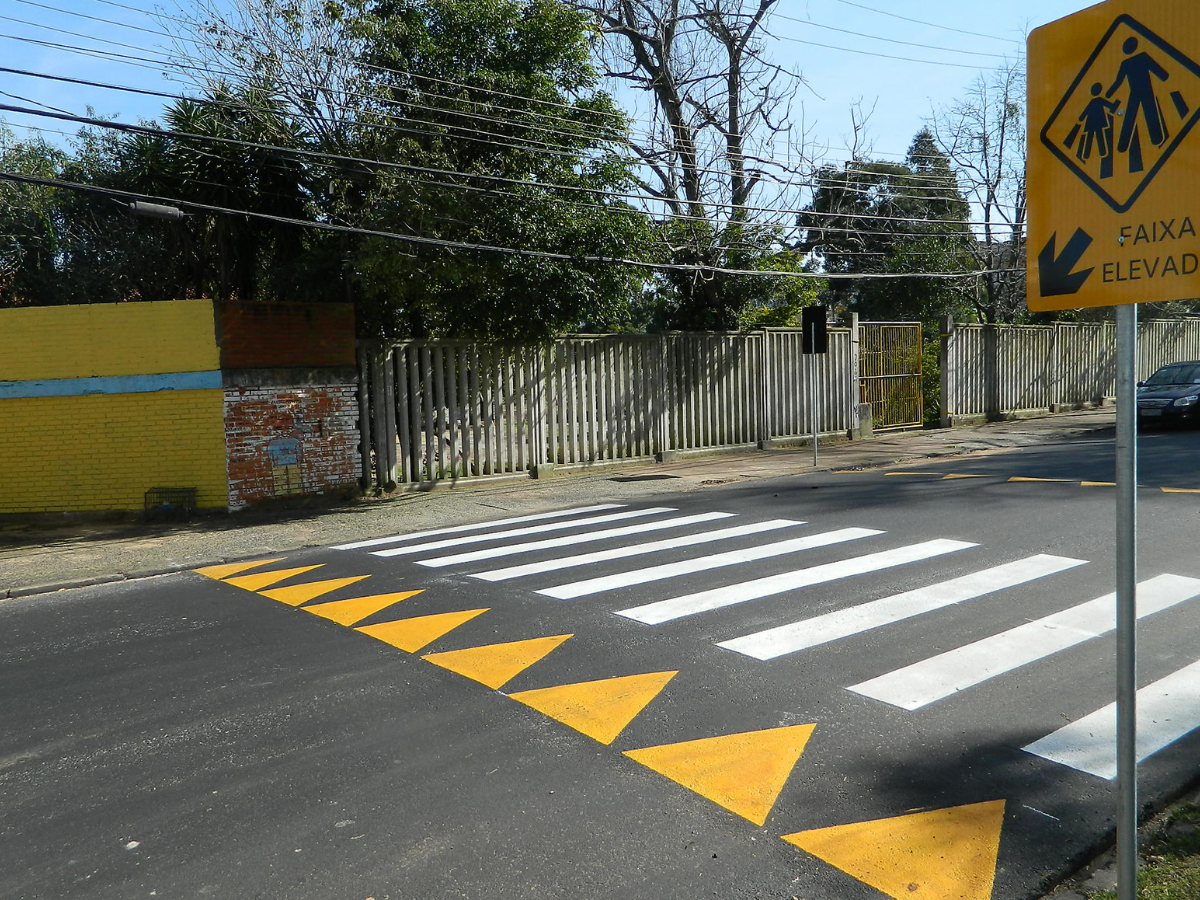
Understand The Rules And Purpose Of The Elevated Crosswalk, A Type Of Pedestrian Crossing Designed For Your Safety, And Know The Correct Conduct Of Drivers.
The elevated crosswalks, those pedestrian crossings that are level with the sidewalk, are becoming increasingly common in Brazilian cities. Designed to enhance pedestrian safety and calm traffic, their intuitive design suggests a clear priority for those on foot. Nonetheless, many drivers and even pedestrians still have questions about the right of way at these locations.
understand the purpose of the elevated crosswalk, a special type of pedestrian crossing, and detail the right-of-way rules according to the Brazilian traffic code. The focus is to dispel uncertainties and promote safer and more conscious traffic for everyone.
What Is An Elevated Crosswalk And Why Does It Exist In Traffic?
Technically, the elevated crosswalk is a physical traffic calming device. Its main feature is the raising of the roadway surface to the same level as the sidewalk. The primary objective is to offer better conditions of accessibility, comfort, and, above all, safety for pedestrians crossing.
-
With more than 635,000 doctors, Brazil sees competition increasing in large cities, and recent graduates are competing for shifts at an accelerated pace while the countryside still faces shortages.

-
The world’s first octopus farm wants to open in the Canary Islands and is already provoking an international reaction: the plan aims to produce 3,000 tons per year.

-
Drought may be creating stronger superbugs in the soil and helping antibiotic resistance reach hospitals, warns a study highlighting a problem that could grow alongside extreme weather.

-
The biggest scam in history: Napoleon’s France deceived the United States by selling them a territory that was Spanish.


By eliminating the height difference between sidewalk and street, it facilitates the movement of all, especially people with reduced mobility. The physical elevation also serves as a natural speed reducer for vehicles. Its implementation is common near schools, hospitals, and places with high pedestrian traffic, regulated by resolution nº 738/2018 of Contran. This design of the elevated pedestrian crossing visually communicates the priority of the pedestrian.
Priority At The Pedestrian Crossing, Including The Elevated
The Brazilian traffic code (CTB) is explicit about the priority of pedestrians. The article 70 of the CTB states that pedestrians crossing at the marked crossings have the right of way, except in places with traffic lights. Even in these cases, the sole paragraph ensures preference for those who have not completed the crossing.
At elevated crossings, which are mostly unmarked pedestrian crossings, this priority is reinforced. The article 29, § 2 of the CTB establishes that larger vehicles are responsible for the safety of smaller ones, motorized vehicles for non-motorized ones, and all for pedestrians. The elevated crosswalk, by its design, intensifies this rule without changing it.
Correct Conduct Of The Driver, What To Do When Approaching An Elevated Pedestrian Crossing
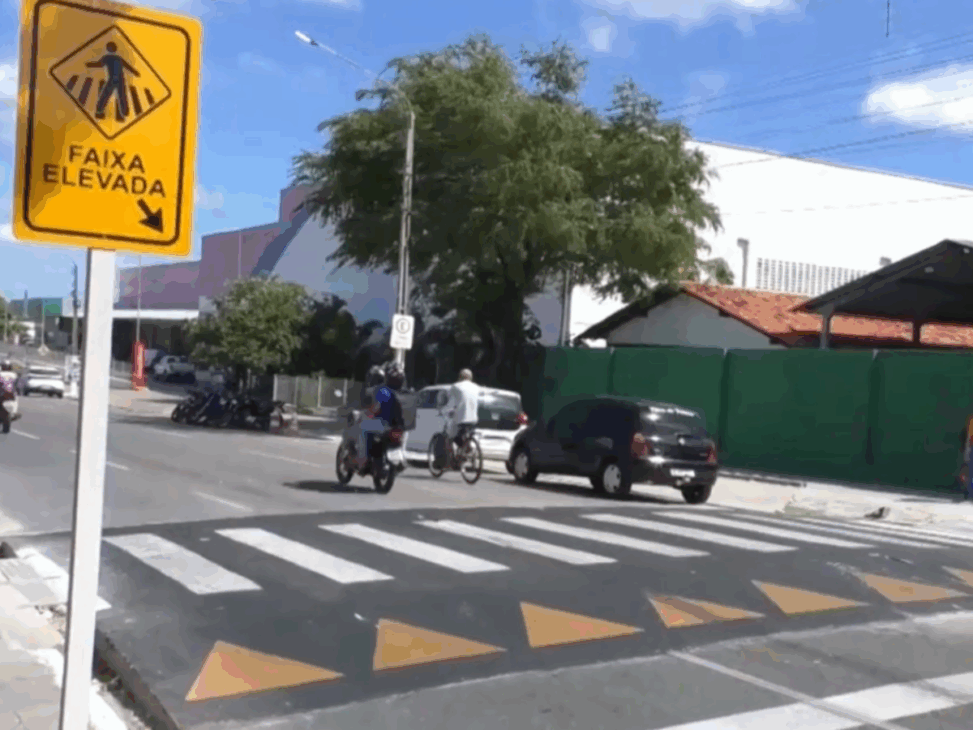
When approaching an elevated crosswalk, the driver must first reduce speed obligatorily, according to the signage (usually R-19, indicating 30 km/h or less). Attention should be heightened, observing the sidewalks and the platform.
If there are pedestrians using the crosswalk or intending to cross, the driver MUST stop the vehicle completely before the crosswalk and wait for them to complete the crossing safely. Driving straight through without certainty of the absence of pedestrians is a serious offense. One should never overtake other stopped vehicles near the crosswalk or honk to hurry pedestrians. Disregarding this priority at the pedestrian crossing is a serious infraction.
Myths And Common Errors That Put Lives At Risk At The Pedestrian Crossing
Some myths and errors persist. One of them is thinking that, without a traffic light, the driver can “risk passing before the pedestrian.” This is incorrect and dangerous. The priority is for the pedestrian. Another mistake is viewing the elevated crosswalk merely as a “sophisticated speed bump,” ignoring its primary function of protecting those on foot.
One of the most dangerous errors occurs when one vehicle stops, but the one in the neighboring lane continues forward, creating a trap for the pedestrian. If one car stops or slows down near a pedestrian crossing, the other must do the same. Not slowing down in advance is also a common mistake that prevents timely reactions.
Respect At The Pedestrian Crossing For Safer Traffic

Disregarding the pedestrian’s right of way at the elevated pedestrian crossing is a serious offense, according to article 214, sections I and II of the CTB. The penalty includes fines of R$ 293.47 and 7 points on the driving license. Driving in a threatening manner toward pedestrians (article 170 of the CTB) can lead to the suspension of the right to drive.
The elevated crosswalk is an essential device for pedestrian safety, the most vulnerable element in traffic. Respecting the rules at these locations is a matter of respect for life and building a more civilized urban environment. The shift from a “car supremacy culture” to a culture of respectful coexistence requires education, awareness, and constant enforcement.








Seja o primeiro a reagir!