





 Portuguese
  English
  Spanish
  4 min of reading
  0 comments


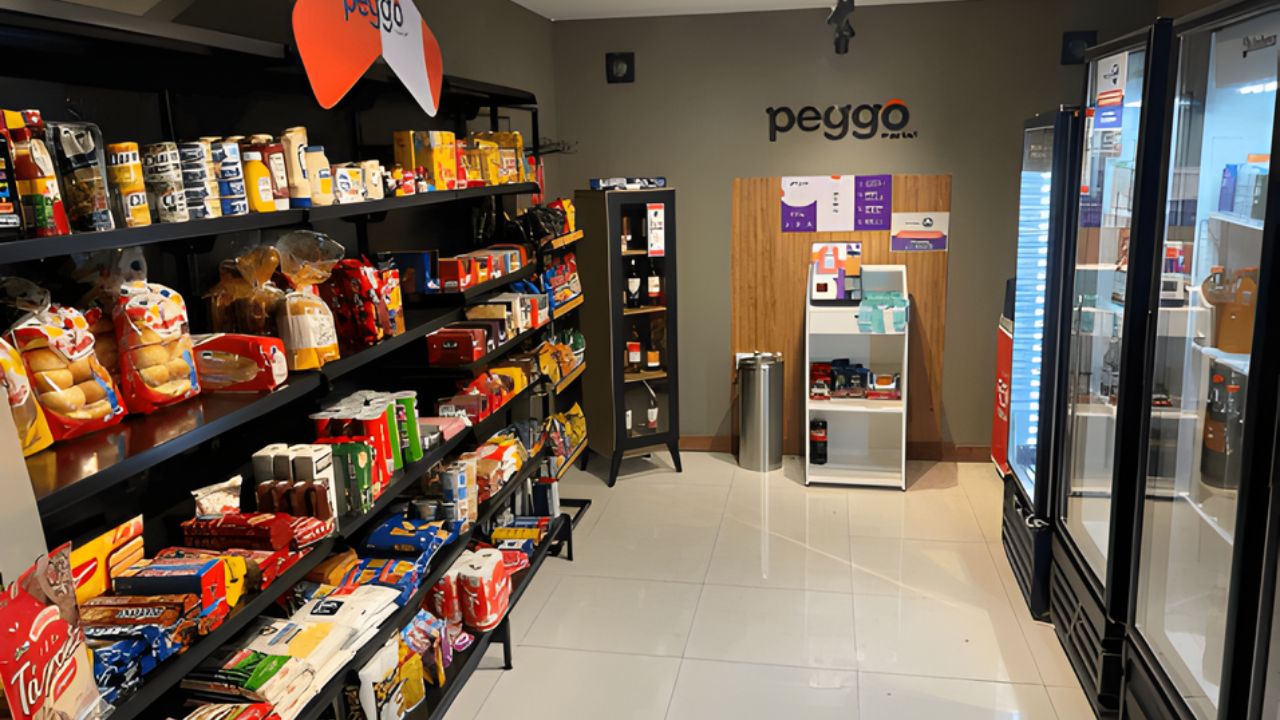
After Successive Failures, Entrepreneur Daniel Sant’anna Turned Learning into a Chain of Markets Without Employees, With 350 Stores and a Goal of R$ 26 Million. Meet Peggô Market.
For years, entrepreneur Daniel Sant’anna was closer to failure than success. Before seeing his name associated with a chain of autonomous minimarkets (markets without employees) in rapid expansion, he accumulated frustrating attempts in different sectors.
The turning point only came in 2021, with the creation of Peggô Market, founded alongside Luciane Fassarella, when experience, persistence, and a lean model finally came together.
In four years, the company expanded from a single store to 350 units spread across 17 states, reaching R$ 14 million in revenue.
-
The Argentine government celebrates the lowest poverty rate in 7 years, but experts warn that the methodology has changed, real wages have fallen, unemployment has risen, and the number of people on the streets of Buenos Aires has increased by 57% since Milei took office.

-
7.8 magnitude earthquake in Indonesia frightens the population, triggers tsunami alert, and hits an island with over 200,000 inhabitants this Thursday.

-
Google will finally let you change that embarrassing Gmail address you created in your teenage years without losing any accounts, logins, or old emails: the feature is already available in the United States.

-
Heading to Brazil in a Bonanza F33 single-engine aircraft: a couple departs from Florida on a visual flight, makes technical stops in the Caribbean to refuel and organize paperwork, and begins the staged crossing until they reach the country.


The projection for the end of 2025 indicates an even greater leap: 500 stores in operation and R$ 26 million in annual revenue, numbers that place Peggô among the leading cases of autonomous retail in the country.
A Business Shaped by Accumulated Failures
Unlike many entrepreneurship stories, this project did not arise from a successful trajectory.
Daniel Sant’anna went through 11 ventures throughout his career, of which eight did not succeed. Instead of trying to erase this history, he decided to incorporate it into the building of the new business.
“Failing so many times taught me more than any course could teach. Each mistake became a lesson and prepared me to make Peggô successful,” says the entrepreneur.
This experience was crucial in avoiding common pitfalls, especially in franchising, a sector in which he had already worked as a franchisee.
An Unconventional Franchising
The expansion model of Peggô deviates from the conventional practices of the sector.
Instead of charging progressive fees for each new store, the chain adopted a format of single licensing, priced at R$ 40 thousand, which allows franchisees to open multiple units without additional costs.
According to Sant’anna, the decision was strategic.
“We understood that scaling would only be possible if the model was fair for those at the front. Today, the average is 2.5 units per franchisee,” says Sant’anna.
This design reduced risks for investors and helped accelerate the brand’s capillarity.
Before the Peggô Store
Daniel’s relationship with entrepreneurship began early. At the age of 14, he was already involved in sales, leading teams of event promoters.
At 17, he founded his first company dealing with custom furniture, which lasted for around two decades.
At the same time, he tried to diversify his businesses, creating companies in the segments of fashion, advertising, parking, and real estate.
Most did not prosper, mainly due to management failures and financial control, according to the entrepreneur himself.
The Idea for the Store Came from Observing Automated Retail
The insight that would give rise to Peggô Market came in 2020, when Daniel came into contact with the Amazon Go model in the United States.
The stores operate without traditional checkout counters, using technology to automatically register purchases.
Upon analyzing the system, he realized that the solution was unfeasible for Brazil due to an estimated cost of around US$ 1 million.
“I realized that I could bring the same level of technology and convenience, but in a more accessible way, adapting it for the Brazilian audience,” he explains.
The alternative was to develop a simpler system, suited to the local reality. The first store opened in a condominium in Recreio dos Bandeirantes, in Rio de Janeiro.
The acceptance was immediate. In just three months, the operation already had eight units and had generated R$ 500 thousand in revenue.
In January 2022, the company officially started expanding through franchises, broadening its reach to businesses and street locations, in addition to residential condominiums.
To support this growth, Daniel decided to abandon other professional fronts.
He sold his stake in an advertising agency where he had been a partner for ten years and started dedicating himself fully to Peggô.
“When I decided to franchise, I sold my share in the advertising agency where I had been a partner for ten years and focused 100% on the project. We learned from the mistakes of poorly managed franchises where I had been a franchisee and built a model in which the franchisee is the protagonist,” states Sant’anna.


Consumer Education Was the First Challenge
Initially, the main obstacle was not logistical, but cultural. Many consumers showed distrust towards stores without employees.
“At the beginning, we joked that the operation was more about education than retail. We needed to teach people to trust the self-service system,” says the entrepreneur.
As the audience matured, behavior changed.
“Currently, more than half of our stores have recurring consumption. In other words, customers even do their monthly shopping at our stores. This changes everything because we start competing with traditional supermarkets,” he states.
Store Expansion and New Plans
The increase in consumption led to a significant expansion of the product mix.
Some stores now operate with over 3,000 SKUs, a number far superior to the 120 items in the first units.
The projection for 2026 is even more ambitious: to reach between 1,000 and 1,400 stores and achieve R$ 80 million in revenue.
To sustain this phase, the company is preparing a new base in São Paulo, in addition to the existing structure in Rio de Janeiro.
Despite the business narrative, Sant’anna states that the motivation to continue entrepreneuring goes beyond financial results.
Father of two daughters, he recalls an episode that redefined his priorities.
“In 2012, I suffered a serious accident. I almost died. My daughter, who was one year old, was what gave me the strength to continue. Today, everything I do is for them,” he recounts.









-

-

-

-

-

12 pessoas reagiram a isso.