





 Portuguese
  English
  Spanish
  3 min of reading
  0 comments


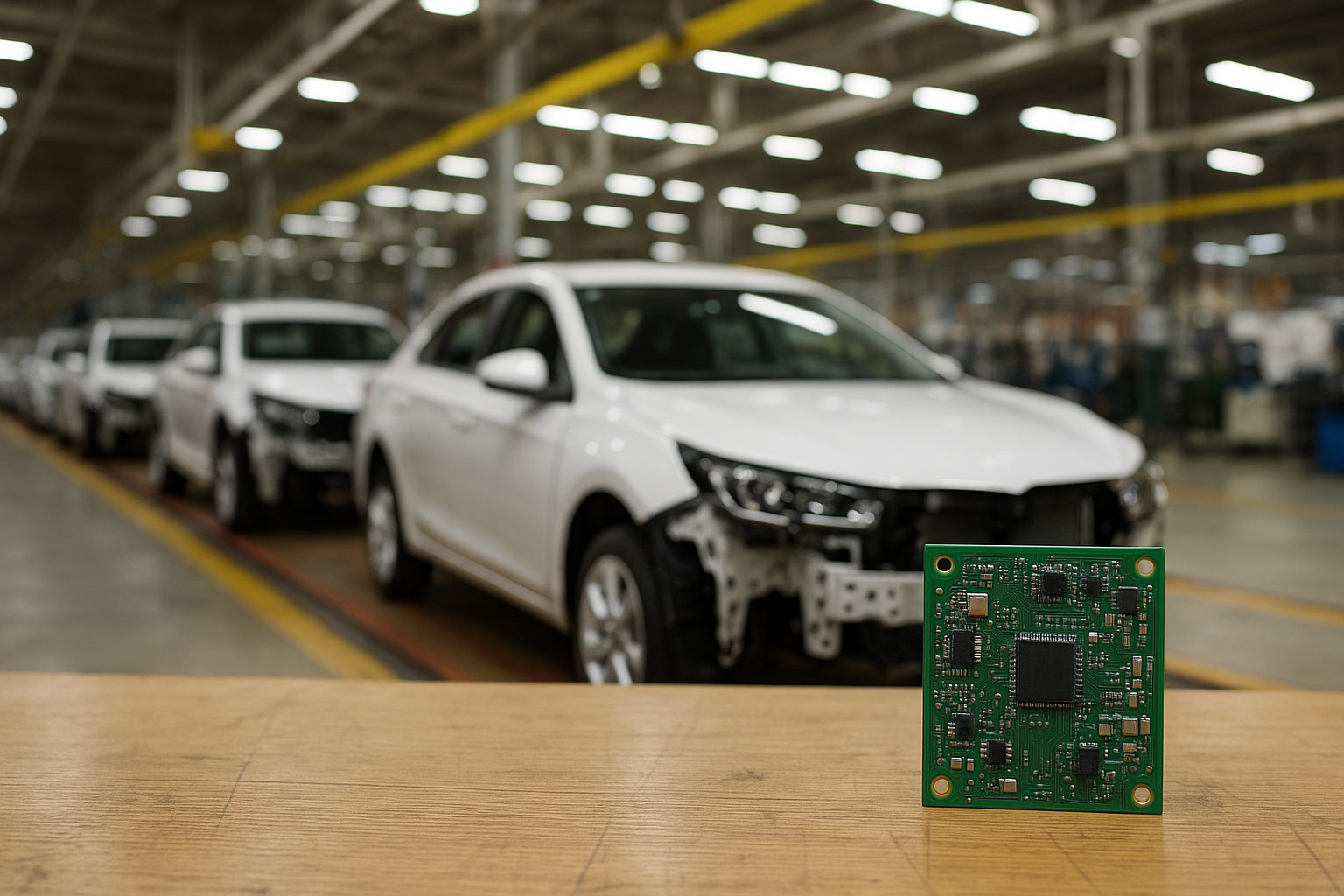
Semiconductor Shortage Threatens Brazilian Automotive Industry and Reignites Fears of Paralysis Amid International Geopolitical Tensions
The Anfavea, association representing car manufacturers based in Brazil, issued an urgent alert in October 2025 about the imminent risk of vehicle production shutdown.
Thus, the cause would be the semiconductor shortage, which has been worsening worldwide. Furthermore, according to the entity, the country may face interruptions in assembly lines within weeks, repeating the critical scenario of the 2021 pandemic.
During that period, factories were idle due to a lack of electronic components, which caused billion-dollar losses and drastically reduced industrial pace.
Global Semiconductor Crisis Worsens
According to Anfavea, the problem has regained strength after the Dutch government took control of semiconductor manufacturer Nexperia, a company linked to a Chinese group.
In immediate reaction, China imposed new export restrictions on electronic components, which directly affected supply for European manufacturers and, consequently, the Brazilian market.
Thus, with the global supply chain out of balance, local production can be affected quickly.
If the government does not adopt emergency measures, the problem is likely to intensify further, compromising the entire national automotive industry.
Manufacturers Face Real Risk of Interruption
The entity explained that each modern vehicle uses between 1,000 and 3,000 chips, essential for the functioning of electronic and safety systems.
Therefore, without these components, there is no way to keep production lines operating, and the risk of a shutdown becomes extremely high.
Moreover, Anfavea has already alerted the federal government about the need for swift and coordinated actions.
Thus, the goal is to ensure supply and avoid a complete collapse of the automotive chain, which generates billions of reais annually.
-
Spain surprises the world by erecting 62 artificial dunes, mixing sand with natural remains of posidonia, and causing the structure to lose only 1.4% of its volume in 1 year.

-
With 16 Bulava missiles, improvements in acoustic stealth, and a design focused on silent patrols, Russia’s nuclear submarine was born to ensure Moscow’s invisible retaliation and has become one of the pillars of its maritime strength.

-
‘Populous’ city in Rio among the worst in Brazil in national ranking and exposes silent development crisis.

-
Couple buys house in the South Zone of São Paulo, opens a hidden door in the garage, and finds a secret wine cellar with dozens of old wines forgotten since the 1970s.


Economic and Social Impact in Chain
With 1.3 million direct and indirect jobs at risk, the automotive sector may face devastating effects if the crisis is not controlled.
Moreover, the president of Anfavea, Igor Calvet, emphasized that the moment is critical, especially in light of high interest rates, consumption slowdown, and global uncertainties.
According to him, immediate mobilization is essential to preserve the stability of the industry, as the country is already facing significant economic difficulties.
Therefore, Calvet stressed that it is necessary to protect the national production base and act before the impact becomes irreversible.
Recent History Reinforces the Alert
During the semiconductor crisis of 2021 and 2022, Brazil stopped producing about 250,000 vehicles, according to data from MarkLines and Reuters.
During that period, manufacturers like Volkswagen and General Motors temporarily suspended their operations, and recovery was slow.
Now, with the worsening of tensions between China and Europe, the risk of repeating this scenario is real and growing.
Additionally, analyses by industry experts, published by CNN Brasil and Valor Econômico, indicate that dependence on foreign inputs may compromise the industry’s performance in the coming months.
Ways to Avoid Collapse
To reverse the situation, experts advocate that the government diversify international suppliers to reduce the sector’s vulnerability.
Additionally, they suggest encouraging domestic semiconductor production and establishing strategic agreements with partner countries to ensure continuous supply.
Thus, cooperation between the government, manufacturers, and global suppliers will be crucial to ensure the continuity of operations and preserve the competitiveness of the Brazilian automotive industry. In this way, only a prompt and coordinated response can prevent a new crisis.








-

Uma pessoa reagiu a isso.