





 Português
  Inglês
  Espanhol
  4 min de leitura
  1 comentário




Labor Shortage In The Field Is Holding Back Brazilian Agriculture And Generating An Unprecedented Crisis. Even With High Technology, The Lack Of Skilled Workers Continues To Affect Rural Properties.
The lack of qualified labor is becoming one of the biggest challenges for the agribusiness in Brazil.
According to Gustavo Sartorello from the website Farmnews, this problem, which already affects urban centers, takes even more critical proportions in the field due to a series of factors specific to the sector.
70% of rural properties report difficulties in hiring qualified personnel.
-
Drought may be creating stronger superbugs in the soil and helping antibiotic resistance reach hospitals, warns a study highlighting a problem that could grow alongside extreme weather.

-
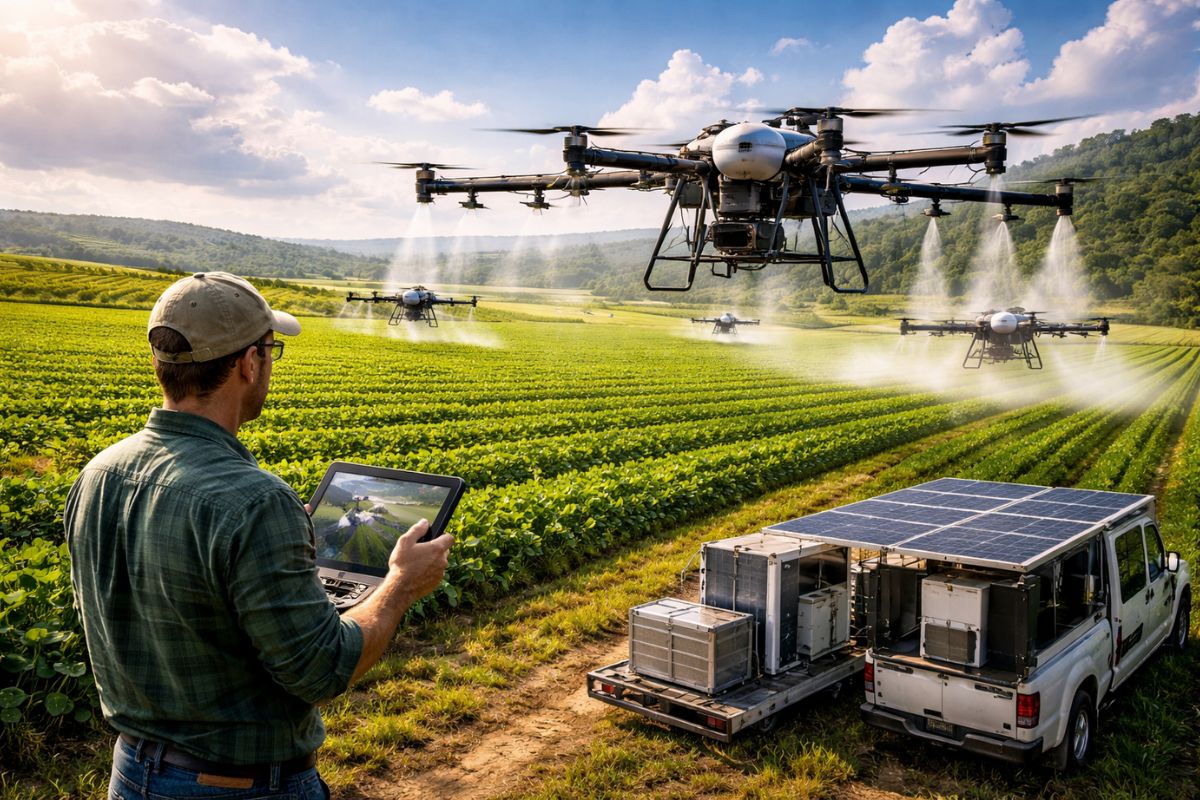
Alone, the producer applies 7,400 hectares with the T100 drone in an optimized structure, replaces the generator with a silent battery, and demonstrates how technology reduces costs, increases productivity, and even challenges the uniport in the field.
-
The biggest scam in history: Napoleon’s France deceived the United States by selling them a territory that was Spanish.

-
Why is the Danakil Desert so dangerous? It has unstable terrain and how extreme temperatures and toxic gases turn the region into one of the most hostile environments on Earth.


Moreover, employee turnover in the agricultural sector has increased by 35% in the last decade, which further exacerbates the scarcity of workers for essential activities.
The cost of labor training represents less than 1% of operational expenses on farms, according to recent studies.
The Paradox Of Mechanization: More Productivity, More Specialization Required
Mechanization, which revolutionized agricultural productivity, generated a new demand for specialized skills.
According to the study “History Of Agriculture In The World” by Mazoyer and Roudart (2010), mechanization increased productivity per worker from 1 hectare/man/year to up to 1,000 hectares/man/year.
However, this exponential advancement requires a highly qualified and adaptable workforce.
The Agronomist Of The Future: From Field Specialist To Digital Strategist
The agricultural sector is undergoing transformation, and this change is reshaping the profile of the agronomist.
With the rise of technologies like Big Data, Artificial Intelligence (AI), Internet of Things (IoT), and Blockchain, the role of the agronomist is becoming increasingly strategic.
Now, it is necessary for the agronomist to not only understand agricultural practices but also to interpret large volumes of data and implement digital solutions to optimize production.
From Plow To Artificial Intelligence: The Generational Change In The Field
The evolution of generations in the field reflects profound socioeconomic changes.
Baby Boomers (born between 1946-1964): They are known for their strong work ethic and willingness to perform labor-intensive tasks.
Their demands were mainly focused on stability and basic sustenance.
Generation X (1965-1980): While sharing some characteristics with Baby Boomers, Generation X began to show interest in improving working and living conditions.
Generation Y (Millennials, 1981-1996): This generation brought a significant change. More educated, they started to seek opportunities that offered professional and personal growth.
They sought work environments that provided flexibility, purpose, and recognition.
Generation Z (born between 1997-2012): As digital natives, members of Generation Z have high expectations for the work environment.
They value diversity, sustainability, and seek continuous learning.
This generation presents specific challenges for agribusiness, with high turnover rates and difficulties adapting to the rural environment.
How To Attract And Retain Professionals In Agribusiness?
Understanding the causes of the labor bottleneck in the field and how the evolution of rural workers can adapt the sector to the new reality is essential.
Here are some practical actions to attract and retain professionals in agribusiness:
Housing And Connectivity
85% of rural youth consider the internet essential (IBGE, 2021).
The action: Implement high-speed internet and modernize accommodations, offering housing and connectivity conditions in line with the expectations of the new generations.
Safety And Well-Being
Farms with wellness programs reduced accidents by 60% (SENAR, 2022).
The action: Invest in cutting-edge PPE and preventive health programs, creating a safe environment for workers.
Continuous Training
Studies show that every 1% invested in training increases productivity by 3.4% (Embrapa, 2023).
The action: Establish partnerships with educational institutions and agricultural technology, ensuring that your team is always updated with the best market practices.
Structured Career Plan
Farms that implement career plans have a turnover 40% lower (ABAG, 2022).
The action: Implement a meritocracy and skills-based progression system, promoting the growth of employees.
Technology As A Catalyst
Properties that adopt AgTech increase efficiency by 25% (McKinsey, 2023).
The action: Integrate AI, IoT, and data analytics systems into your operations to optimize management and productivity in the field.
Labor Management: An Economic Imperative
Effective labor management in the field is not just a matter of human resources, but also an economic imperative.
Economic analyses show that properties with advanced people management strategies have:
- ROI 22% higher than the industry average.
- Operational costs 18% lower.
- Productivity per hectare 30% higher.
The lack of qualified labor in agribusiness is a growing challenge, but solutions may be within reach for those willing to invest in continuous improvements.
In your view, reader, how will it be possible to resolve the labor shortage in agriculture? Leave your comment! See you next time.








O Brasil usa o dobro de agrotóxicos que EUA e China juntos isso é um absurdo tem que trabalhar com o mínimo de agrotóxicos e com adubação orgânica.