





 Portuguese
  English
  Spanish
  3 min of reading


According to an alert published by the BSSE, the lack of training on oil and gas exploration platforms led to the death of a crew member in the Gulf of Mexico
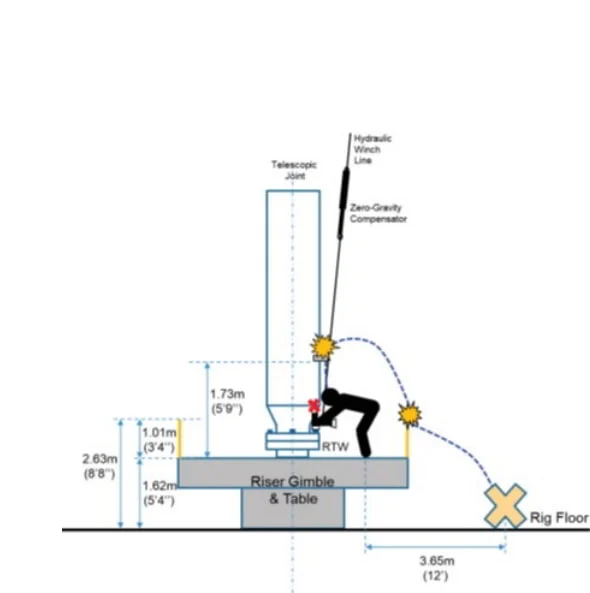
A safety alert was published last week by the BSEE, explaining about the throwing in the air of a crew member, after being hit by a hydraulic torque wrench, striking a lifting clamp approximately two meters above the elevated work deck before falling to the platform floor, at an exploration unit located in the Gulf of Mexico, in 2020.
According to the offshore-energy website, the incident occurred on August 23, 2020, during the unlocking of the lower marine riser package of the blowout preventer in preparation for the relocation of the oil and gas platform ship. The crew member received first aid and was transported to the hospital of the drilling ship Pacific Khamsin, where he was later declared dead.
At the time of the incident, the drillship Pacific Khamsin was owned by Pacific Drilling. However, after the merger of Pacific with Noble Corporation in March 2021, the drilling ship is now owned by Noble.
-
Brazilian giant expands borders in the Southeast: Petrobras confirms new oil discovery in ultra-deep waters in the pre-salt of the Campos Basin.
-
Alert in the global energy market: Severe tropical cyclone hits the coast and disrupts gas production at major plants in Australia, threatening global supply.
-
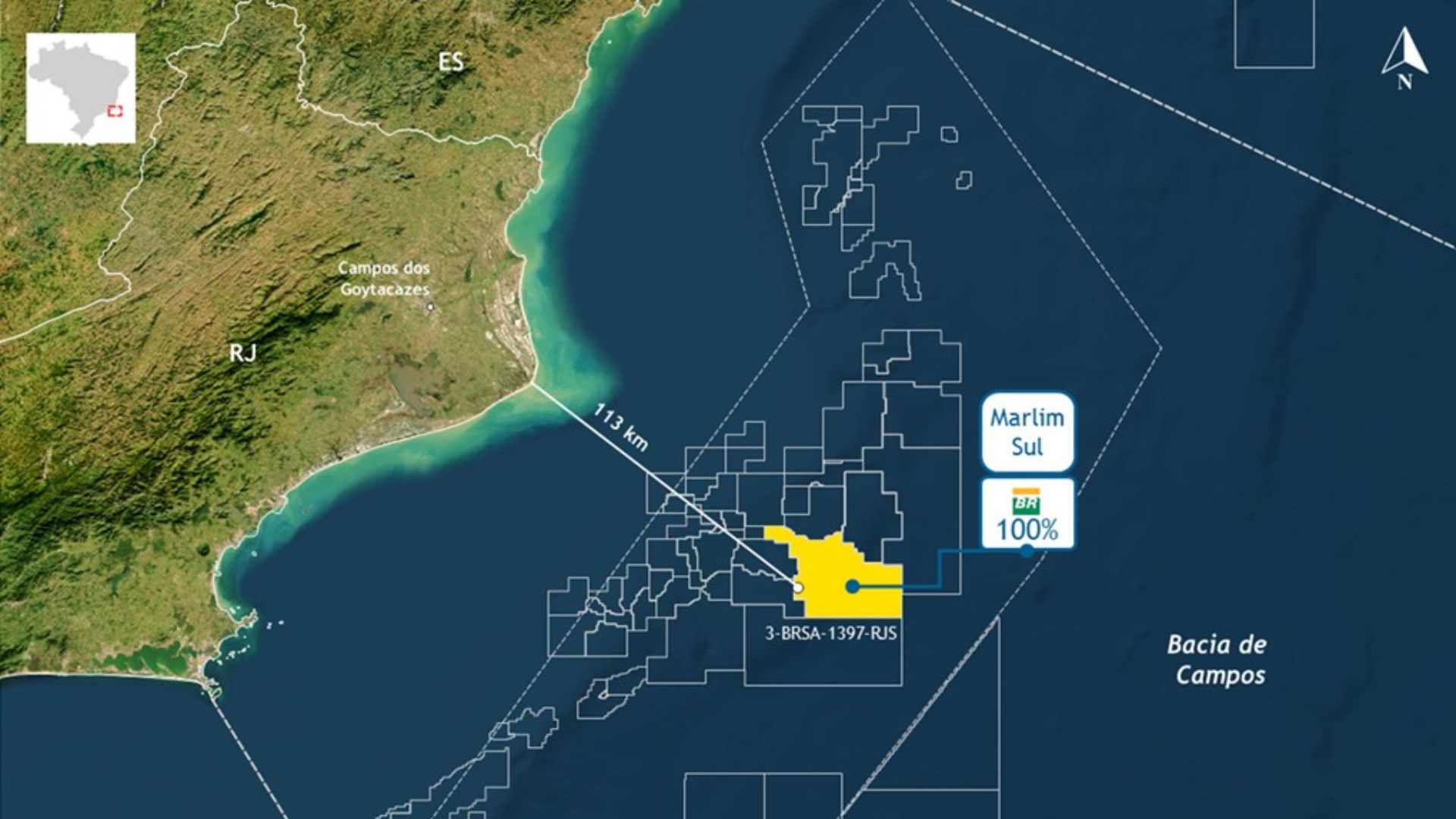
Petrobras finds high-quality oil in the pre-salt at 113 km from RJ and reignites expectations about strategic reserves in the Campos Basin.

-
Ocyan opens registrations for startups focused on innovation in the oil and gas sector and will select projects for Innovation Day with the support of Nexio.

The Lack of Training on Oil and Gas Exploration Platforms
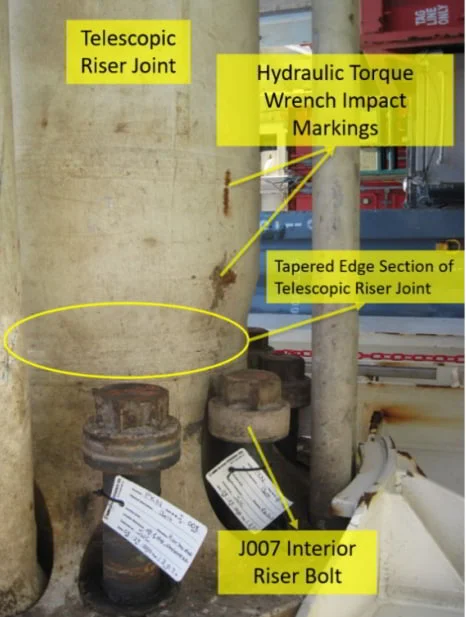
According to the BSEE, the investigation into the incident found that the crew of the oil and gas platform was using a hydraulic torque wrench to remove the bolts from a flange of the telescopic joint of the riser (TJ).
During the operation, the HTW socket got stuck between the bolt head and the tapered edge of the TJ. After failing to manually dislodge the HTW using physical effort, the platform crew used a hydraulic wrench to provide upward force and applied tension to release the tool.
After applying force upward, the torque wrench released under tension and shot upward, hitting the crew member, indicating that the platform crew lacked the necessary training for emergency situations.
The U.S. regulator alleges that factors contributing to this incident include the lack of recognition of the potential HTW stuck at the beveled edge of the TJ, the lack of comprehensive understanding of the risk assessments of the task associated with riser tensioning, the failure to effectively communicate all learnings from previous riser pulls, lack of formal training for the use of the HTW and HUW, and adverse designs of the HTW and HUW.
What to Do in Emergency Situations on Oil and Gas Platforms?
With that in mind, the BSEE recommends that:
- Oil and gas platform operators and contractors ensure that the Job Safety Analysis captures the limitations of the HTW when in use;
- Check that all employees understand the Job Safety Analysis and have been formally trained to operate the HTW and HUW;
- Emphasize the initiation of Work Stoppage Authority if an imminent hazard is observed; and expand the responsibilities of the Drill Floor Observer to monitor all aspects of work occurring on the platform floor;
Additionally, the U.S. regulator explains that oil and gas platform operators and contractors should consider using an HTW with a compatible design that matches the beveled edge of the TJ; explore options to employ a load indicator or a similar design mechanism on the HUW package; and ensure pre-job reviews and promote feedback sharing from past experiences.








Seja o primeiro a reagir!