





 English
  Francês
  Alemão
  Italiano
  Japonês
  Norueguês
  Portuguese
  Spanish
  4 min of reading
  0 comments


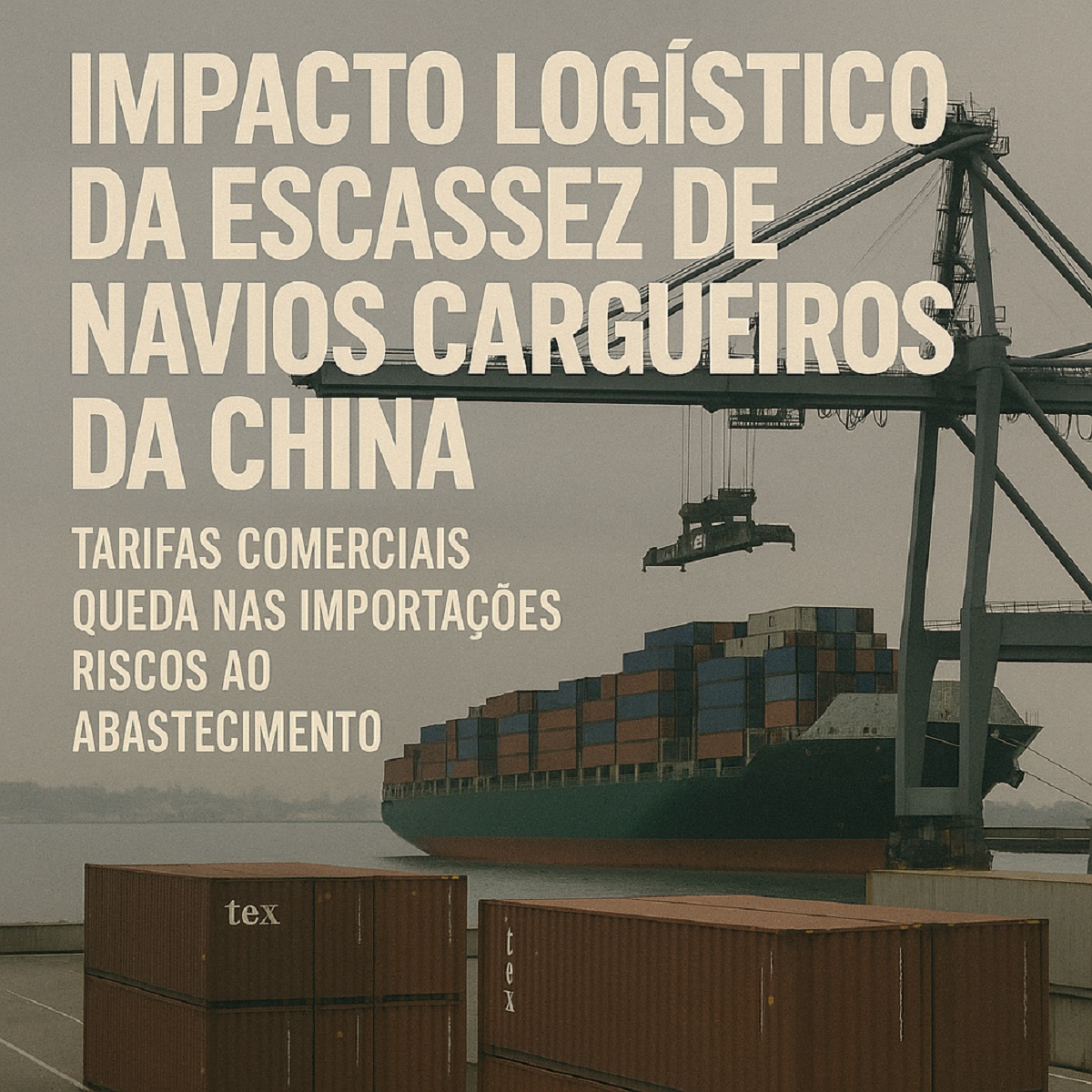
Understand How the Reduction in Shipments from China and the Increase in Trade Tariffs Affected American Ports and Global Logistical Stability
Since May 7, 2025, the ports of Los Angeles, Long Beach, and Seattle have been recording a decline in the arrival of Chinese ships. Additionally, as confirmed by the American Association of Port Authorities (AAPA), this reduction highlights significant logistical impacts for the west coast of the United States. The Port of Long Beach, in turn, officially reported on May 10 a reduction of up to 40% in cargo movements. Meanwhile, the Port of Los Angeles indicated a significant 31% drop in operations during the same period, reinforcing the critical scenario. On the other hand, the Port of Seattle, according to the Seattle Port Authority, surprisingly went 24 hours without receiving container ships, an unprecedented event since 2020. Thus, the data demonstrate, above all, the ongoing and intense logistical dependency of the U.S. west coast on maritime trade with China.
Trade Tariffs Contributed to the Reduction in Logistical Flow
Starting in April 2025, the United States significantly increased tariffs on Chinese products, as reported by the U.S. Department of Commerce. This happened mainly as a direct response to the imposition of Chinese barriers on American semiconductors, which began earlier on March 27, 2025. Operations in this context became financially unfeasible, even with attempts to maintain trade flow. Nonetheless, the company thus opted to redirect part of its fleet to new routes, which in turn affected the terminals on the west coast.
Stocks Under Pressure and Risk of Price Increases
In an interview with NBC News on May 10, the CEO of the Port of Long Beach, Mario Cordero, warned that logistical impacts could directly affect retail in the next 30 days. Currently, about 63% of the cargo processed in Long Beach comes from China; however, this number was 72% in 2016, according to the Harbor Trucking Association. Although networks like Walmart and Target are thus seeking alternative suppliers, the logistical replacement is still quite limited for now. According to a report published by Supply Chain Review on May 11, the scarcity of products may primarily affect electronics, clothing, and seasonal items. Furthermore, in light of the reduced supply, price increases, although gradual, are considered an almost inevitable consequence.
-
Middle East War Hits Fertilizers and Transportation and May Strain Brazilian Wallets

-
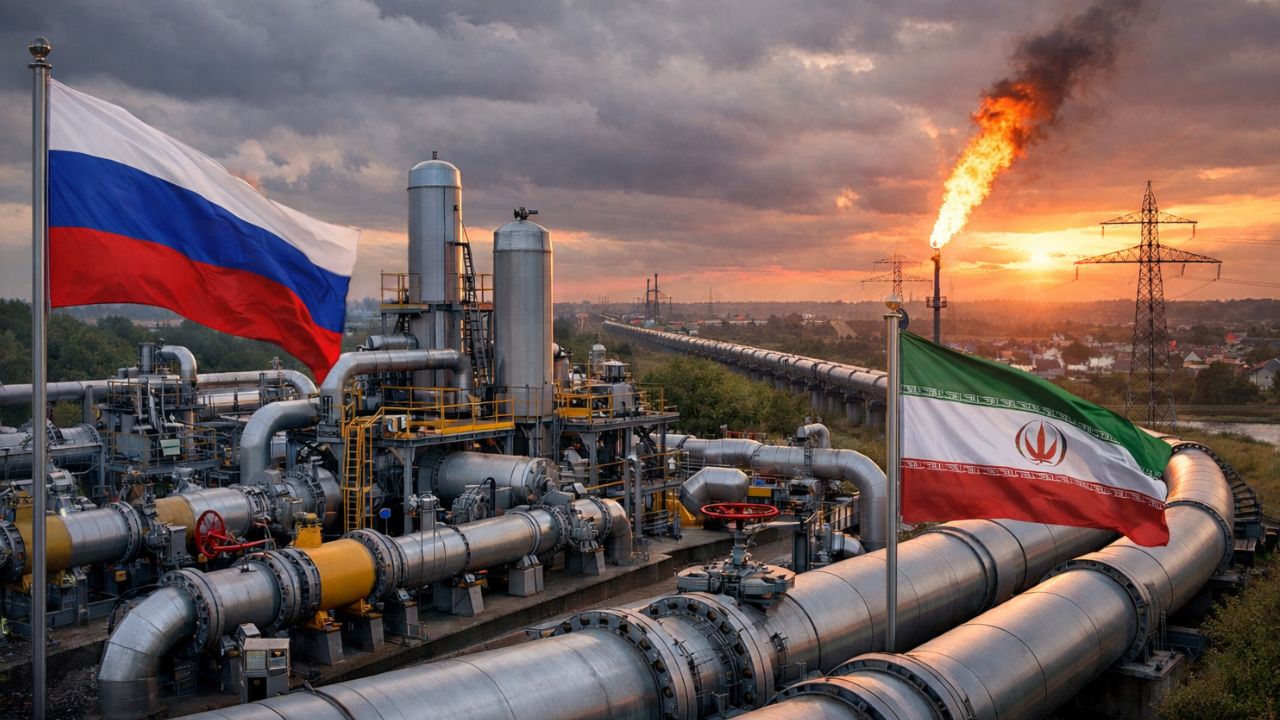
Russia Considers Suspending Gas to Europe After Surge in Energy Prices
-
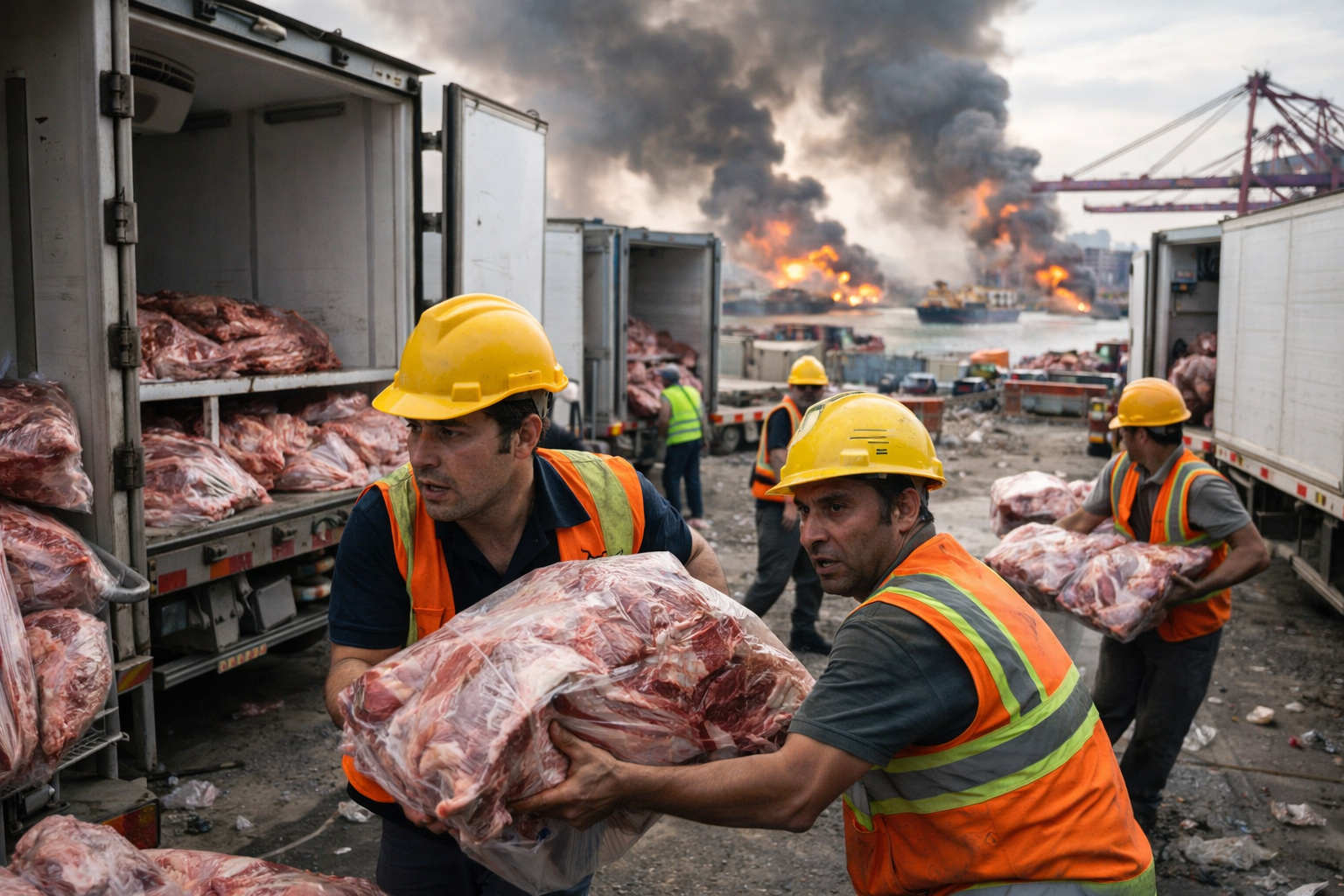
How A War Thousands of Miles From Brazil Started Disrupting Global Shipping Routes, Raising Container Costs, and Putting Up to 40% of Brazilian Beef Exports at Risk
-
Iran-U.S. War Drives Up Oil Prices and Pressures Global Financial Markets


Temporary Trade Agreement Between U.S. and China Seeks to Ease Tensions
On May 11, 2025, representatives from the governments of the United States and China met in Geneva to discuss emergency measures, as reported by Reuters. The agreement reached established a reduction of American tariffs from 145% to 30% and Chinese tariffs from 125% to 10%. The measures take effect immediately and will last for 90 days. During a press conference, U.S. Treasury Secretary Scott Bessent explained that the goal of the agreement is to maintain a minimum level of trade stability during the re-evaluation of bilateral policies. According to an analysis published by CNBC, the Dow Jones index rose 2.3% after the agreement was announced, reflecting market optimism with the temporary truce.
Operational Normalization Will Depend on Logistical Adjustments
A report from Moody’s Logistics Insight, published on May 12, estimates that the complete resumption of logistics operations could take six to eight weeks. For this to happen, it will be necessary to renegotiate contracts between shippers and importers, as well as reorganize the operational windows of the ports. Trust among logistics operators is still in the process of being rebuilt. The National Retail Federation noted that alternative ports, such as Vancouver in Canada and Manzanillo in Mexico, are already operating close to maximum capacity, limiting the redistribution of cargo diverted from the west coast.
Structural Reform of the Global Logistics Chain is Necessary
An editorial from The Wall Street Journal, published on May 12, highlighted that the current logistics crisis underscores the urgent need to modernize global supply chains. Additionally, the Boston Consulting Group pointed out that among the main structural measures are, for example, customs digitalization, the creation of regional logistics hubs, and international contracts with emergency clauses. However, these solutions depend, above all, on coordinated actions between the public sector and, at the same time, the private initiative. Likewise, they require extensive multinational cooperation that, consequently, must be supported by ongoing strategic planning, even in the face of unstable scenarios. Finally, the World Bank, according to a technical note released on the same day, emphasized that predictability is essential to prevent new logistical crises from arising.










Seja o primeiro a reagir!