





 Português
  Inglês
  Espanhol
  4 min de leitura
  25 comentários


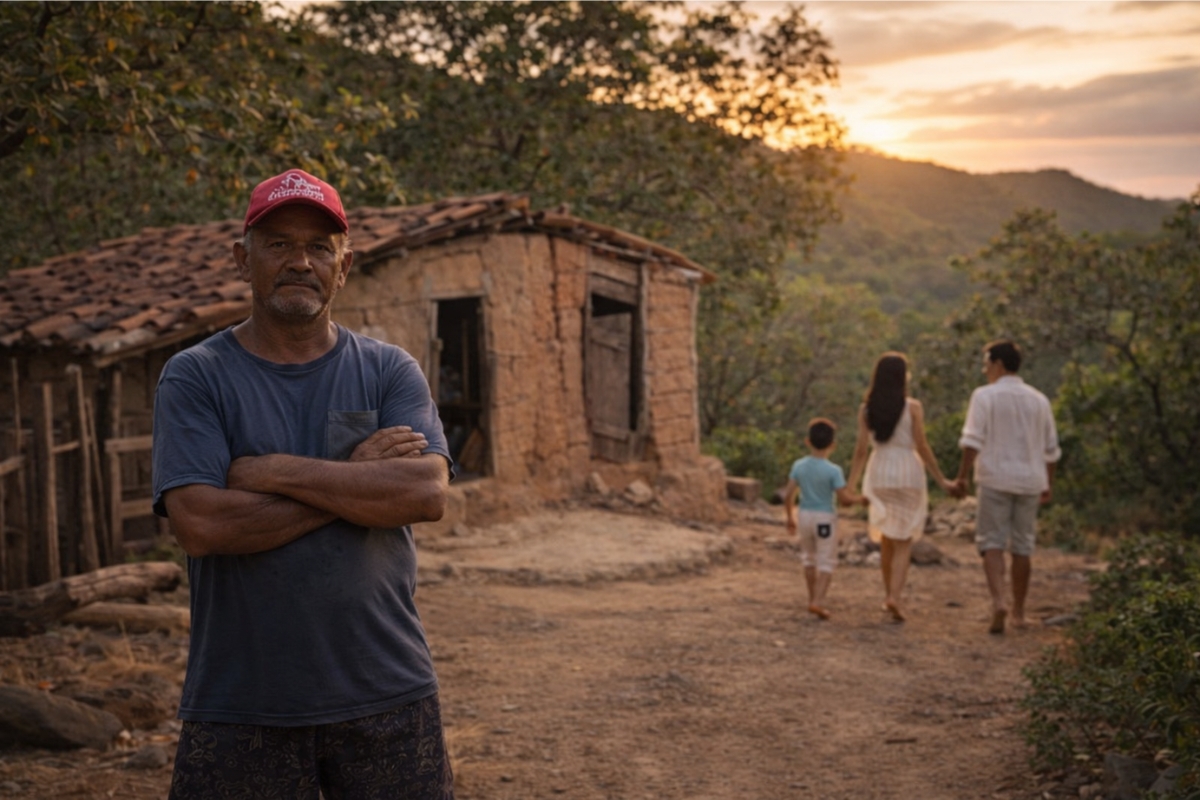


Antônio Pedro Matias Has Lived in Serrinha for 62 Years, Raises Cattle and Donkeys, Milks 6 Liters of Milk a Day, Stores Water in Thousands of Bottles, and Supports His Family with Continuous Work in the Field
At the top of Serrinha, in an elevated region with a cool climate, life follows its own pace. There Antônio Pedro Matias was born and raised, known as Pedro, who is now 62 years old and has never left the place where he built his story.
The landscape around the adobe house reveals a routine shaped by constant work. Cattle, donkeys, calves, corn, cassava, and stored water are part of a daily life where every task has a specific time and necessity.
A Lifetime Dedicated to Animals Since Childhood
Pedro says he has been caring for animals since he was a boy. The habit has become part of his identity. He claims that he enjoys raising them and feels satisfaction in seeing the animals well taken care of.
-
The world’s first octopus farm wants to open in the Canary Islands and is already provoking an international reaction: the plan aims to produce 3,000 tons per year.

-
Drought may be creating stronger superbugs in the soil and helping antibiotic resistance reach hospitals, warns a study highlighting a problem that could grow alongside extreme weather.

-
The biggest scam in history: Napoleon’s France deceived the United States by selling them a territory that was Spanish.

-
Why is the Danakil Desert so dangerous? It has unstable terrain and how extreme temperatures and toxic gases turn the region into one of the most hostile environments on Earth.


The donkeys play a central role in this routine. For him, they are the feet and hands of daily life. They are used to carry water, food, and everything that needs to be transported in the mountains. Therefore, they are fed corn three times a day, both in winter and summer.
Milk Every Day and Production Adjusted to the Rhythm of the Mountains
Even with the steep terrain, Pedro maintains daily milking. Every day, around 6 PM, he milks the cows considering the calf’s schedule.
Each cow produces about 6 liters of milk, an amount that varies with the weather. In winter, according to him, the work yields more. Water is more readily available, and the cattle feed better.
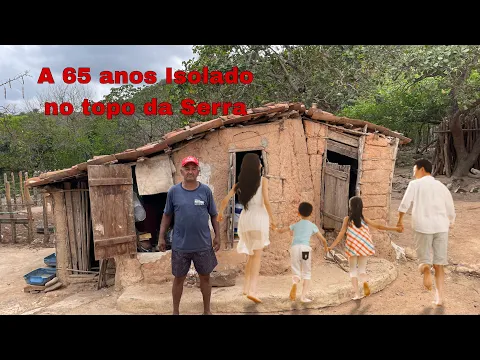

Water Carried on the Donkey’s Back is an Absolute Priority
In Serrinha, there is no piped water. All the water used in the house comes from wells. The main well is about 250 meters from the house.
To cope with the drought, the family stores water in everything they can. There are about 5,000 bottles, in addition to drums scattered around the property. During the rainy season, everything gets filled. In dry times, each reservoir makes a difference.
Family Shares Tasks to Keep the House Running
Pedro lives with his wife and two daughters. One of them helps daily with transporting water, as he suffers from back problems and cannot carry weight.
The women also take care of the plants around the house. Small gardens, fruit trees, and flowers show that, even with limitations, the yard remains productive.
Corn, Beans, and Cassava Ensure Food and Feed
Agricultural production follows the winter cycle. Pedro plants corn and beans every year. He explains that he harvests about 40 sacks of corn per crop and up to nine sacks of beans, depending on the year’s conditions.
Part of the corn becomes feed for the animals. Another part is stored. Cassava also enters the cattle’s diet, broken up and distributed to ensure that food never runs out.
Simple Tools and Old Machines Sustain the Routine
In the shed, the scene reveals the reality of the farmer. Axe, sickle, wheelbarrow, corn mill, and a motor used to grind feed are part of daily life.
Some maintenance requires investment. He mentions a repair that cost R$ 1,330, but explains that without the equipment, the work cannot proceed.
Adobe House, Wood Stove, and Organization in Daily Life
The house where Pedro lives is adobe, with a burnt floor and everything well organized. There is a wood stove, refrigerator, and simple utensils, each in its place.
The environment shows care and dignity. Even with few resources, nothing is lacking. Everything has a defined function and use.
Daily Work as a Way to Sustain Life in the Field
Pedro summarizes his routine with a straightforward phrase. Those who fight with a branch do not rest. He works from Sunday to Sunday, not by choice, but out of need.
The story lived in Serrinha shows a faithful portrait of rural Brazil. In high regions, far from the city and without basic infrastructure, families continue to produce, raise animals, and maintain a way of life that endures through time and difficulties.
Source: ISRAEL PURO SERTÃO









Gostei muito da matéria .
Muito simpático .
Deus o proteja sempre.
Amei o vídeo 👏👏👏
Queria ver as outras pessoas da família. Ele é muito simpático.