





 Portuguese
  English
  Spanish
  5 min of reading
  0 comments


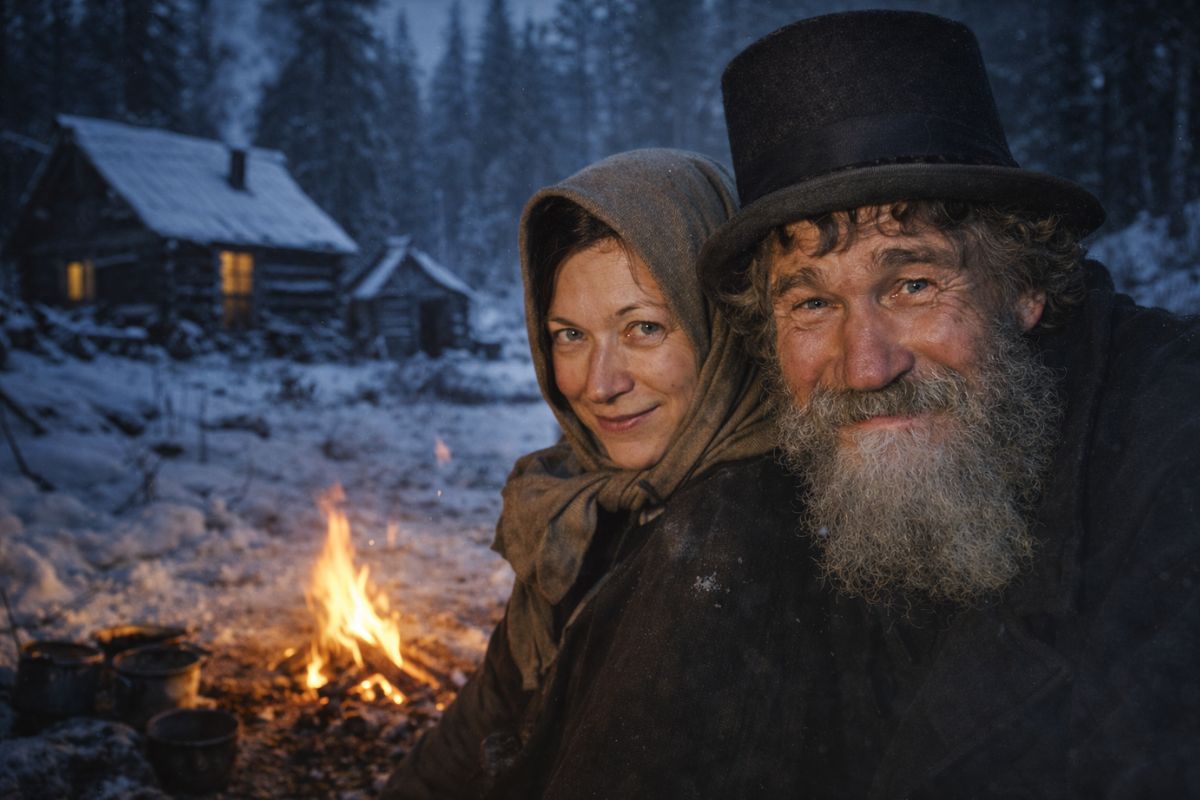
Russian Family Lived Isolated for Over 40 Years in the Siberian Taiga After Fleeing Political Persecution, Faced Extreme Cold, Hunger, and Wolves, and Was Only Found by Geologists in 1978.
A Russian family was isolated for over 40 years in one of the most inhospitable places on Earth, living as hermits in the Siberian taiga, far from any city and with no contact with the modern world, after fleeing political persecution in the 1930s.
The case came to light when geologists spotted improbable signs of human life high up on a mountain in 1978 and decided to make contact. What they found was a brutal survival routine, marked by extreme cold, hunger, hunting, losses, and a silent insistence on continuing to exist.
The Unlikely Discovery in the Heart of the Siberian Taiga
It was in 1978 that a group of geologists was flying over the southern taiga near the border with Mongolia, looking for a safe place to land.
-
From sertanejo star to international investor: Ana Castela invests millions in a mansion in the USA, creates a themed accommodation in Orlando, and shows that the “boiadeira” also wants to grow away from the stage.

-
The 10 most stunning motorhomes in the world: a $3 million trailer with a rooftop nightclub and garage for a Ferrari, “palaces on wheels” with Italian marble, private cinema, and five-star hotel luxury for billionaires.

-
Trump wanted to spend $400 million on the White House, but the courts prohibited the million-dollar construction.

-
How the Egyptians erected giant structures like pyramids, temples, and obelisks without modern technology, cranes, or engines still amazes the world and reveals the power of engineering based on ramps, levers, ropes, and colossal organization.

From the helicopter, the team saw something that simply didn’t fit the landscape: a garden on the slope of a mountain, too high and too isolated to be ordinary.
The scene was so unexpected that they flew over the site several times before concluding the obvious and absurd at the same time: there was human life there, at about 6,000 feet altitude, where wolves and bears seemed more likely than any person.
The Trail to the Cabin and the Signs of a Hidden Life

As they advanced, the signs became clearer. They found a simple path marked in the earth, then saw objects that would not exist there by chance, such as a walking stick and a log used as a crossing.
Next came even more direct clues of planned survival: a shed with a stock of dried potatoes, indicating preparation for long periods of scarcity, until finally the wooden cabin appeared, darkened by time and decay but still standing, anchored to the slope like a piece of the past refusing to disappear.
Why the Russian Family Was Isolated for Over 40 Years

The path to that isolation began in 1936. That was when the patriarch, named Karp, led his wife Akulina and two children, Savin and Natalia, to the taiga after his brother was shot and killed by Soviet guards. The escape was not a retreat; it was an attempt to survive.

They settled about 150 miles from the nearest populated area. There, outside of society, the family grew: Dmitri was born in 1940 and Agafia in 1943. The children grew up without knowing the modern world, without school, without cities, with no references to urban life.
How Was It Possible to Survive Without Contact with the Modern World

Survival depended on a harsh cycle: planting, harvesting, preserving, hunting, enduring the cold, and starting over. The basis of their diet came from garden vegetables, foraged berries, and trapped animals. Dmitri became an experienced hunter, navigating the forest barefoot to sustain the family.
Even so, nothing was guaranteed. Life in the taiga is described as a place where “death is a constant companion,” and for this family, it became a daily practice, not a metaphor.
The Extreme Cold and Hunger That Almost Ended Everything
By the late 1950s, the pressure mounted. In 1961, tragedy struck: snow fell in June. With insufficient food, they were forced to consume tree bark and even their own shoes.
Akulina refused food so that her children wouldn’t suffer and ended up dying of starvation. The hunger became a sentence, and survival seemed to have reached its limit.
The “Miracle” of the Rye Grain and the Slow Recovery of the Crop
Still in 1961, the family experienced what they considered a miracle: a single rye grain started growing in the garden. They tended to that sprout day and night, trying to prevent rats and other animals from eating it.
From that single grain, they managed to produce more seeds and slowly regenerate the crop, regaining a minimal thread of food security in a scenario where any failure meant disappearing from the map.
The Encounter with the Geologists and the Shock of the Outside World

When the geologists made contact, the initial reaction was one of apprehension. They had brought gifts without knowing how they would be received.
Karp did not accept anything at first but later accepted salt, a detail that shows the extent of their isolation: more than 40 years had passed since that mineral last crossed their lips.
The living conditions were described as “medieval,” but Karp showed quickness in understanding certain information from the outside world.
He did not believe that man had landed on the Moon, but he understood what satellites were, connecting the bright points in the night sky to something that observed the Earth.
The Losses After the First Contact and the Last Survivor

The reunion with humanity did not bring immediate relief. In 1981, just three years after the first contact, three of the children died. Only Karp and his daughter Agafia remained in the cabin.
Despite offers to move to a nearby village, they chose to stay where they were. In February 1988, Karp died, exactly 27 years after Akulina’s death, and was buried on the mountainside next to his children’s graves.
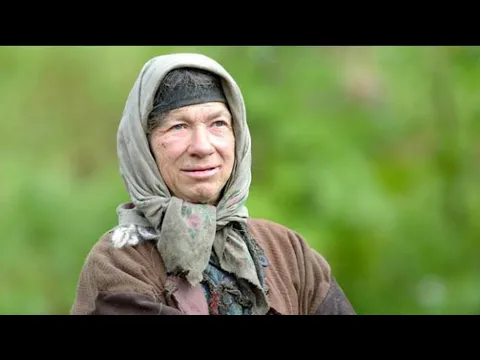
Agafia was left alone, the last survivor of a family that spent most of their life isolated from the world and, decades later, continued living in the forest, struggling to survive, almost untouched by the major events of the last century.
Could you stay isolated for over 40 years, without a city, without technology, and without contact with anyone, only with what the forest provides?








-

-

-

3 pessoas reagiram a isso.