





 Portuguese
  English
  Spanish
  5 min of reading
  0 comments


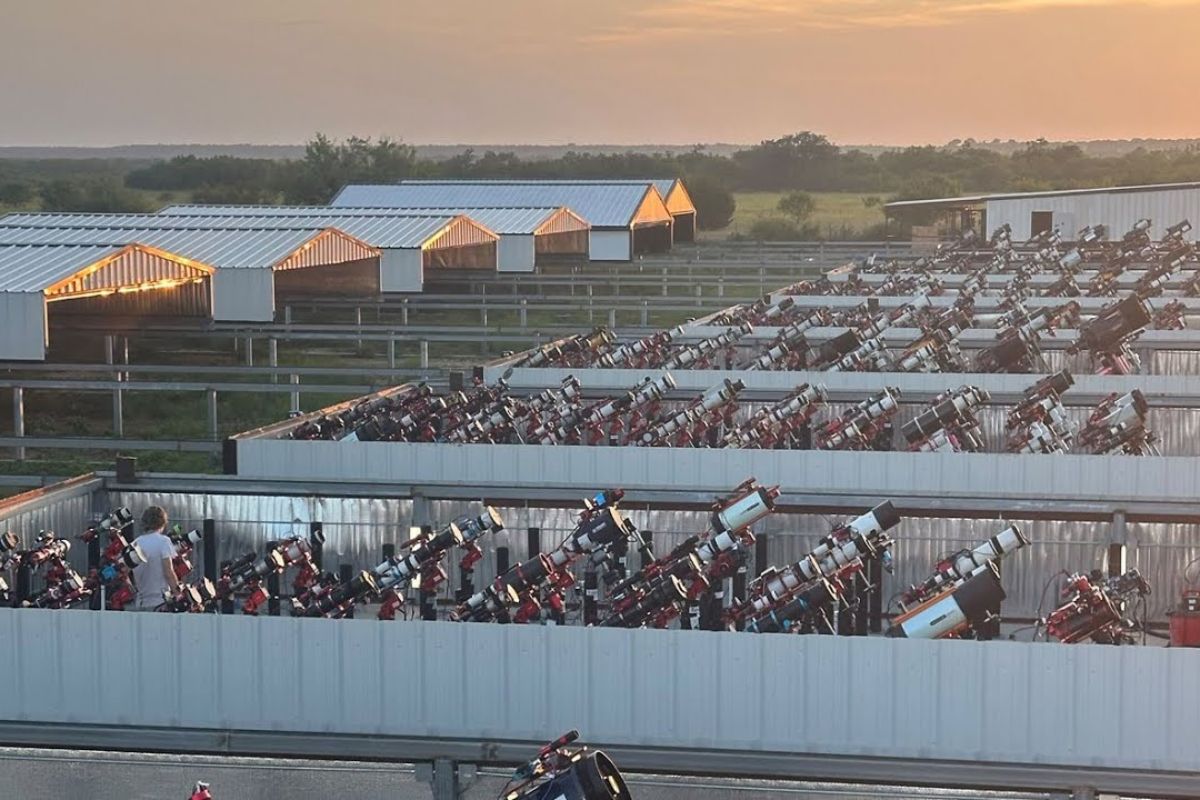
In The Rural Area Of Rockwood, The Farm In Texas Opened Sheds With Movable Roofs To House Remotely Controlled Telescopes Via The Internet. The Proposal Bypasses Light Pollution, Which Worsens 10% Per Year, And Turns Dark Sky Into A Digital Service For Observation, When Cities Let Stars Disappear On Many Urban Nights.
On The Night When The Northern Lights Became A “Colorful Spectacle” In A Report Displayed By CBS 19 News, Light Pollution Returned To The Center Of Debate For A Concrete Reason: Many People Can No Longer See What Happens Above The Streets. It Is In This Void That The Farm In Texas Enters As A Technical Alternative, With Remotely Operated Telescopes Via The Internet And Focus On Dark Sky.
The One Who Triggered This Shift Was Brave Falls, Amateur Astronomer And Co-Founder Of Starfront 18 Months Ago. The Logic Of The Service Is Direct: The Client Sends The Equipment, The Farm In Texas Maintains The Physical Structure, And The Internet Allows Operation From Afar, Including Live Broadcasts That Become Routine For Followers On Social Media.
Sheds That Open The Sky And An Operation Designed For Distance

The Most Visible Detail Is Almost Choreographed: Roofs Of Sheds Are Removed To Expose Rows Of Equipment, As If The Farm In Texas Became An Observatory For A Few Minutes.
-
Motorola launched the Signature with a gold seal from DxOMark, tying with the iPhone 17 Pro in camera performance, Snapdragon 8 Gen 5 that surpassed 3 million in benchmarks, and a zoom that impresses even at night.

-
Satellites reveal beneath the Sahara a giant river buried for thousands of kilometers: study shows that the largest hot desert on the planet was once traversed by a river system comparable to the largest on Earth.

-
Scientists have captured something never seen in space: newly born stars are creating gigantic rings of light a thousand times larger than the distance between the Earth and the Sun, and this changes everything we knew about stellar birth.

-
Geologists find traces of a continent that disappeared 155 million years ago after separating from Australia and reveal that it did not sink, but broke into fragments scattered across Southeast Asia.

The Choice For Sheds With Quick Opening Is Not Aesthetic; It Creates A Routine In Which Remotely Operated Telescopes Are Protected When Not In Use And Gain Full Access To The Sky When Observation Begins.
In Practice, The Value Lies In The Combination Of Logistics And Connectivity.
The Client Sends The Equipment, The Farm In Texas Stores And Operates The Physical Environment, And The Internet Does The Rest: Remote Control, Monitoring The Set, And Capturing Images.
The Infrastructure Becomes An “Arm” Of The Astronomer, Replacing Urban Backyard, Porch, And Garage With A Fixed Point Under Dark Sky.
Who Uses Remote Telescopes And Why The Internet Became The Bridge

The Audience Described By Starfront Breaks The Local Logic. There Are Clients In Europe, Indonesia, The United Arab Emirates, And Japan, All Connected By The Same Internet That Allows Remote Control Of Telescopes Without Travel.
The Farm In Texas Appears As A Physical Address That Unlocks A Global Ambition: To Observe Without Living Near The Dark Sky.
The Leap From “Passion” To “Service” Depends On A Logic That Often Goes Unnoticed.
When Observation Becomes Routine, The Bottleneck Shifts From Knowledge To Environment, And Light Pollution Has Transformed Environment Into A Rare Asset.
That Is Why The Farm In Texas Manages To Gather Distant People Around The Same Piece Of Sky, As If The Rural Address Became A Digital Meeting Point.
The Data That Changes The Game: Light Pollution And The Annual Loss Of Visibility
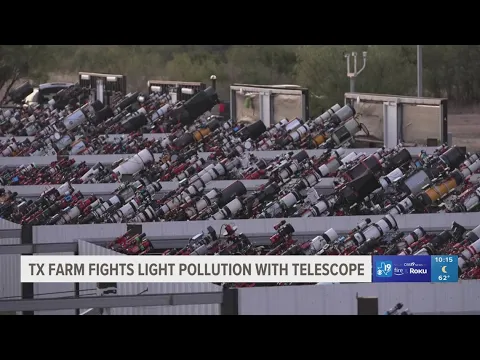

A 2023 Study Published In The Journal Science Concluded That, Each Year, The Sky Becomes 10% More Difficult To See.
The Number Does Not Describe Just Discomfort; It Signals A Trend: Light Pollution Is Not Static And, In Many Regions, Advances Faster Than The Cultural Adaptation Of Cities.
When Artificial Brightness Increases, The Stars Disappear First, Then The Reference Of The Sky Itself Disappears.
The Map Cited In The Survey Indicates A Particular Severity In The Eastern United States, Where Urban Density And Constant Lighting Compress The Observation Window.
In This Context, Dark Sky Ceases To Be A Landscape And Becomes Critical Infrastructure, And The Farm In Texas Positions Itself As A Functional Response To A Problem That Grows Without Asking For Permission.
Detroit As Contrast: Full Garage, Empty Sky
In The Outskirts Of Detroit, Chuck Ayoub Maintains A Garage Full Of Telescopes But Admits He Rarely Uses Them Anymore.
The Phrase “Light Pollution Is A Killer” Appears As A Direct Diagnosis From Someone Located About 20 Minutes From The Urban Center And Practically Feels The Cost Of Trying To Observe In A Sky Saturated With Lighting.
The Turning Point Was Sending Equipment To The Farm In Texas And Starting To Operate From A Distance.
On Most Nights, Ayoub Live Streams The Image From The Telescope To Followers On Social Media, While A Small Camera At The Base Allows Him To See The Equipment In Action.
The Scene Is A Shock Of Scales: He Is In Detroit; The Dark Sky Is In The Interior Of Texas; The Internet Connects The Two.
Invisible Galaxies And The Side Effect Of A Shared Discovery
Outside, Falls And Other Participants Identify Objects They Describe As Unprecedented For Them, Such As An Image Called “Crown Of Thorns Nebula.”
The Relevance Here Is Not In The Label, But In The Mechanism: Remotely Operated Telescopes In Dark Sky Increase The Chance Of Capturing Details That Light Pollution Would Erase In The Urban Environment.
This Technical Gain Has An Unexpected Social Effect. By Live Streaming And Sharing Images, The Observer Stops Being Lonely, And Observation Becomes An Event.
Astronomy, Which Seemed To Be Losing Ground In Cities, Reappears As A Collective Experience, Supported By A Farm In Texas That Operates As A Hub And By An Internet That Transforms Data From The Sky Into Conversation.
What Is At Risk When Stars Disappear From Daily Life
When Falls States That Light Pollution Prevents People From Dreaming, The Point Is Less Emotional And More Structural: It Is A Break In Reference.
The Loss Of Nighttime Stars Reduces Curiosity, Reduces The Sense Of Scale, And Reduces The Impulse To Look Up.
In This Sense, Dark Sky Is Not Just A Setting; It Is Part Of How People Place Themselves In The World.
The Farm In Texas Explores This Void With Pragmatism: It Provides Access To Dark Sky, Organizes Remotely Operated Telescopes, And Sells Connection Via The Internet.
But The Very Existence Of The Business Functions As A Warning: If Observing Depends On Outsourcing The Sky, Something Has Changed Permanently In Cities.
The Digital Solution Exists, But The Problem Remains Physical, Spread Across Poles, Facades, And Windows.
In The End, The Farm In Texas Becomes An Indicator Of The Time: Technology Provides Remote Telescopes And Internet, But The Scarcity Is The Dark Sky, Eroded By Light Pollution.
The Service Solves Individual Access, While The Collective Loss Of The Night Sky Continues Without A Simple Response.
In Its Place, When Was The Last Time You Saw Real Stars Without Having To Travel, And What Has Light Pollution Changed In Your Night Routine? If You Could Choose, Would You Prefer To Invest In Your Own Equipment, Use Remote Telescopes Via The Internet, Or Seek A Dark Sky Away From The City To Recapture That Feeling?







-

-

-

4 pessoas reagiram a isso.