





 Português
  Inglês
  Espanhol
  4 min de leitura
  0 comentários


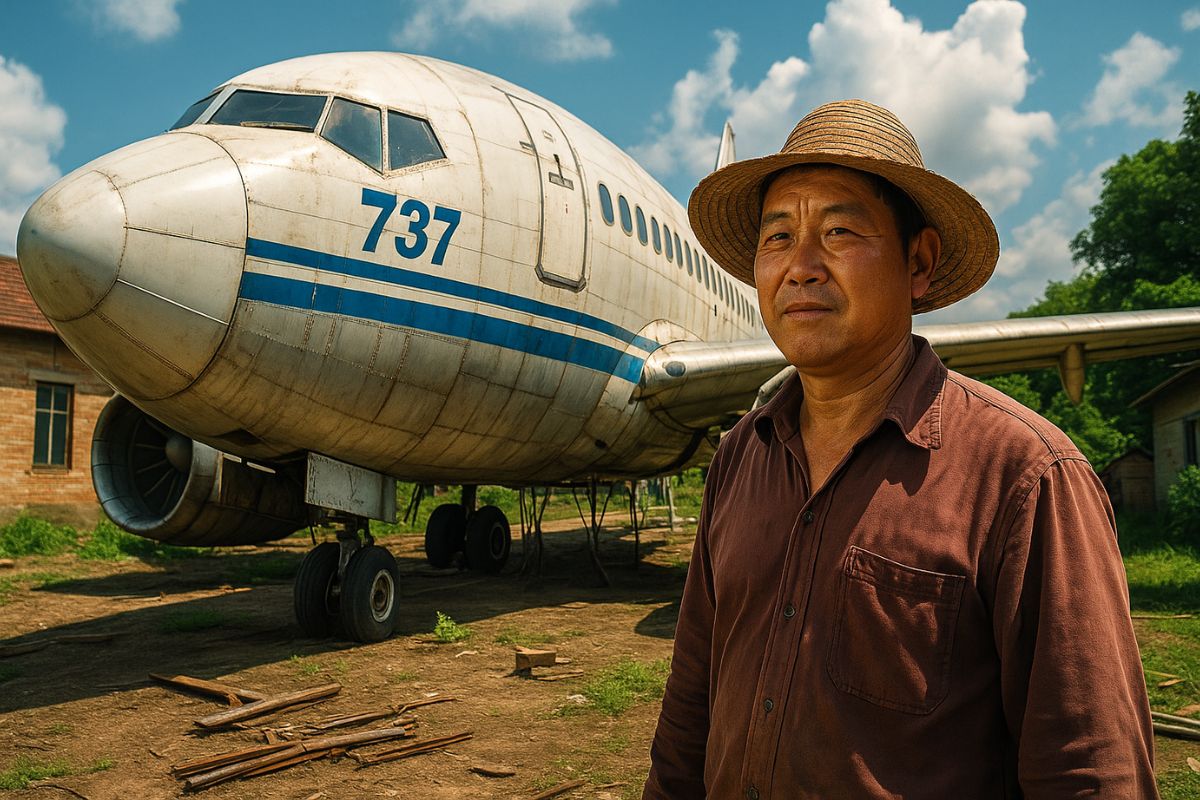
Functional Boeing 737 Replica Built with Scrap Metal in a Year Becomes a Symbol of Creativity and Persistence.
A true garage story (or rather, a backyard story): a Chinese farmer built a functional Boeing 737 replica on his own farm, transforming recycled metal into practical engineering. The project, measuring 35 meters in length, showed that passion, method, and time can substitute for budget and formal degrees.
The aircraft does not take off and was never designed to do so. “Functional,” here, means assembled cabin, complete structure, controls, lighting, and practical uses (such as a themed restaurant and visitation space). The functional Boeing 737 replica became a local attraction and a case study on how curiosity techniques can turn into business.
Who Made It, Where, and Why
The author is Wang Lanqun, a farmer from Henan province in China. With simple tools and access to scrap, he gathered metal parts, pipes, and sheets to reproduce the jet’s external proportions and internal setting.
-
The world’s first octopus farm wants to open in the Canary Islands and is already provoking an international reaction: the plan aims to produce 3,000 tons per year.

-
Drought may be creating stronger superbugs in the soil and helping antibiotic resistance reach hospitals, warns a study highlighting a problem that could grow alongside extreme weather.

-
The biggest scam in history: Napoleon’s France deceived the United States by selling them a territory that was Spanish.

-
Why is the Danakil Desert so dangerous? It has unstable terrain and how extreme temperatures and toxic gases turn the region into one of the most hostile environments on Earth.


With no formal training in aeronautical engineering, he guided himself using photos, reference measurements, and a lot of trial and error.
The motivation combines passion for aviation and practical vision: to create something that unites technological enchantment and income.
In rural areas, equipment of this scale attracts visitors, media, and curious onlookers, generating consumption at the themed restaurant and boosting the local economy.
How the Replica Got Built: Materials, Time, and Method
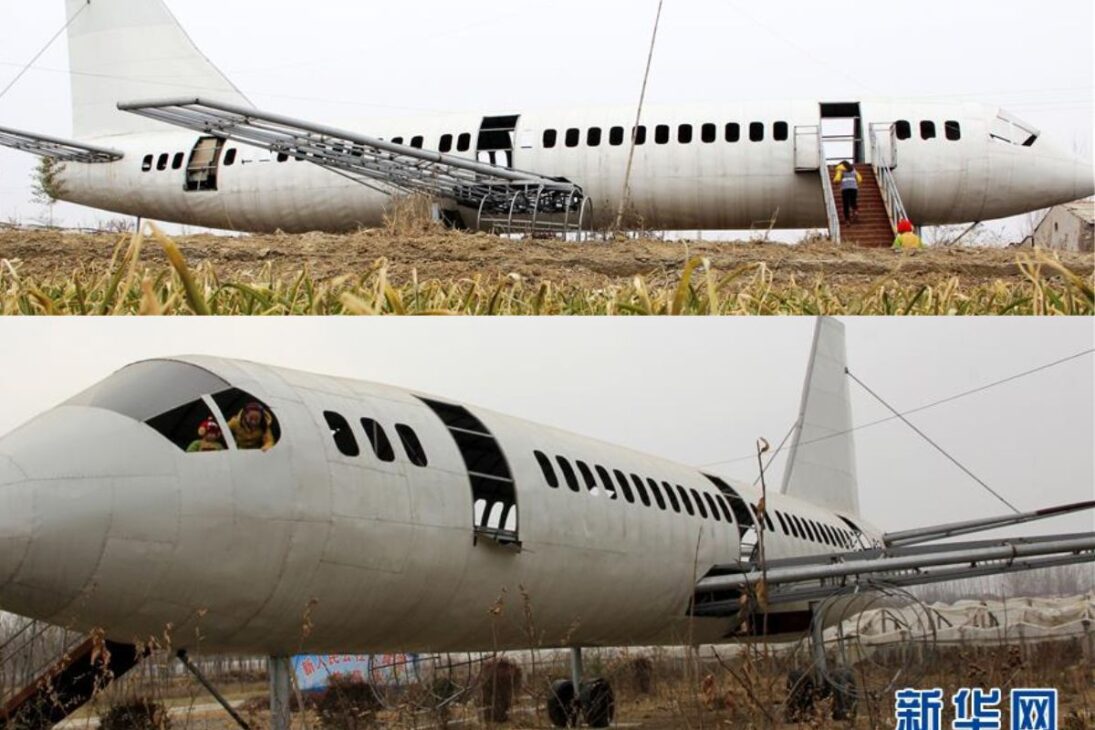
Wang spent about a year from start to visible finish. The structure is made of steel, with reinforcements and templates to reproduce the fuselage, wings, and tail, as well as cockpit assembly with panels, seats, and scenic controls.
Welding, cutting, sanding, and painting composed the repetitive cycle of the artisanal construction site.
The supply came from junkyards and industrial scrap, a strategy that reduces costs and makes a project of this scale possible outside a factory.
“Functional” does not mean “airworthy”: there are no flight certifications, real jet engines, or critical aviation systems; it is a static reproduction with practical uses (restaurant, exhibition, events).
What “Functional” Means and What It Does Not Mean
In the functional Boeing 737 replica, “functional” means real use of the space: doors, lighting, seating arrangements, cabin with layouts that interact with the public.
You can “pilot” the experience, not the airplane. It doesn’t fly, roll on a runway, or carry passengers like an aircraft.
Still, the realism impresses. Metallic textures, windows, nose, tail, and cabin with instruments create immersion.
In terms of safety, the replica follows building standards, not aviation: it relies on a fixed base, with structural reinforcements and controlled access for the public.
From Hobby to Business: Aircraft Restaurant and Neighborhood Tourism
The turning point is in the business model: the “backyard” jet became a themed restaurant, with lines of curious visitors and private events.
The experience sells from the “in-flight” menu to selfies in the cockpit, the average ticket price rises with ambiance, souvenirs, and reservations.
For the community, there is a multiplier effect: local traffic, jobs, and services.
For the creator, recurring revenue and maintenance financed by operations. Passion becomes an economic asset, proof that care and consistency can build an authentic tourist product.
Not an Isolated Case: The “Do It Yourself” Culture in Rural China
Wang is not alone. Zhu Yue built a full-size A320 with friends and 40 tons of iron, also converted into a themed restaurant.
Li Jingchun erected a smaller plane on the roof of his own house, on a tight budget. The common lesson: repurposing materials, self-taught learning, and creative commercial use.
This rural maker ecosystem combines skilled labor, technical curiosity, and local opportunities.
Projects arise from photos, simplified blueprints, and a lot of practice, demonstrating that innovation is not monopolized by academic centers.
Limits, Risks, and Legacy
It is crucial to separate aesthetics from aviation function: replicas are structural scenes, not aircraft. There are no operational jet engines, flight certification, or airworthiness tests.
The focus is on safe static use: reinforced floors, handrails, exits, and access control are rules of building and events, not aviation.
The legacy goes beyond just “wow.” The functional Boeing 737 replica proves that ambitious projects can arise from simple goals and daily rhythm.
Documenting processes, planning purchases, dividing stages, and testing solutions is a replicable method for any big dream whether it’s an airplane or a creative neighborhood business.
Wang’s story shows that “functional” means serving: a space that delights, educates, and sustains.
The functional Boeing 737 replica does not need to fly to elevate stories elevated a family, a neighborhood, and a good idea.
And you? If you had to turn a passion into a public experience, what would your “backyard airplane” be? For those already living in cities with handmade attractions: what captivates you more, the realism, the food, the photo in the cockpit, or the story behind the project?
Tell us in the comments what would make you cross the city to see a replica like this.






-

-

-

-

-

-

25 pessoas reagiram a isso.