





 Portuguese
  English
  Spanish
  5 min of reading
  3 comments


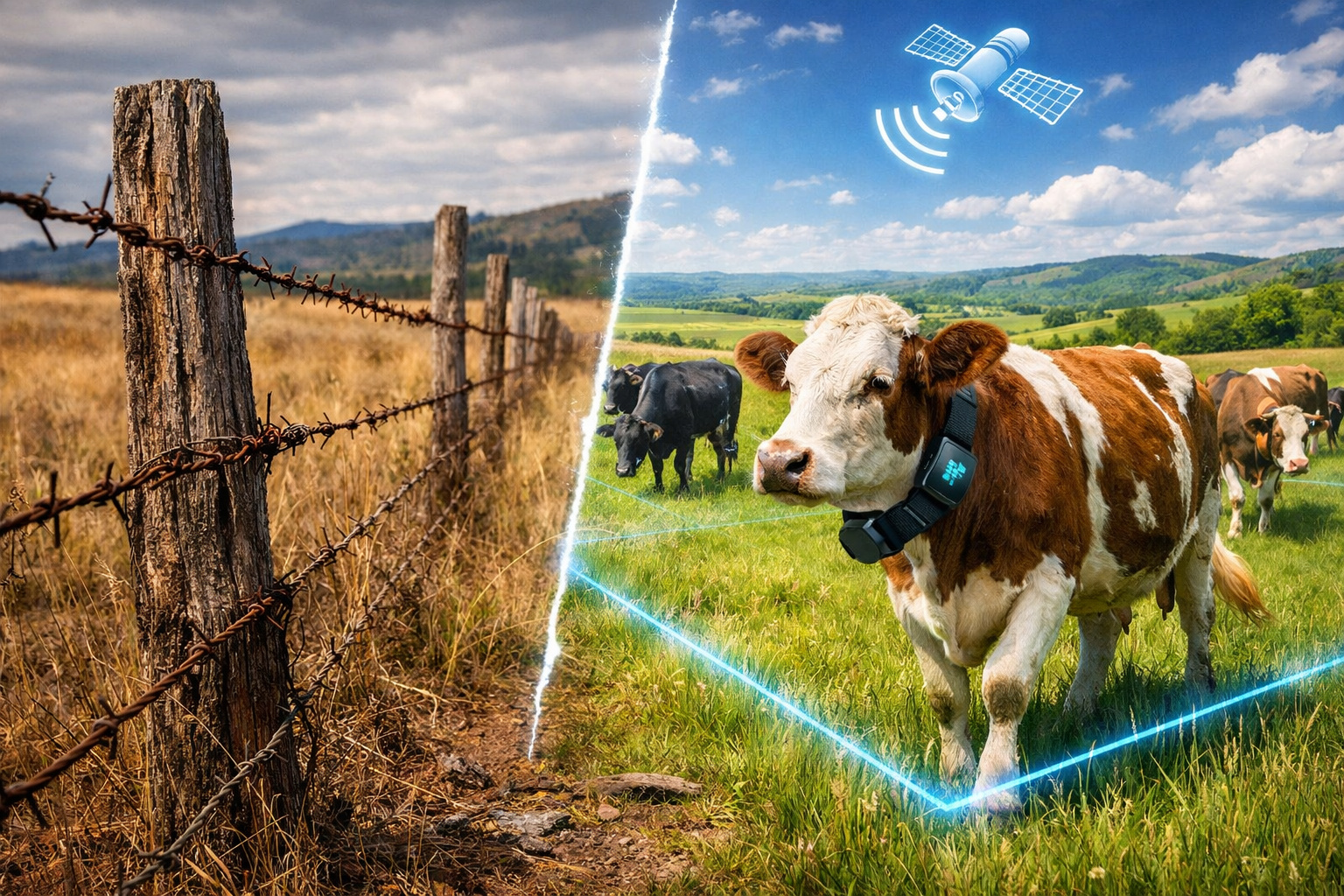


Virtual Fences Via GPS Replace Barbed Wire, Reduce Costs, Prevent Injuries to Cattle, and Revolutionize Livestock Management with Smart Collars.
For over a century, barbed wire has been an absolute symbol of livestock farming. It marked properties, separated pastures, and shaped the rural landscape in virtually every continent. But, quietly, this model is starting to be questioned. On farms in Australia, the United States, Europe, and already in pilot projects in Brazil, producers are leaving behind kilometers of steel and betting on something that until recently seemed unlikely in the field: virtual fences based on GPS and smart collars.
The logic is simple, but the impact is profound. Instead of installing posts, stretching wires, and dealing with constant maintenance, the producer draws the boundaries of the pasture on an app. The cattle start to respect invisible boundaries, learned through conditioning, without any physical barrier on the ground.
What Are Virtual Fences and How Do They Work in Practice
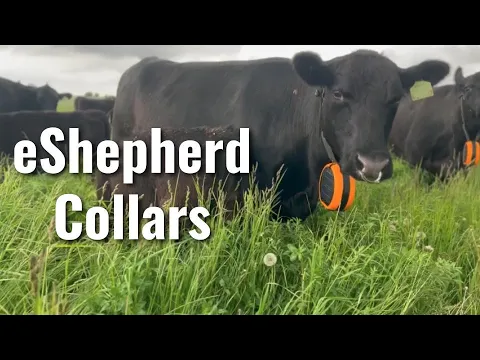
Virtual fences replace the physical boundary with a digital one. Each animal wears a collar equipped with GPS, motion sensors, and a small communication module. When the animal approaches the virtual boundary, the collar emits a sound signal. If it insists on advancing, it receives a mild electric stimulus of low intensity and short duration.
-
The sugar-energy sector advances with agricultural technology, but agricultural productivity still raises concerns.

-
The eggshell that almost everyone throws away is made up of about 95% calcium carbonate and can help enrich the soil when crushed, slowly releasing nutrients and being reused in home gardens and vegetable patches.

-
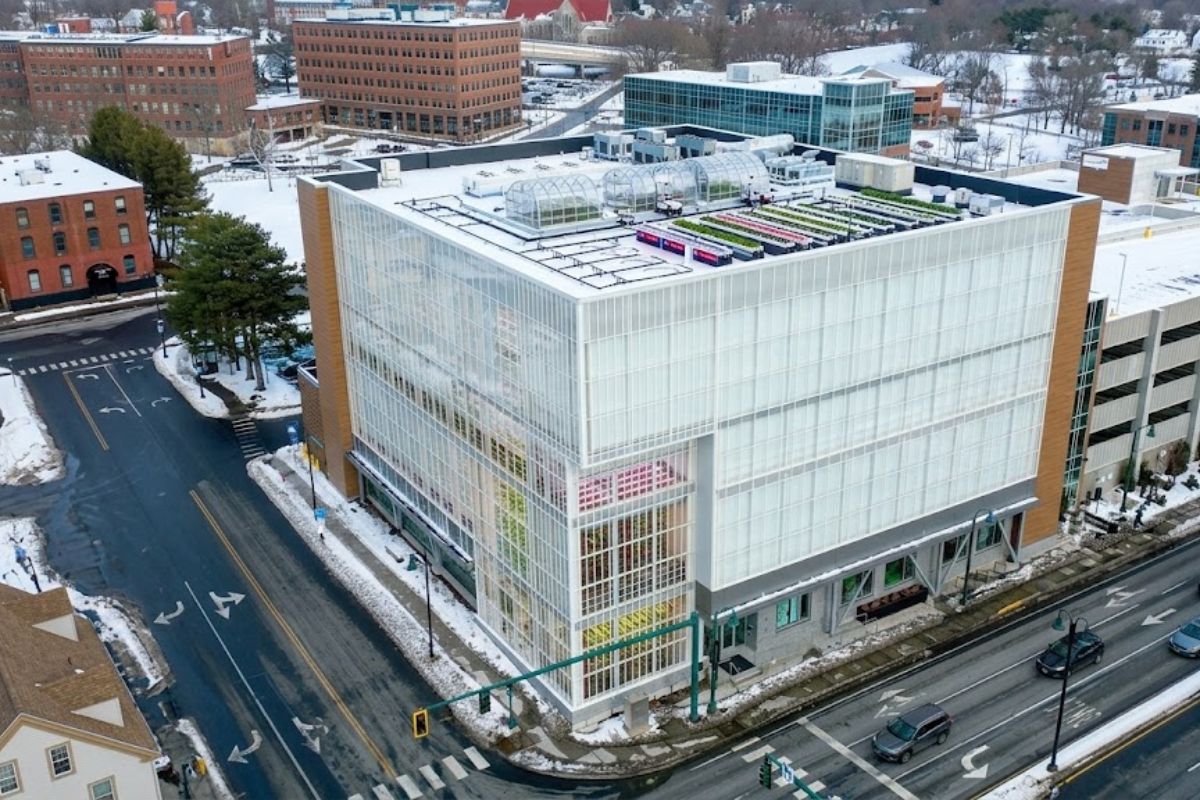
This farm in the United States does not use sunlight, does not use soil, and produces 500 times more food per square meter than traditional agriculture: the secret lies in 42,000 LEDs, hydroponics, and a system that recycles even the heat from the lamps.
-
The water that almost everyone throws away after cooking potatoes carries nutrients released during the preparation and can be reused to help in the development of plants when used correctly at the base of gardens and pots, at no additional cost and without changing the routine.


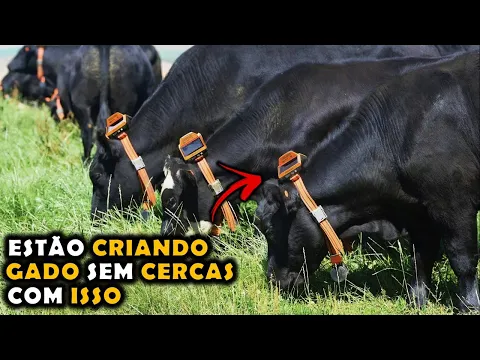

The goal is not to cause pain but to teach. Field studies show that after a few days of adaptation, most animals start to respond only to the sound warning, changing direction even before any additional stimulus. In practice, the cattle “learn” where the permitted pasture ends.
The whole system is controlled remotely. The producer can change the grazing limits in minutes, via mobile phone or computer, something unthinkable in the traditional model.
The Technology Behind Smart Collars
Behind the apparent simplicity lies a sophisticated combination of technologies. The collars use GPS for individual location, sensors that detect movement and direction, as well as communication via cellular or satellite network.
The data is sent to cloud platforms that allow monitoring of the herd’s behavior almost in real time.
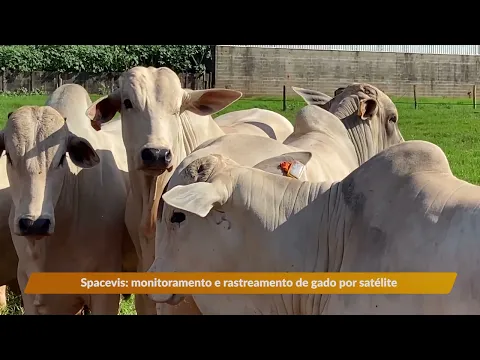
In addition to defining boundaries, many systems record grazing patterns, daily movement, and rest time. This transforms the virtual fence not just into a barrier, but into a tool for zootechnical management. Abrupt changes in behavior can indicate stress, illness, or nutritional problems, allowing for early intervention.
Real Projects Already in Commercial Use Around the World
The technology is not limited to laboratories or isolated tests. Companies and institutions are already operating commercial systems on a large scale. One of the best-known examples is Nofence from Norway, a pioneer in the use of virtual fences for cattle, sheep, and goats, with increasing adoption in Europe and the United States.
In Australia, the eShepherd system, developed by the CSIRO scientific agency, has been tested and applied on large cattle properties, with peer-reviewed studies demonstrating rapid learning by the animals and significant cost reduction.
In the United States, the company Vence integrates virtual fences with soil maps, environmental areas, and advanced rotational management, being adopted by large cattle ranches.
These projects have one thing in common: they are all operational, with continuous use and measurable results.
Cost Reduction and the End of Constant Maintenance
One of the main attractions of virtual fences is economic. Physical fences require high initial investment, frequent maintenance, replacement of posts, wires, and specialized labor. In large areas, the costs multiply rapidly.
With virtual fences, most of these expenses disappear. There is no steel, no posts, no physical maintenance. Field studies indicate reductions of up to 70% to 80% in costs related to cattle containment over time, especially in large properties or with rugged terrain.
Moreover, operational flexibility reduces indirect costs. The producer can adjust management according to the season, the availability of pasture, or the need to protect sensitive areas, without physical works or interventions.
Animal Welfare and the End of Injuries Caused by Wire
Another direct impact is on animal welfare. Barbed wire is one of the main causes of injuries in cattle, sheep, and goats, resulting in productive losses, infections, and veterinary expenses. By eliminating physical contact with fences, these risks practically disappear.
Research conducted in Australia and Europe indicates that, after the initial adaptation period, the stress levels of animals with virtual fences are not higher than those observed in traditional systems. In many cases, there is even a reduction in stress, as management becomes more predictable and less aggressive.
Rotational Management, Environmental Preservation, and New Possibilities
Virtual fences also change the way pasture is managed. With digital boundaries, the producer can implement rotational grazing with precision, controlling the time the cattle spend in each area and allowing for soil and vegetation recovery.
This facilitates the protection of springs, riparian areas, and permanent preservation areas, without the need to physically fence these locations. It is enough to draw a prohibited area in the system. The result is a more efficient integration between livestock production and environmental conservation.
Real Limitations and Challenges That Still Exist
Despite the advancements, the technology is not without challenges. The initial cost of the collars is still high in some markets, which may hinder adoption by small producers. Dependence on connectivity, whether cellular or satellite, is also a critical factor in remote areas.
There are still regulatory and cultural debates over the use of electrical stimuli, even if mild and controlled. In some countries, legislation is still being adjusted to accommodate this new form of management.
The replacement of barbed wire with digital boundaries is not just an incremental innovation. It is a structural rupture in a century-old practice of livestock farming. For the first time, the confinement and management of cattle no longer depend on permanent physical infrastructure and are defined by software.
This change reduces costs, improves animal welfare, increases management efficiency, and opens space for more flexible livestock farming integrated with the environment. In a sector pressured by productivity, sustainability, and impact reduction, virtual fences emerge as one of the most profound transformations underway in the field.
More than eliminating steel wires, this technology redefines the relationship between technology, territory, and animal production and signals that the future of livestock farming will increasingly be digital, even in the most rural scenarios.









Muito bom está nova técnica para o agronegócio, a minha sugestão é de fazer uma nova tornozeleira eletrônica nos mesmos moldes para condenados da justiça como o ex Bolsonaro que destruiu a tornozeleira.
Em princípio a ideia é boa, mas é o **** do vizinho que não quer adotar a coleira?
Vai colocar coleiras cabritos, cabras galinhas?
Achei ótimo essa ideia, tenho interesse.