





 Portuguese
  English
  Spanish
  5 min of reading
  0 comments


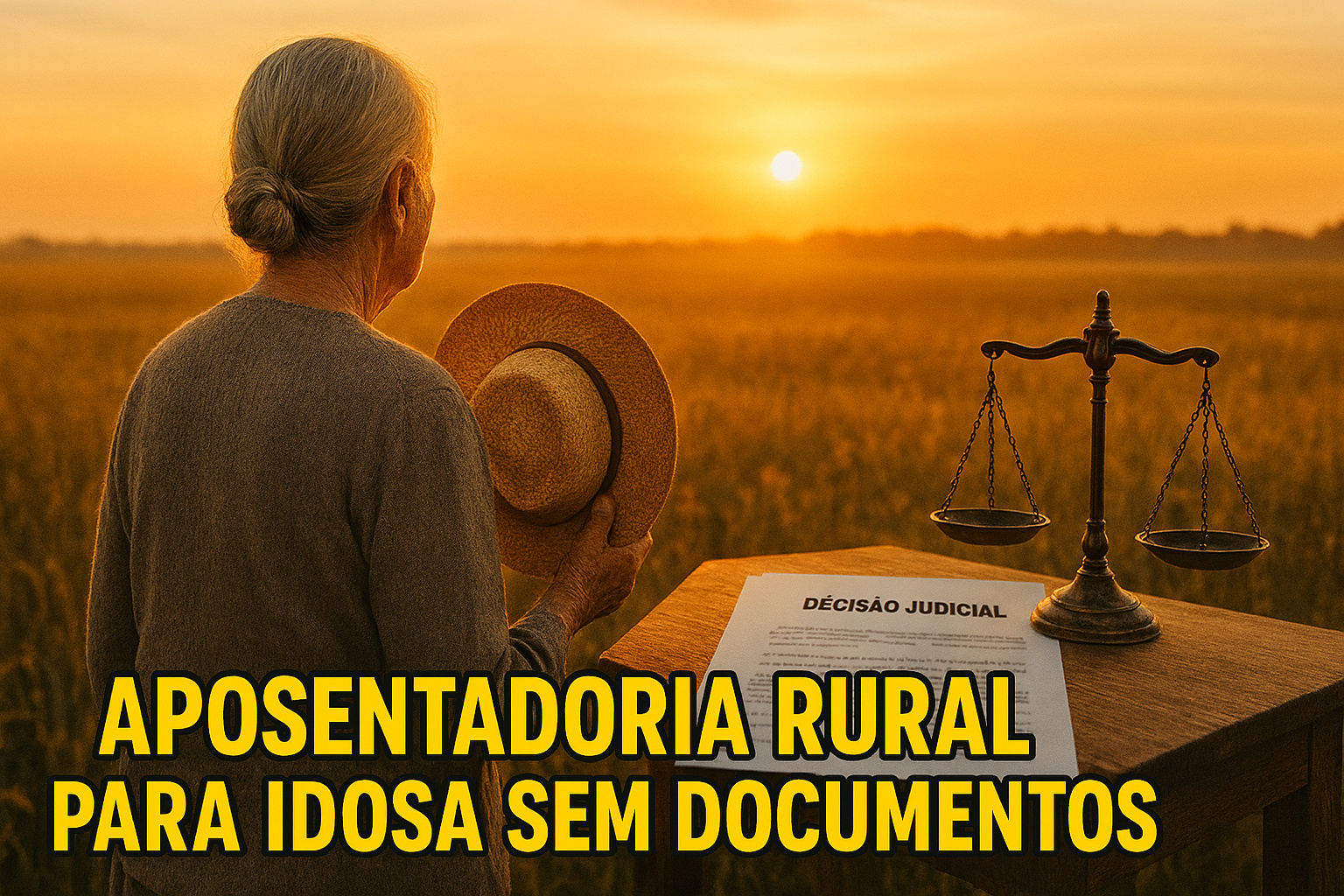
Federal Court Guarantees Rural Retirement to 63-Year-Old Woman Even Without Documents, Accepts Testimonial Evidence and Orders INSS to Pay Back Benefits.
A decision from the Federal Court in Guarapuava, Paraná, has reignited the debate about the real access of rural workers to Social Security and may change the fate of thousands of insured individuals who have been made invisible by the system. The 2nd Federal Court of Guarapuava/PR ruled that the INSS grant old-age rural retirement to a 63-year-old, illiterate worker, even without the presentation of formal rural work documents.
The magistrate recognized over 15 years of activity in the field based solely on testimonial evidence and personal statements, applied a gender perspective, dismissed any claims of prescription or expiration, and ordered the immediate implementation of the benefit at the value of a minimum wage, as well as the payment of all retroactive amounts since the date of the administrative request. The information was disclosed by the portal Migalhas, based on data from TRF4.
The Reality of Those Who Worked Their Whole Lives in the Field Without Ever Having a Record
The author of the action is a typical rural worker from the most vulnerable base of the Brazilian countryside. Illiterate, rural day laborer, without a signed contract, no formal contracts, and no official documents that proved the link to agricultural activity, she spent her life providing services on farms, properties, and small productions, always informally.
-
The noise law will no longer be in effect at 10 PM starting in June with a new rule valid during the 2026 World Cup.

-
The Chamber opens a debate on driver’s licenses at 16 years old as part of a reform that includes around 270 proposals to change the Brazilian Traffic Code and may redesign rules for licensing, enforcement, and circulation in the country.

-
The new Civil Code could revolutionize marriages in Brazil with “express divorce” and changes that could exclude spouses from inheritance.
-
Banco do Brasil sues famous influencer for million-dollar debt and intensifies debate on delinquency, risks of seizure, and direct impact on Gkay’s credibility.



Upon reaching the minimum age for rural retirement, she sought the INSS. As occurs in thousands of similar cases every year, the benefit was denied on the grounds of lack of documentary evidence of rural activity.
It was only in court that her work history could be adequately analyzed from the perspective of the social reality of the Brazilian countryside.
What the Judge Recognized in the Process
In the ruling, the magistrate was straightforward in pointing out that requiring formal documentation from poor, illiterate, and historically invisible rural day laborers imposes a discriminatory barrier to accessing Social Security. Therefore, she adopted three fundamental pillars:
- Recognition of Testimonial Evidence as Sufficient
- Analysis of the Social Reality of Rural Women
- Explicit Application of Gender Perspective
The testimonies collected in court proved that the insured worked for over 15 years in the rural environment, fulfilling the minimum time required for old-age rural retirement.
Thus, the magistrate concluded that the absence of documents cannot, by itself, prevent the recognition of a constitutional social security right.
The Value of Retirement and Guaranteed Arrears
In addition to ordering the grant of the benefit, the court determined:
- Immediate Implementation of Rural Retirement
- Value of a Minimum Wage per Month
- Payment of All Arrears from the Date of the Administrative Request
- Permanent Registration of Rural Time in the Insured’s Registration with the INSS
In practice, this means that the elderly woman not only began to receive the benefit monthly but will also be entitled to a lump sum that can exceed tens of thousands of reais, depending on how long the process took.
Why the Decision Dismissed Prescription and Decay
The INSS often claims prescription or decay in old cases. However, the magistrate dismissed these claims because:
- the retirement is a continuing benefit;
- the administrative request was formalized;
- the delay was due to the denial by the agency itself.
Thus, the court understood that the right remained intact, including regarding the arrears.
The Gender Perspective as a Central Element of the Decision
One of the most relevant points of the ruling was the explicit application of the gender perspective. The magistrate recognized that:
- Rural women have historically had less access to documents;
- Many worked as day laborers without formal ties;
- Female production in the field has been invisible for decades.
By adopting this lens, the court stated that the analysis of evidence cannot ignore the structural inequalities faced by women in rural areas. Requiring them to meet the same documentary standard as a formal urban worker effectively prevents access to their rights.

What the Law Says About Rural Retirement Without Documents
Social security legislation allows rural workers to prove their activity through various means, including:
- Testimonial Evidence;
- Indirect Documents in the Name of Third Parties;
- Rural Registrations;
- Declarations from Unions.
The problem is that, in practice, the INSS tightens the criteria, which generates an avalanche of administrative denials that are only reversed in court.
The decision of the Federal Court of Guarapuava reinforces that the judiciary cannot reproduce the same bureaucratic rigidity of the social security agency.
How Many People Could Be Impacted by Decisions Like This
Data from the judiciary itself indicates that thousands of social security actions each year involve rural retirement denied due to lack of documents. A large part of these actions is proposed by:
- Older Women;
- Informal Workers in the Field;
- Day Laborers;
- Seasonal Workers;
- Small Producers Without Formal Registration.
The decision serves, in practice, as a legal alert to the INSS that the simple absence of documentation cannot outweigh a lifetime of work validated by witnesses.
The Social Impact of Granting Rural Retirement
For those living off the informal rural economy, retirement means:
- Stable Income;
- Access to Medications;
- Guaranteed Food;
- Financial Independence in Old Age;
- Reduction of Dependence on Others.
In the specific case of this 63-year-old woman, the decision represents a complete turnaround in dignity after decades of invisible work.
What This Decision Signals to INSS
Even though it is not a binding precedent, the decision:
- Reinforces Case Law Favoring Testimonial Evidence;
- Expands Recognition of Gender Perspective in Social Security Law;
- Pressures INSS to Review Excessively Rigid Administrative Criteria;
- Reduces the Margin for Automatic Denials.
In practice, the judiciary makes it clear that it will not accept that bureaucracy excludes rural workers from the social protection system.
Who Can Benefit from This Understanding
Those who can rely on this type of decision include:
- Rural Women Without Work Documents;
- Day Laborers in the Field;
- Seasonal Workers;
- People Who Can Only Prove Rural Activity Through Witnesses.
Each case depends on individual analysis, but the legal path is becoming increasingly established.
A Direct Message for Those Who Had Their Retirement Denied
The main message of the decision is clear: those who worked in the field do not lose the right to retirement just because they do not have signed papers. Rural work exists, has economic, social, and social security value, even when performed outside formalization.
The decision of the 2nd Federal Court of Guarapuava goes beyond an individual case. It exposes a structural reality of rural Brazil, where thousands of women have worked for decades without any formal recognition.
By admitting testimonial evidence, dismissing prescription, applying gender perspective, and guaranteeing retirement with back payments, the Federal Court reaffirms a basic constitutional principle: the right to social security cannot be a privilege for those who had access to documents, but a guarantee for those who actually worked.










-

-

-

-

6 pessoas reagiram a isso.