





 Portuguese
  English
  Spanish
  4 min of reading
  0 comments


There Was a Time When Rapid Changes, Unexpected Discoveries, and Intense Transformations Were at the Center of Attention. Among Remarkable Advancements and Surprising Facts, the News Gained Strength, Attracting Attention Due to the Immediate Impact and the Implications That Could Alter Routines, Strategies, and Even the Way We Think About the Future.
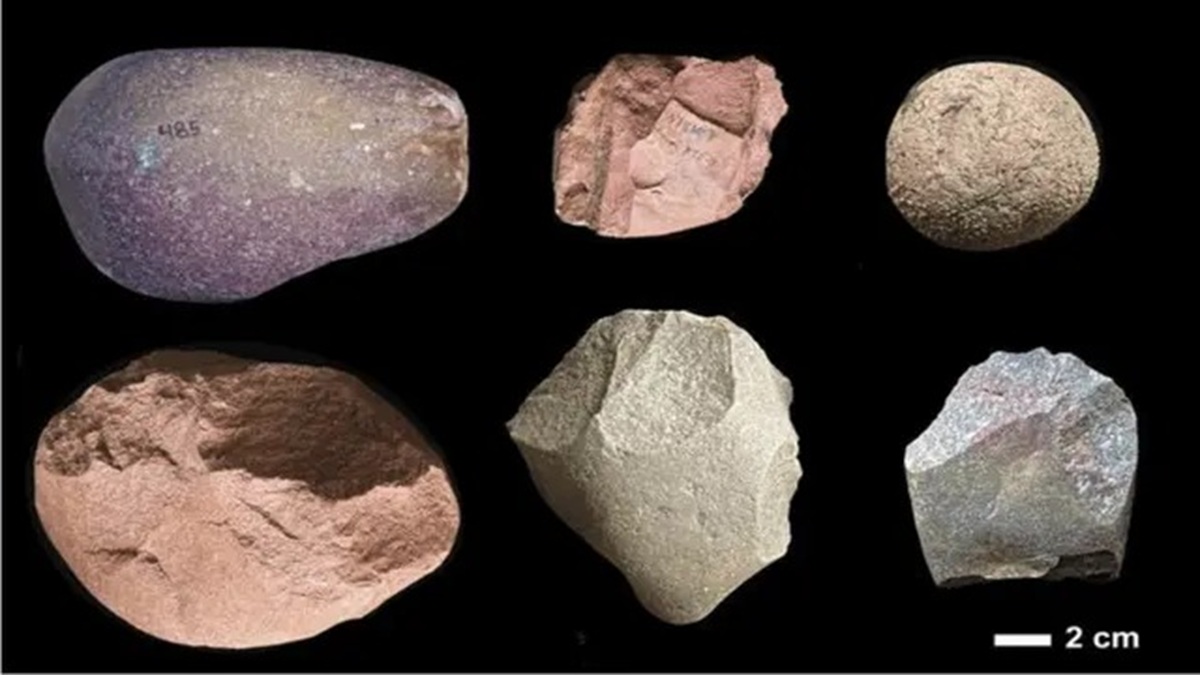
A study from the Smithsonian National Museum of Natural History provided new evidence about the behavior of early hominins. Researchers found in Kenya a set of 2.6 million-year-old tools, considered one of the oldest in the world.
The find pushes back the proof that humans transported stones over long distances by about 600,000 years. This means that the practice was older than previously thought, showing planning and organization much earlier than expected.
The Oldowan Toolkit
These tools are part of what is known as the Oldowan toolkit. Known for their durability and versatility, they marked a significant advancement in the use of stones.
-
China has created a mass-produced hypersonic missile that costs the same as a Tesla, and this is changing everything in modern warfare because the United States cannot defend itself without spending millions.

-
100% Brazilian technology transforms agricultural waste into a meat-scented ingredient using fungi from the Amazon rainforest. The process does not use excessive water or chemicals, and it also increases the nutritional value of the final product.

-
Psychology reveals that adults who avoid conflicts at all costs are not balanced individuals, but rather children who learned in the worst way that expressing emotions brought punishment and now live paralyzed by the fear of expressing themselves.

-
Goodbye pet hair on clothes: a washer with an internal filter promises to remove up to 5 times more hair than regular machines and uses an XL trap dryer system to capture what remains.


Researchers from the Smithsonian, Cleveland Museum of Natural History, and Queens College explained that previous studies focused on the shape of the tools. The new work, published in the journal Science Advances, shifted the focus to how these objects were transported.
Rick Potts, senior author of the study, stated that taking material to food-rich locations was already part of human behavior at the beginning of the Oldowan. This reveals a structured thought process and a higher degree of adaptation.
Tools for Large Prey
The researchers also found the earliest evidence of hominins using stones to hunt large animals.
According to the study, the variety of uses shows that even at this early stage, the tools enhanced the survival capacity of hominins. They were used for cutting, scraping, and handling different tasks, showing that the relationship between stone and food was vital.
A press release highlighted that the toolkit allowed for an increased consumption of large prey. The material was located in Nyayanga, in southwestern Kenya, and helps to better understand the evolution of human thought.
How They Were Made
About three million years ago, hominins had already mastered techniques for making tools. They used hammers to break stone cores and create sharp flakes.
Breaking, slicing, and scraping became common actions in daily life. This skill opened new possibilities for food and expanded the variety of prey consumed.
The important detail was the choice of material. The best quality stones needed to be sourced from distant locations. Therefore, stone transportation played a fundamental role.
The Surprise of the Research
Emma Finestone, the study leader, pointed out that the Nyayanga toolkit is very old within the Oldowan tradition. Previously, scientists believed that the transportation of stones over long distances emerged much later in human evolution.
This advancement indicates that our ancestors were already thinking beyond the immediate environment. They traveled kilometers to secure high-quality raw materials, something that is nonexistent among non-human primates, which carry stones and food over much shorter distances.
The Importance of Transport
According to the press release, transporting resources was a significant milestone in evolution. This behavior shows that hominins could plan ahead and assess what would be necessary to process food.
They created a “mental map” of the surrounding environment, remembering where the best stones were located. This mapping guided their actions and reinforced their survival strategy.
Rick Potts explained that the mental maps of the first tool makers extended far beyond their immediate space, reaching several kilometers. Thus, hominins could gather materials at one point and shape what they needed at their base.
Innovations That Lasted Millions of Years
This skill sustained technological innovations for millions of years. The idea of gathering raw materials and making tools at specific locations established a pattern that accompanied the entire course of human evolution.
Moreover, the study reinforces that the reliance on tools has always been linked to the capacity for adaptation. They were used to solve everyday challenges, such as hunting, cutting, preparing, and better utilizing found resources.
Reflections on the Present
Emma Finestone stated that understanding how this relationship began helps to comprehend our connection with tools today. In her words, “humans have always relied on tools to solve adaptive challenges.”
Therefore, studying this beginning allows for a better perception of how we still depend on them in a technology-driven world. The difference is that now the instruments are not stone flakes, but complex digital machines.
Even so, the logic of creating practical solutions to overcome difficulties remains the same. The Nyayanga toolkit reveals that this strategy has deep roots in the history of humanity.








Seja o primeiro a reagir!