





 Portuguese
  English
  Spanish
  4 min of reading
  18 comments


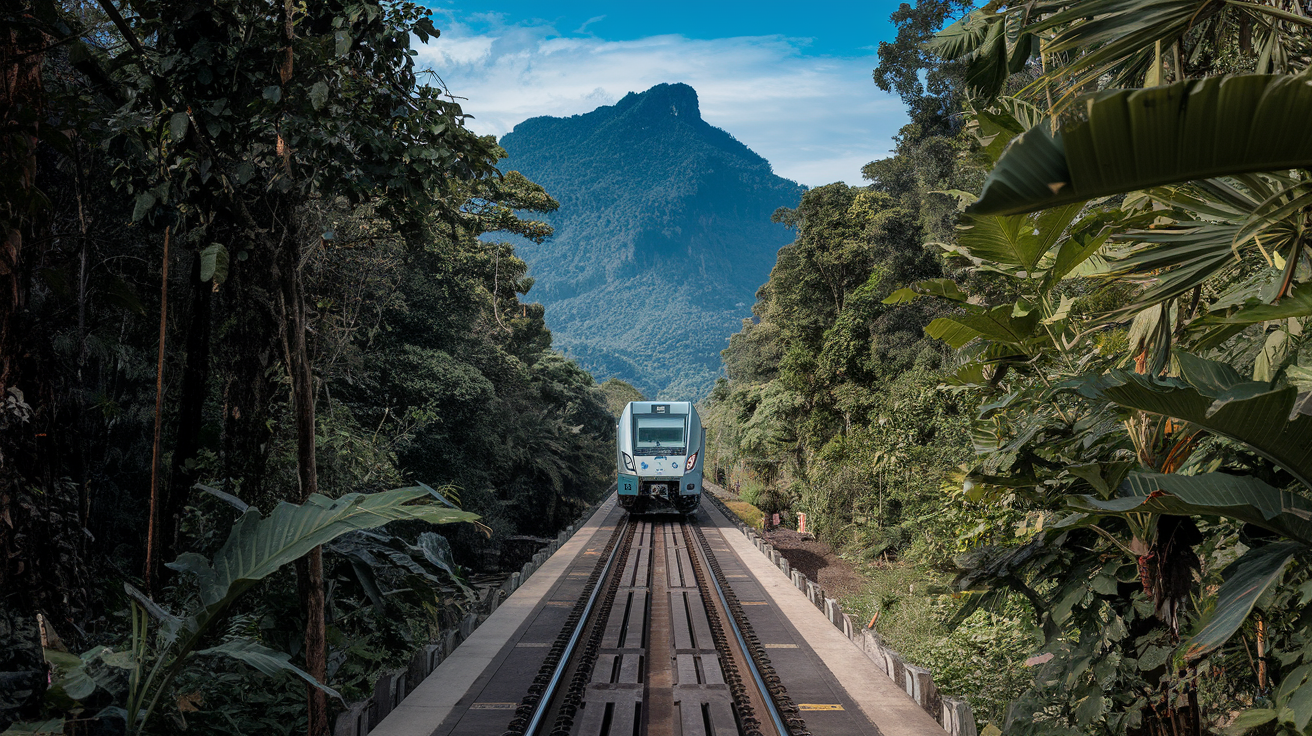


The Transcontinental Railway Is a Billion-Dollar Project That Could Transform Trade Between Brazil, Peru, and China. However, Environmental and Diplomatic Challenges Threaten Its Future. This Route Is More Than Just Logistics: It Is a Strategic Piece for China’s Global Dominance. Will the Railway Ever Become a Reality?
Imagine a route capable of linking the heart of South America directly to the Pacific, transforming international trade and revolutionizing the transport of goods.
This is the promise of the ambitious Transcontinental Railway, a billion-dollar project that not only challenges geographical barriers but also reignites geopolitical disputes.
Despite its potential, the project faces environmental and diplomatic challenges that could delay its realization. What is really behind this historic investment?
-
Brazilian city bets on the business environment to generate jobs and attract investments in the energy sector — secretary reveals strategy at Macaé Energy 2026.

-
50 viaducts, 4 tunnels, 28 bridges, and 40 kilometers of bike paths: BR-262 in Espírito Santo will receive 8.6 billion reais for the largest engineering project in the state’s history, inspired by the Immigrant Highway in São Paulo.

-
Brazil produces too much clean energy and doesn’t know what to do with it: over 20% of solar and wind capacity was wasted in 2025 while investors flee and 509 renewable generation projects were abandoned in the last year.

-
Piauí will produce a new fuel that replaces diesel without needing to change anything in the truck’s engine and reduces pollutant gas emissions by half: truck drivers from all over the Northeast are already celebrating the news that will arrive later this decade.


At the center of this massive undertaking is a strategic partnership between Brazil, Peru, and China, aiming to connect the two oceans through a high-capacity railway.
With an investment of R$ 581 billion (US$ 100 billion), the project aims to reduce logistics costs, increase the competitiveness of South American exports, and consolidate China’s presence in the region, according to experts.
The railway is expected to be a central theme during Chinese President Xi Jinping’s visits to Brazil and Peru, planned for the end of this month, as he passes through the G20 Summit in Rio de Janeiro.
What Is the Transcontinental Railway?
The Transcontinental Railway aims to connect Brazil to Peru through a rail line that will traverse some of the most challenging regions of the continent, such as the Amazon Rainforest and the Andes Mountains.
According to information from the Brazilian government, this route will have the capacity to transport a vast volume of goods, reducing reliance on traditional maritime routes, such as the Panama Canal.
For Brazil, this means an opportunity to facilitate the export of commodities such as soy and iron ore, while for China, the project represents direct access to South America’s natural resources, strengthening its position as a global power.
According to sources from the Peruvian government, the railway will also benefit small local producers by improving regional transport infrastructure.
An Advance in the New Silk Road
The project fits into China’s ambitious strategy of the New Silk Road, which aims to expand trade connections between Asia and other regions of the world.
For China, the railway is more than just a logistics investment; it is a key piece of its geopolitical strategy in Latin America.
According to analysts, as the United States’ influence in the region diminishes, China seizes the opportunity to expand its presence with structured projects like this.
In addition to boosting trade between the continents, the initiative promises to generate jobs, strengthen local economies, and promote sustainable development in South America.
Environmental and Diplomatic Challenges
Despite the optimism, the Transcontinental Railway faces considerable obstacles.
One of the biggest challenges is the environmental impact, as the route crosses sensitive ecosystems, including protected areas of the Amazon.
Environmental organizations warn that construction could cause deforestation and threaten indigenous communities.
Additionally, there are disagreements between Brazil and Peru regarding the ideal route of the railway.
While Peru suggests a path that favors its ports on the Pacific, Brazil advocates for a route that benefits its agricultural exports.
According to experts, these impasses could delay the project’s timeline.
Economic and Strategic Impact
If completed, the railway promises to revolutionize trade between South America and Asia, shortening delivery times and making regional products more competitive in the global market.
Moreover, the reduction in logistics costs is expected to attract new investments to Brazil and Peru, strengthening regional integration.
For China, the project is a unique opportunity to consolidate its influence in South America, especially at a time when the country seeks to diversify its import and export routes.
This strategic partnership reinforces the country’s role as one of the largest global investors in infrastructure.
The Future of Regional Integration
Although the project is still in the structural phase, experts highlight that the Transcontinental Railway has the potential to integrate economies and boost sustainable development in the region.
For this, it will be necessary to adopt advanced technologies, ensure transparency in agreements, and minimize environmental impacts.
The success of the venture will depend on alignment between the involved governments and engagement from local communities.
Do you believe that the Transcontinental Railway will be able to overcome its challenges and transform global trade? Or will environmental and diplomatic impacts pose insurmountable obstacles? Share your opinion in the comments!








A construção da ferrovia não vai sair do papel. Mas os recursos com certeza sairão para o bolso de algum ****.
Não acredito na conclusão da obra embora seja uma mina de ouro para os Chineses. Tudo nesse governo só é enganação para iludir um bando de ****.
Sou a favor da construção desta ferrovia esta obra vai colocar o Brasil nos trilhos de volta ao futuro