





 Portuguese
  English
  Spanish
  5 min of reading
  0 comments


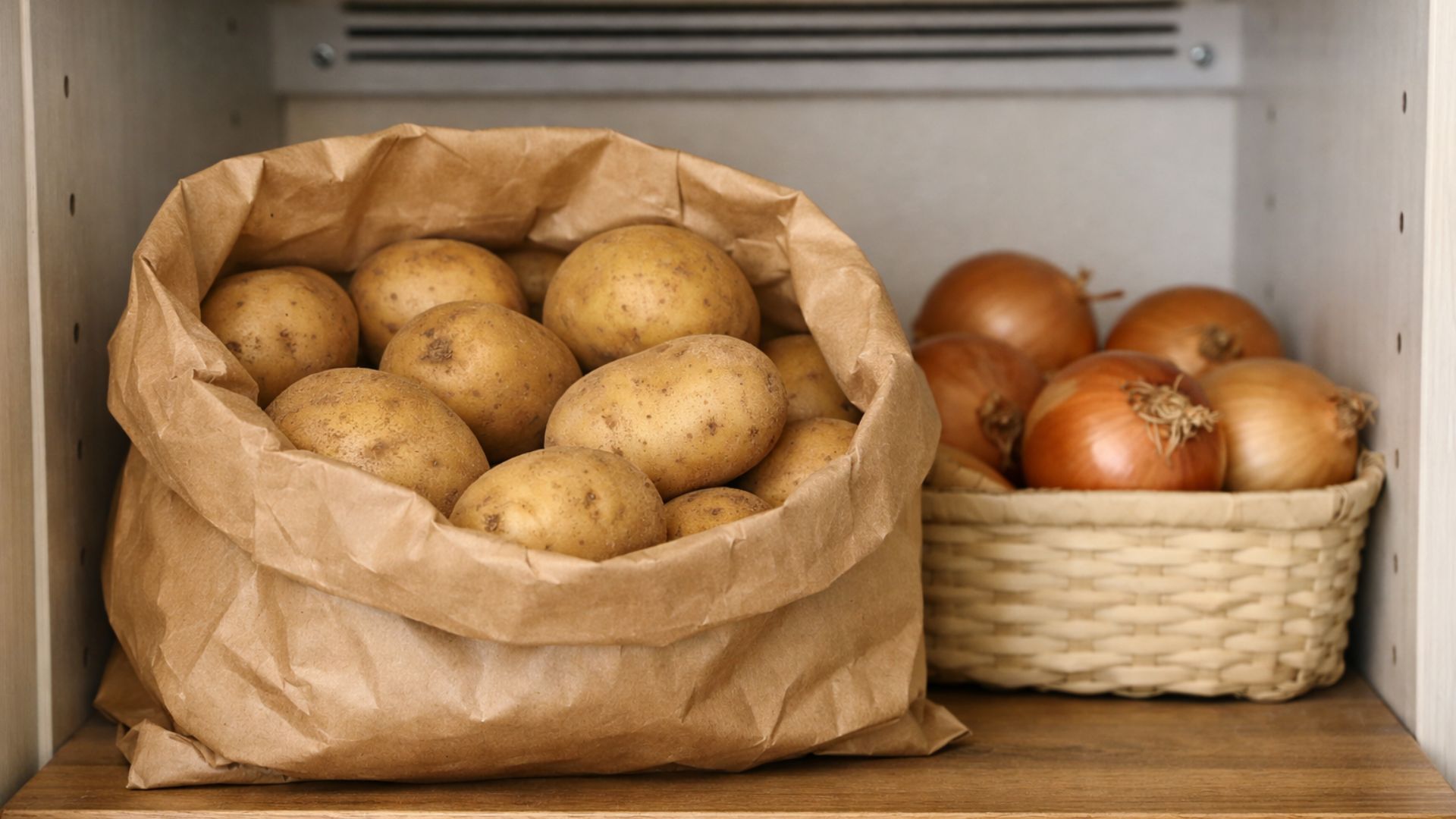
Domestic storage of potatoes requires an adequate environment, away from excessive cold, light, and foods that accelerate deterioration, with direct impact on flavor, texture, and durability in everyday life.
Storing raw and whole potatoes in the refrigerator is not the most recommended method for home routines, and leaving them next to onions also shortens the quality of both foods.
At home, the safest guidance is to keep the tubers in a cool, dry, dark, and ventilated place, protected from light and away from heat sources, instead of using the refrigerator as an automatic rule for storage.
This recommendation contradicts a common habit in the kitchen, but it appears consistently in public agencies and extension services.
-
Retired from construction, he built a Stonehenge in his backyard in Michigan using wooden levers, small stones, and gravity to demonstrate how one man can move giant blocks.

-
Measuring almost 15 meters in length, with 29 watchmen and space for 6 men for 6 weeks, the Ben Franklin spent 30 days drifting in the Gulf Stream without surfacing on a mission so unusual that NASA treated it as a trial for a space station.

-
China debuted a new platform at its first commercial spaceport, a structure 83 meters tall designed to launch rockets at a high cadence, divert flames without an underground trench, and dump 500 tons of water in 15 seconds.

-
Brazilian family transforms old boathouse in Paraty and creates a refuge with glass walls, private beach, and three suites in a property that combines Atlantic Forest, exclusivity, and sophistication.

The USDA states that dry potatoes and onions should not be refrigerated in usual storage, while the FDA warns that refrigerating potatoes can alter their composition and worsen culinary results when the food is baked, sautéed, or fried.
Why avoid the refrigerator for potato storage
The main problem with excessive cold is the transformation of starch into sugars, a process that changes the flavor and favors browning during preparation.
The FDA also states that this storage can increase the formation of acrylamide when refrigerated potatoes are subjected to high temperatures, as occurs in baked, toasted, or fried preparations.
In practice, this means that raw potatoes may seem “more protected” inside the refrigerator, but they tend to lose culinary quality.

This guidance is especially valid for home use, as some technical publications on prolonged storage deal with controlled conditions of temperature and humidity that do not correspond to the variable operation of a common household refrigerator.
Why not store potatoes with onions
The combination of potatoes and onions is also discouraged by various extension services.
Materials from the University of Missouri, Iowa State University, and the USDA treat this proximity as inappropriate because it accelerates quality loss, either due to the effect of ethylene released by other vegetables and fruits or due to the interaction of moisture and insufficient ventilation in the same space.
In the case of onions, the guidance appears directly in documents about home storage.
Iowa State informs that onions produce ethylene and can cause potatoes to spoil sooner, while the natural moisture of potatoes favors browning and deterioration of onions.
In kitchen terms, putting the two in the same basket may seem practical, but it reduces the shelf life of both.
Where to store potatoes correctly in the house
When experts talk about a suitable place, the reference is not the hottest countertop in the kitchen or the stuffy cabinet near the stove.
The ideal point is an environment without direct light, with air circulation and moderate temperature, such as a ventilated pantry or a cooler cabinet, away from the oven, sun, refrigerator motor, and damp areas.
The type of packaging also affects the result because potatoes need to “breathe”.
University extensions recommend using a paper bag, perforated bag, or another ventilated container, instead of closed plastic or containers that concentrate condensation.
The logic is simple: without suffocation, there is less chance of accelerated wilting, early sprouting, and loss of texture over the days.
Washing potatoes before storing can accelerate deterioration

Another frequent mistake is washing potatoes right after purchase to make them “ready” for use.
Extension and food safety sources recommend avoiding this step before storage because the water retained on the surface promotes faster deterioration, in addition to increasing the risk of loss of firmness and early appearance of problems in the skin.
Therefore, cleaning should be left for the preparation moment.
The guidance is to brush or rinse only when the potato is used, preserving the dry skin during the storage period.
This domestic care may seem small, but it makes a difference, especially when the purchase includes several kilos and consumption will be spread over days or weeks.
Light, sprouts, and green parts require attention
Exposure to light is another factor that directly interferes with quality.
The Illinois Extension explains that green potatoes have been excessively exposed and may develop solanine, a glycoalkaloid associated precisely with the green areas.
Therefore, darkness is not just a storage preference: it is a practical measure to reduce greening, sprouting, and faster loss of the food.
Not every sprouted potato needs to be discarded immediately, but the overall condition matters.
When the tuber remains firm, some technical guidelines allow for removing the sprouts and using the rest; however, very shriveled, wrinkled, overly sprouted, or extensively green specimens are no longer a good choice for consumption and should be removed from the pantry.
Simple sorting prevents waste in the pantry
Those who buy potatoes in larger quantities also gain more durability by doing periodic sorting.
Extension materials recommend separating bruised, overly soft, or deteriorated units because already compromised pieces tend to accelerate losses in the rest of the batch when they remain closed in the same bag, without ventilation and inspection over the days.
This control does not require specialized techniques or complex routines.
Just observe the bag or box where the potatoes were stored and remove the units with clearer signs of wear, repeating the check regularly.
The practical effect is to preserve for longer those that remain firm, dry, without excessive sprouts, and with intact skin.
How to store cooked potatoes safely
The above guidelines apply to raw and whole potatoes.
After being boiled, baked, mashed, or incorporated into a ready meal, the rule becomes the same applied to other perishable leftovers: quick refrigeration, in a closed container, within two hours, to limit the multiplication of bacteria at room temperature.
In practical terms for home cooking, potatoes last better when kept out of the refrigerator, away from onions, protected from light, kept dry, and stored in a ventilated container.
The success of storage depends less on tricks and more on three objective cares: moderate temperature, air circulation, and separation from foods that hasten deterioration.





Seja o primeiro a reagir!