





 English
  Francês
  Alemão
  Italiano
  Japonês
  Norueguês
  Portuguese
  Spanish
  6 min of reading
  0 comments


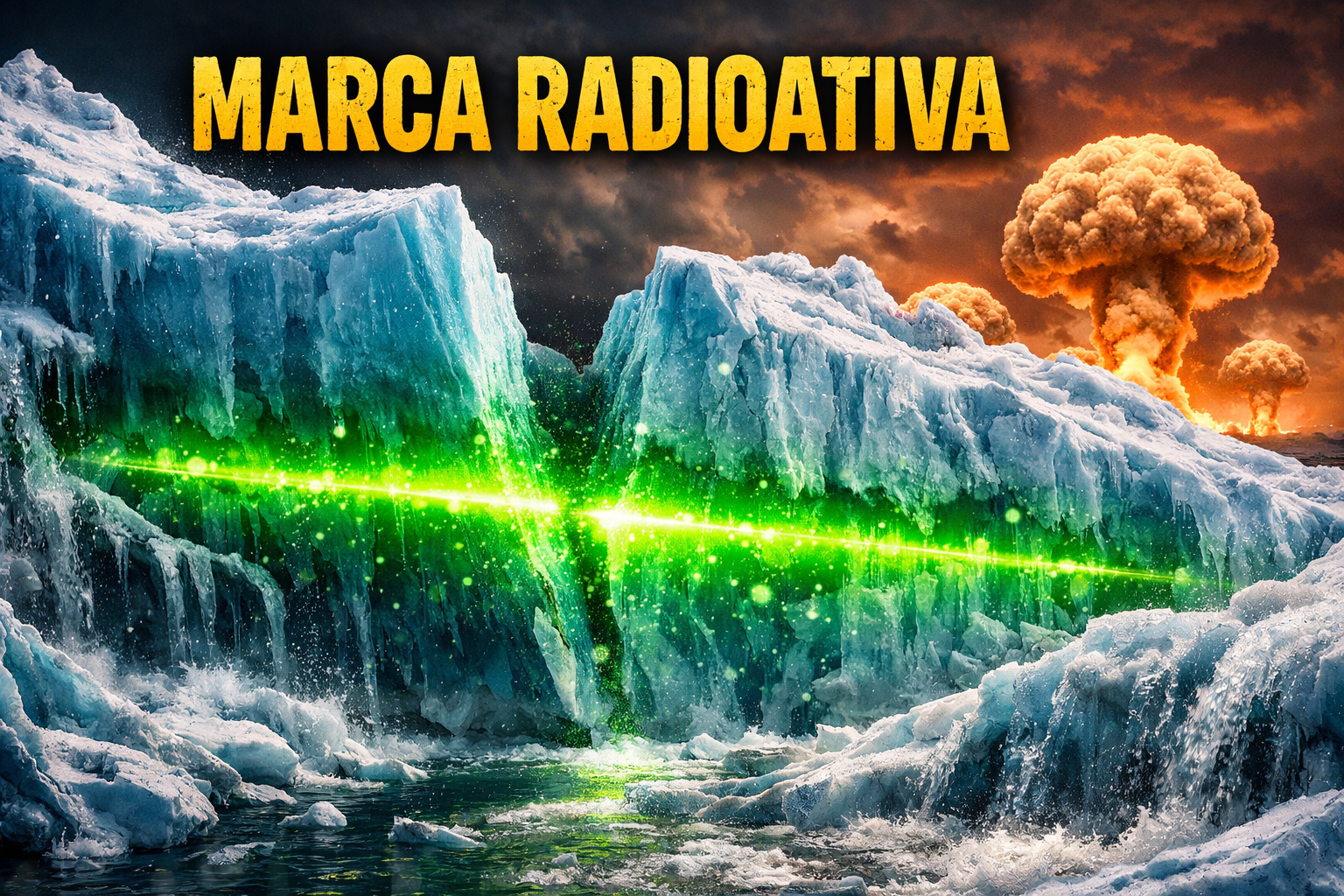
Nuclear tests left a “radioactive clock” in the glaciers of the planet, but global warming is already starting to erase this historical record of more than 70 years in various regions
During the 1950s, the world experienced one of the most intense periods of the nuclear race. The United States, the Soviet Union, and other powers conducted hundreds of atmospheric nuclear tests, releasing a massive amount of radioactive particles into the atmosphere. What few know is that this material did not disappear — it was redistributed globally and ended up preserved in one of the most extreme environments on Earth: the glaciers.
Today, decades later, scientists use this invisible layer as one of the most precise time markers ever recorded on the planet. But this natural archive, which holds an entire chapter of human history, is beginning to disappear in some regions due to the accelerated melting.
How nuclear tests created a “global marker” on the planet
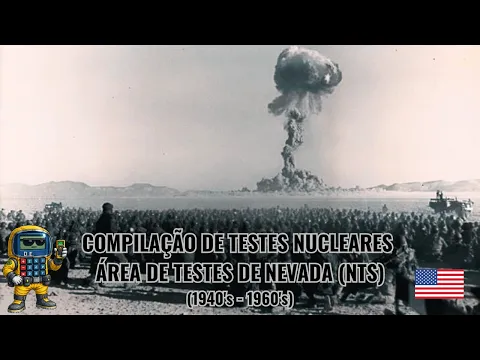
Between the end of World War II and the early 1960s, more than 500 atmospheric nuclear tests were conducted. These explosions launched radioactive particles to high altitudes, where they were dispersed by atmospheric currents around the world.
-
350-year mystery may have been solved: remains of a soldier who inspired the hero of The Three Musketeers found beneath a church in the Netherlands.

-
NASA photographed a nearly perfect square with 3 km sides on Mars, 13 times larger than the Great Pyramid of Giza, but the official explanation is natural erosion; still, no one has explained why the four sides have almost identical lengths.

-
Starlink breaks the barrier of 10,000 satellites in orbit and takes its expansion to an unprecedented level, with a direct impact on global internet, technological competition, and the race for space.

-
Japan finds an alternative to oil amid rising prices by transforming ocean balance into electricity with a new technology that maintains efficiency even when the sea changes.

These materials included isotopes such as cesium-137, strontium-90, and plutonium-239. Over time, these particles returned to the surface through rain and snow, depositing in soils, oceans, and especially in cold regions.
In polar areas and mountain ranges, such as the Alps and Himalayas, this deposition was recorded in ice layers. As snow accumulates year after year, the radioactive material became trapped in a kind of “natural archive”, organized in chronological layers.
The peak of 1963: the moment that became a global scientific reference
The year 1963 is considered a key point in this record. It was when the concentration of radioactive material in the atmosphere reached its peak, shortly before the signing of the Partial Test Ban Treaty.
This event created an extremely distinct layer in the glaciers, known as bomb spike or “nuclear peak.” This layer serves as a universal marker, allowing scientists to accurately identify the corresponding period within an ice sequence.

Credits: Education – Stable Isotopes NOAA GML
From this point, it is possible to date layers above and below with great accuracy, transforming the ice into a detailed timeline of the planet.
Glaciers as natural archives of Earth’s history
Glaciers do not only record nuclear events. They store a range of information about Earth’s past, including climate variations, volcanic eruptions, pollution levels, and changes in atmospheric composition.
Each layer of ice corresponds to a specific period, preserving particles and gases from that moment. By drilling into these layers and extracting samples, scientists can reconstruct events that occurred hundreds or thousands of years ago.
The presence of radioactive material from nuclear tests adds a unique element to this record: a global mark created directly by human activity.
Where this radioactive layer can be found
The signal left by nuclear tests has been detected in various regions of the planet. Among the main locations are the large ice masses of Greenland and Antarctica, as well as high-altitude glaciers on different continents.

In all these environments, the deposition occurred relatively uniformly, making the marker even more reliable for scientific studies.
This global distribution is one of the factors that differentiate this record from other natural events, which generally have a more localized impact.
The advance of melting and the loss of historical records
In recent years, the increase in global temperatures has accelerated the melting of glaciers in various parts of the world. This process affects not only sea levels or water supply — it also jeopardizes valuable scientific records.
In some regions, ice layers that took decades to form are being lost in just a few years. This means that information accumulated over generations may disappear before it is even fully studied.
The radioactive layer from nuclear tests is among the threatened records. In places where melting is more intense, this mark may be partially or completely erased.
What scientists are observing in practice
Recent studies show that mountain glaciers, especially in tropical and temperate regions, are the most vulnerable. In these areas, melting occurs more rapidly, exposing and eliminating ice layers at an accelerated pace.
In some cases, records covering several decades are being compressed or disappearing completely. This complicates the reading of the layers and compromises the accuracy of future analyses.
The loss of this data represents a challenge for science, which relies on this information to understand climate changes and environmental processes over time.
Why this marker is so important for science
The radioactive layer left by nuclear tests is one of the few precise global references available for recent dating. Unlike other markers, it can be identified with high reliability in different regions of the planet.

This allows researchers to align data from various areas, creating a common base for climate, geological, and environmental studies.
Without this type of reference, reconstructing recent events becomes more complex and subject to greater margins of error.
The relationship between human activity and geological records
The fact that nuclear tests have left a detectable mark across the planet raises an important question: the influence of human activity on the geology of Earth.
This type of record is often cited in discussions about the so-called Anthropocene, a possible new geological era characterized by human impact on the planet.
The radioactive layer serves as concrete evidence of this impact, showing that human actions can leave lasting marks on a global scale.
An archive that may disappear before being fully understood
Despite its importance, the record left by nuclear tests is far from being fully studied. Many glaciers have yet to be analyzed in detail, and new discoveries continue to be made.
However, the advance of melting creates a race against time. As the ice disappears, so does the opportunity to access this information. This poses a challenge for science: to collect and preserve as much of this data as possible before it is lost.
Nuclear tests were events of immediate and destructive impact, but they left a mark that has lasted for decades. On the other hand, glaciers, which seem stable and permanent structures, are proving vulnerable to relatively rapid changes.
This contrast highlights the complexity of natural systems and how different processes interact over time. The mark left by human activity remains, but the medium that preserves it is at risk.
An invisible record that tells the story of humanity
The radioactive layer in the glaciers is not visible to the naked eye, but it represents one of the clearest records of recent human history. It connects political, technological, and scientific events to natural processes occurring on a global scale.
Each ice sample that contains this material is, at the same time, a fragment of the Earth and a fragment of human history.
And as the planet changes, this silent record risks disappearing, taking with it a unique part of the world’s memory.






Seja o primeiro a reagir!