





 Portuguese
  English
  Spanish
  5 min of reading
  0 comments


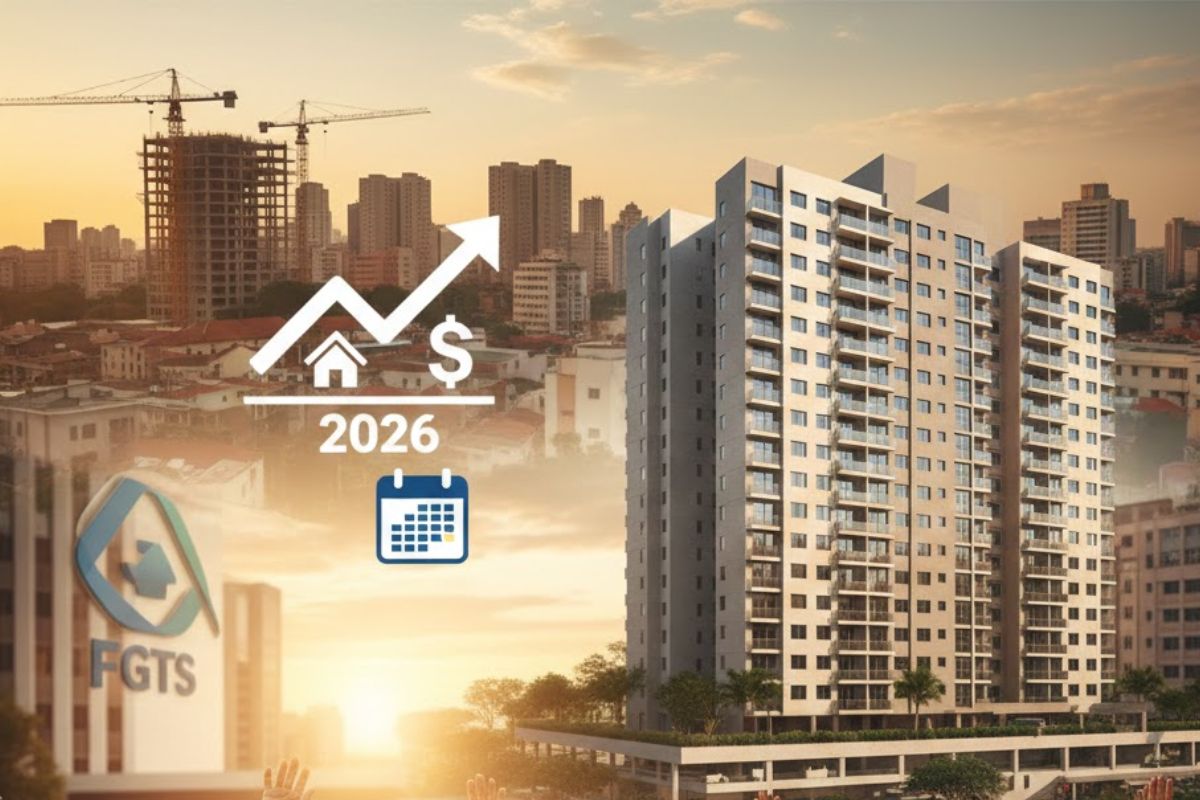
In The 203rd Meeting Of The Curators Council This Thursday (18), The FGTS Should Update The Ceiling Of Popular Housing For The My House My Life, Correct Values That Have Not Been Updated For Three Years And Expand Subsidies To Unlock Home Financing For Low-Income Families In 2026 Across The Country
The FGTS is entering one of the most anticipated decisions of the year for those dreaming of homeownership. This Thursday (18), during the 203rd Ordinary Meeting of the Curators Council, the fund is expected to decide whether to increase financing for the My House My Life program and raise the ceiling for popular housing intended for low-income families.
The expectation is that the change will begin to ease the burden as early as 2026, especially for those in the lower income brackets who are struggling to make ends meet with current values. Technicians from the Ministry of Cities point to a cumulative deficit of about three years without an update to the ceiling, which pressures access to housing in a scenario of more expensive credit and high interest rates.
Adjustment To The Ceiling Of Popular Housing In Tiers 1 And 2
The central point being analyzed by the Curators Council of the FGTS is the update of the ceiling for homes classified in tiers 1 and 2 of the My House My Life program, aimed at families with a monthly income of up to R$ 4,700.
-
BRICS is building its own payment system that could be operational by 2030, and experts say it could increase trade between the countries by up to 10% per year and add 3% to the GDP of each member of the bloc.

-
Government suspends over 3 million traffic fines in Brazil and drivers breathe a sigh of relief.

-
Iran has just approved toll charges for ships in the Strait of Hormuz and has completely prohibited the passage of vessels from the United States and Israel in the world’s most important maritime route for the global energy market.

-
Government cancels R$ 25 million “celebration” for Brasília’s anniversary and allocates funds to health.


Currently, in many municipalities in the Central-West, Northeast, and North regions, the maximum value for popular housing is set at R$ 255,000.
The proposal under discussion provides for a mean adjustment of 4% on this limit, precisely to try to keep up with the rise in housing prices and construction costs since the last adjustment.
As a result, homes that currently sit slightly above the ceiling could finally be included in the table, allowing more families to use the FGTS to finance their home purchase.
In municipalities in the interior of São Paulo and Rio de Janeiro, an adjustment by the same percentage has already come into effect, reinforcing the argument that other regions have fallen behind.
In the capitals, the ceiling remains at R$ 350,000. For tier 3, aimed at families with an income of up to R$ 8,600, the ceiling continues at R$ 500,000, a value that also applies to tier 4, aimed at monthly incomes between R$ 8,600 and R$ 12,000.
Special Conditions For Low-Income Families In The North And Northeast
In addition to the ceilings, the Curators Council of the FGTS is working with rules that ensure differentiated conditions for low-income families, especially in the North and Northeast regions.
In these areas, real estate financing may have reduced interest rates, ranging from 4% to 10.5% per year, according to the income bracket and eligibility for the program.
Another decisive point is the subsidy funded by the FGTS, which can reach a discount of up to R$ 55,000 per family. This support directly decreases the value of the property, reducing the amount to be financed and, consequently, the installment amount.
For families on tight budgets, this subsidy is often the factor that determines whether the contract fits within their finances.
With outdated ceilings and increasingly expensive housing, many buyers end up losing access to these benefits, even while remaining within the income limit.
Therefore, the updating of values is regarded as a key piece to re-include low-income families within the range of financeable homes with support from the FGTS.
FGTS Already Allows Purchase Of Higher Value Properties
While discussing the increase in the ceilings for popular housing, the Curators Council of the FGTS had already approved, in a previous decision, the possibility of using fund resources for the purchase of any property valued at up to R$ 2.25 million.
This rule applies to those with sufficient balances who meet the fund’s usage conditions, expanding the range of options for workers with greater payment capacity.
In practice, this creates an important contrast: on one side, there is room to finance higher-value properties with the FGTS; on the other, families relying on popular housing still struggle with outdated ceilings.
The decision this Thursday (18) seeks to correct this distortion, ensuring that fund resources also enable home ownership for those earning less.
Other Topics On The Agenda At The Same Council Meeting
This Thursday’s meeting (18) is not limited to the My House My Life program. In addition to the housing axis, the council is expected to analyze a favorable statement regarding the Settlement Agreement for the Gasômetro Lot and the allocation of resources for commemorative actions for the 60th anniversary of the FGTS.
These discussions demonstrate how the FGTS operates on multiple fronts simultaneously, combining housing, urban infrastructure, and policies for utilizing workers’ resources.
In a context of restricted real estate credit and high interest rates, any adjustment to the fund’s rules tends to produce immediate effects in the market and access to housing, especially for those depending on subsidies and lower rates to finance their homes.
Live Broadcast And Impact For Those Who Want To Buy In 2026
The 203rd Ordinary Meeting of the Curators Council of the FGTS is scheduled to begin at 9:30 AM, with live broadcast on the YouTube channel of the Ministry of Labor and Employment and on the official FGTS website.
The meeting is closely followed by construction companies, financial agents, industry entities, and especially families who are already in the process of purchasing or studying credit simulations.
For those hoping to close a deal in 2026, the decision regarding the increase in the ceilings for popular housing and the strengthening of financing through the FGTS may make the difference between keeping the dream on paper or finally signing the contract for homeownership.
And what about you? Do you think that the increase in the ceiling and the new financing conditions with resources from the FGTS will really unlock homeownership for low-income families starting in 2026?










-

-

-

4 pessoas reagiram a isso.