





 Português
  Inglês
  Espanhol
 5 min de leitura
  0 comentários


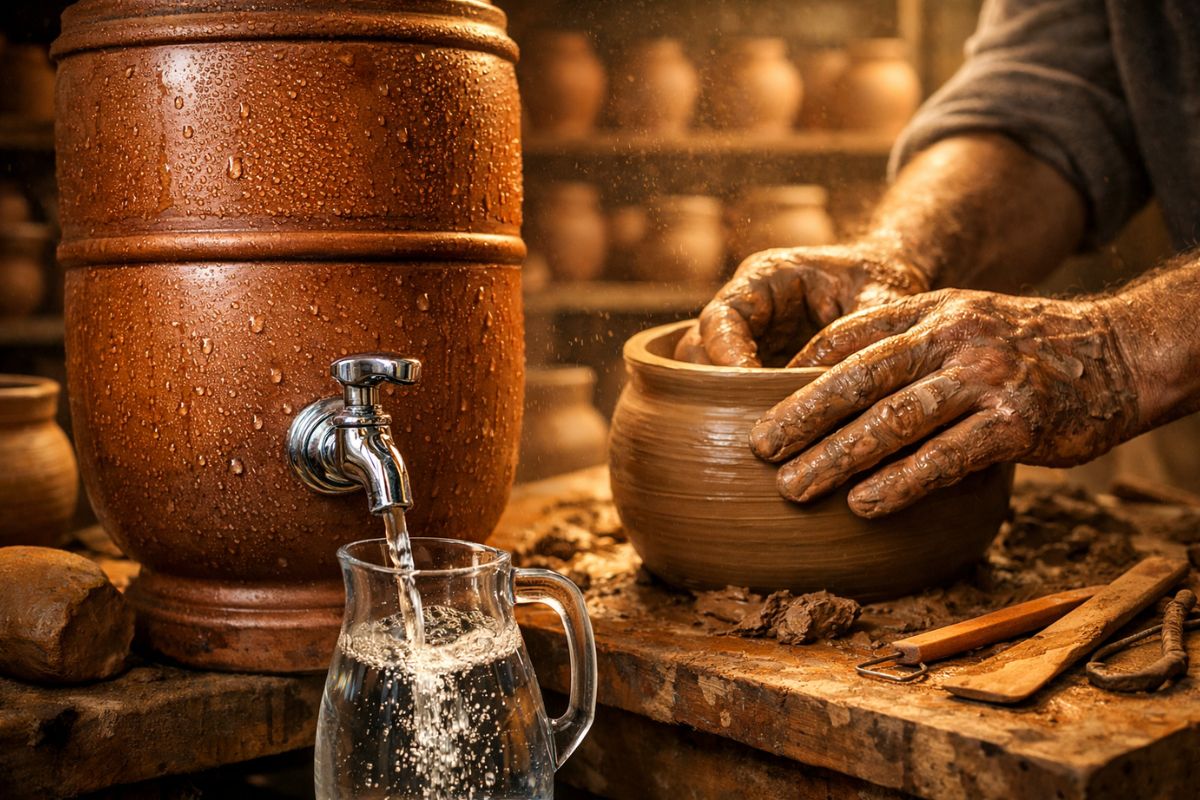
In 2025, the Clay Filter Produced in the Interior of São Paulo Maintains Handmade Ceramics Family Production, Delivers Fresh Water Without Electricity, Gains Space in Brazilian Kitchens, Beats Modern Purifiers on a Budget, and Shows Why Simple Tradition Still Solves the Daily Heat of the Country in Brazilian Regions
Amid yet another sequence of sultry days and temperatures above average in several Brazilian cities, the clay filter has once again taken a prominent place in kitchens and TV reports. While electric devices weigh on electricity bills, the old brown pot reappears as a type of popular liquid air conditioning, cooling water in a simple, silent manner without consuming energy.
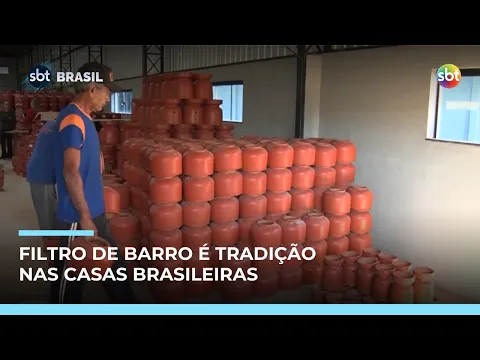
On a recent visit to the municipality of Indiana, in the interior of São Paulo, a reporting team closely followed the routine of a pottery that maintains tradition. There, the production of clay filters is 100% handmade, moving stocks that reach 4,000 units per month and helping to explain why the equipment was pointed out in U.S. research as one of the best purification systems in the world, combining fresh water with sanitary safety.
Why the Clay Filter Remains Unbeatable in Fresh Water

Amid so many technologies, the clay filter continues to compete for space on kitchen countertops with electric purifiers, frost-free refrigerators, and digital water dispensers.
-
The world’s first octopus farm wants to open in the Canary Islands and is already provoking an international reaction: the plan aims to produce 3,000 tons per year.

-
Drought may be creating stronger superbugs in the soil and helping antibiotic resistance reach hospitals, warns a study highlighting a problem that could grow alongside extreme weather.

-
The biggest scam in history: Napoleon’s France deceived the United States by selling them a territory that was Spanish.

-
Why is the Danakil Desert so dangerous? It has unstable terrain and how extreme temperatures and toxic gases turn the region into one of the most hostile environments on Earth.


The main reason is physical and sensory.
The porosity of the clay allows for a permanent micro-evaporation on the filter’s wall, which removes heat and keeps the water naturally cooler, without noise and without depending on a power outlet.
In addition to temperature, the system of internal ceramic candles and activated carbon retains physical impurities and some microorganisms, which led the Brazilian equipment to be mentioned in international water quality studies.
The combination of simplicity, efficiency, and low cost helps explain why the clay filter remains a symbol of deep Brazil’s kitchen, even in a growing offer of electronic solutions.
Indiana, Interior of São Paulo, Discreet Factory of a National Icon
The pottery visited in Indiana, in the western São Paulo region, is a portrait of this bond between tradition and current demand.
The company has the clay filter as its flagship product and fulfills orders that spread across several states.
On average, monthly production reaches 4,000 pieces, including complete filters and standalone reservoirs.
The process begins with the arrival of raw materials.
There are two types of clay, yellow and dark, amounting to about 22 cubic meters per week, a volume that ensures the supply of production lines.
The choice of suitable clay is crucial to maintain the right porosity, resistance for daily use, and structural integrity of the filter, avoiding cracks or leaks.
From Clay to Clay Filter: Step by Step of Handmade Production

After selection, the clay is mixed with water until it reaches the appropriate consistency.
The prepared clay passes through a machine known as pipa and then through the cylinder, which ensures homogeneity of the mass.
After these stages, the mixture rests for a whole day to stabilize. Only then does it proceed to the kneader, equipment that finishes the preparation before molding.
From there, the work passes into the hands of ceramicists, like Mr. Aparecido, who has been working in the factory for over three decades. The accumulated experience allows him to mold vases and filters almost by memory.
He sums up the routine by saying that after learning the trade, “he does it almost with his eyes closed,” something that reflects the years of relationship with the clay, the wheel, and the oven.
Each piece is molded, dried, fired at controlled temperatures, and receives finishing before moving to the assembly sector for faucets and filtering candles.
Low Cost, Simple Maintenance, and Presence in Local Stores
On the other end of the chain, local merchants incorporate the clay filter into their daily business.
Shopkeeper Juliana keeps a filter near the counter of her handbag store, both for personal use and to offer water to customers.
According to her, maintenance costs are low, and the return in comfort is immediate, as the water remains always fresh.
Basic maintenance involves periodic cleaning of the inner part, sanitizing the candles according to the manufacturer’s guidelines, and occasional replacement of the filtering elements after a few months of use.
There are no electronic parts, compressors, or motors, which reduces the risk of failures and unexpected expenses, making the filter an attractive solution in popular neighborhoods and small urban centers where budgets are tight.
Tradition, Affection, and “Love” as Part of the Production Process
Beyond technique, the production chain of the clay filter includes a symbolic component that appears in workers’ accounts.
When asked about the secret to staying in the same role for so many years, Mr. Aparecido responds that one must like what they do.
He associates the quality of the filter with this silent commitment, a “love” for the craft that helps to face the daily repetition of work.
The narrative is echoed among other employees of the pottery, who see the filter as a product that brings a bit of Indiana’s identity into homes and businesses in various regions.
In times of extreme heat, fresh water served directly from the clay faucet reinforces this affective bond between the object, memory, and climate comfort, in an equation that is hard to replicate with plastic and stainless steel devices.
Clay Filter as a Simple Answer to Extreme Heat
In a scenario where heatwaves are becoming more frequent and cities seek ways to adapt, the clay filter consolidates as an everyday low-cost solution.
It does not replace centralized treatment systems but complements the network by improving the quality of water at home, without requiring complex infrastructure or high energy consumption.
From a public health perspective, the dissemination of efficient filters contributes to reducing the intake of suspicious quality water and diminishes the temptation to substitute water consumption with soft drinks or sugary beverages on hot days.
Indiana, with its artisanal production, shows that small regional factories can still respond to modern challenges with ancient solutions, yet tested and approved.
In light of this story, looking at your routine of heat and water consumption, do you still prefer electric purifiers, or do you believe the clay filter continues to be the best option for having fresh water at home every day?









-

-

-

-

-

14 pessoas reagiram a isso.