





 Portuguese
  English
  Spanish
  3 min of reading
  9 comments


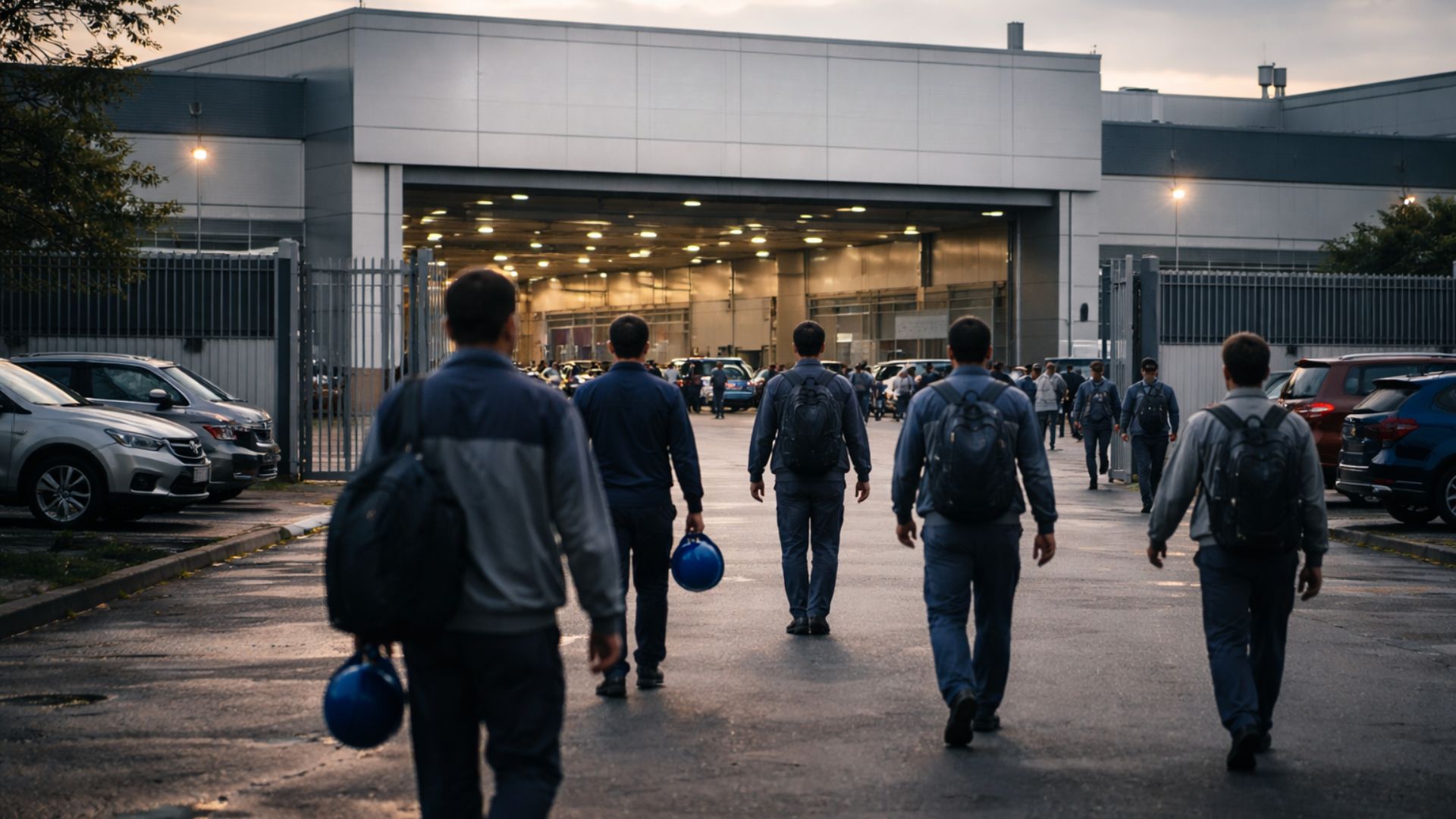


Closure of Subaru Sales in Brazil Marks Transition to Restricted Post-Sale Operations Under Caoa Management, After Environmental Requirements of Proconve L8 Inhibited Importation of the Forester and Led to the Closure of the Last Dealership in the Country.
The Subaru has ended the sale of brand new cars in Brazil and closed its dealerships, ceasing to offer new models in the country while maintaining only the post-sale structure under the operation of the Caoa group.
The last active point of sale, in the city of São Paulo (SP), closed its doors after the stock of 2023 model-year vehicles was exhausted, according to confirmation obtained from employees of the network itself.
Among the models that marked the final stretch of the commercial operation is the Forester, which remained listed on the Brazilian website of the brand with a starting price of R$ 253,900, already with the mild hybrid system and all-wheel drive.
-
Friends have been building a small “town” for 30 years to grow old together, with compact houses, a common area, nature surrounding it, and a collective life project designed for friendship, coexistence, and simplicity.

-
This small town in Germany created its own currency 24 years ago, today it circulates millions per year, is accepted in over 300 stores, and the German government allowed all of this to happen under one condition.

-
Curitiba is shrinking and is expected to lose 97,000 residents by 2050, while inland cities in Paraná such as Sarandi, Araucária, and Toledo are experiencing accelerated growth that is changing the entire state’s map.

-
Tourists were poisoned on Everest in a million-dollar fraud scheme involving helicopters that diverted over $19 million and shocked international authorities.


Closing of Dealerships and End of Zero Kilometers
Over the last few months, Subaru’s presence in the national market has become increasingly restricted, with few available lots, no new launches, and a slower pace of replacement of imported vehicles, which increased uncertainty about the continuity of sales.
With the closure of the last physical unit, the brand began to operate without open dealerships for the public to sell new vehicles, a scenario that, in practice, interrupts the regular supply of brand new cars in the country.
Proconve L8 and New Emission Rules
The regulatory change identified as a hurdle is the evolution of the targets of Proconve L8, a phase of the environmental program that sets corporate emission limits and goes through scaling, with annual milestones outlined in a Conama norm.
In this schedule, the requirements become stricter over time, with dated stages, including parameters that advance on January 1, 2025, and in subsequent years, raising the level of technical compliance required from manufacturers.
Without the necessary homologation within these rules, Subaru failed to register its only product available in Brazil at that time, which made the continuation of formal sales of new vehicles unfeasible, as reported in an investigation published in the automotive sector.
Subaru Forester Hybrid Discontinues in Brazil
The Forester was the last model sold by Subaru in the country, equipped with a 2.0 naturally aspirated engine and a 12V mild hybrid system, coupled with a CVT transmission and all-wheel drive, configuration cited as the basis for the final offer before the interruption.
In the commercial communication maintained online, the SUV appeared with a starting price of R$ 253,900, a value indicated on the official Brazilian page dedicated to the model, even after the reduction of available stock and the approach of the end of the inventory.
Due to legal requirements related to the registration and commercialization calendar, the last units needed to be registered to remain on the market, which led part of the offer to migrate to the used condition as permitted by the timeframe.
Post-Sale Maintained by Caoa
Despite the closure of retail operations, Subaru continues to support owners in Brazil through the Caoa group, which represents the brand in the country and claims to maintain maintenance, inspections, and warranty services.
The announced strategy for this support involves utilizing the conglomerate’s and partners’ workshop network, preserving the supply of parts and fulfilling post-sale routines for the already circulating fleet, as described in the investigation.
Additionally, Caoa itself stated that it is holding talks with Subaru’s headquarters about future possibilities for resuming sales, but acknowledges that homologation and aligning projects with Brazilian regulations remain the main obstacle.









A Subaru já foi uma grande empresa mas parou no tempo. Os carros são ultrapassados em relação às próprias concorrentes japonesas por isso não vendiam mais nada. Hoje só tem duas fábricas no mundo nos EUA e no Japão e a tendência é que acabem desaparecendo infelizmente assim como outras marcas (Datsun, Daihatsu, Isuzu, etc.) que só produzem no Japão ou fecharam suas fábricas
Ok. Entendi a matéria. Mas fechar concessionária é diferente de uma fábrica. Os carros não são produzidos no Brasil. Logo não gera nenhum valor ao país no ponto de vista de produção. Possuir apenas concessionária não representa um número significativo em termos de renda nem pro país e muito menos pra postos de trabalho. O correto mesmo é trazerem as fábricas para o país. Desenvolvimento de produtos voltados as realidades e características de nossa região e nosso combustível, por exemplo. Além lógico de baratear custos de manutenção com as peças sendo produzidas em empresas e fornecedores nacionais. Sei que o Brasil é abusivo nas taxas de importação, mas nessa questão de veículo automotivos, eu sou a favor sim de taxas pra importação porquê ao final vendem aqui e o lucro pesado vai pra fora, sem produzir basicamente nada no país que justifique baratear a importação. Pra o consumidor só ver números e criticar é aceitável, porque não temos a educação necessária para entender que devemos buscar desenvolver nossa indústria e fortalecer o país. E para isso é necessário ao menos não deixar livre chegada de produtos de fora que não possuam interesses em desenvolver nada local. Montar uma concessionária não é o mesmo de construir fábricas.
Errata:
*”nosso povo está desprendendo como[…]”.
Sai daí ****
P e.t.i.s.t.a
Curiosa a mentalidade de que “tudo tem que ser produzido no Brasil”, senão não é bom para o país… Quem já viveu mais, sabe da época da Reserva de Mercado para computadores, onde mal e mal só a carcaça do PC era “produto nacional”. Chips, placas mãe, etc, etc, etc vem tudo de fora ainda hoje. Preservar a indústria nacional só se consegue mantendo ela com capacidade comepetitiva mundial, senão é só para ficar pedindo subsídios, aumentar os impostos arrecadados pelo governo e a população consumidora, paga muito mais caro do que em qualquer outro país. pagamos quase o dobro pelo mesmo carro vendido no Paraguai, Chile (eles não tem NENHUMA montadora lá, 100% dos carros são importados e eles tem quase TODAS marcas mundiais sendo vendidas lá!) ou USA. Reduzindo os impostos, aumenta-se o consumo e por consequencia aumenta a arrecadação de impostos no país!
A Subaru é uma excelente marca – tenho minha 2a. Forester e não a trocaria por NADA! Governo brasileiro **** e sem inteligência tributária, povo que acha que aumento de imposto é saudável para “proteger o país”… Jesus!!! Saiam do país, conheçam nossos vizinhos sul americanos, europeus e norte americanos e vocês irão voltar com outra mentalidade: LIVRE MERCADO, baixa tributação, liberdade de escolha e CRESCIMENTO econômico. Saia da caixinha e abra a mente!!!
Esse proconve nada mais é uma burocracia cara que triplica o valor dos carros. **** de sanguessugas
A qualidade do português desses repórteres atuais está cada vez pior. Infelizmente, nosso povo está se desaprendendo como usar nossa língua. Nessa matéria mesmo, a pontuação está péssima.
É uma pena o que fizeram ao nosso ensino nos últimos 40 anos.
Não julgue sem refletir sobre as transformações sociais. O mundo mudou. A realidade é que as famílias deixaram de educar seus filhos e delegam à escola os deveres , valores e fiscalizações que lhes cabem. Os pais de hoje não sabem nem o que o filho leva dentro da mochila pra escola, com raras exceções. Antes as crianças já chegaravam na escola alfabetizadas ou quase, os pais controlavam o que viam e faziam, repassavam seus conhecimentos e comportamentos. Pra completar não existia Internet. O que mais atinge os jovens de hoje é a desinformação contida nas redes sociais. As famílias ainda não estão educadas para usar a internet. É mais prático aceitar um fakenews rápido do que buscar um artigo numa instituição séria.