





 Portuguese
  English
  Spanish
  5 min of reading
  8 comments


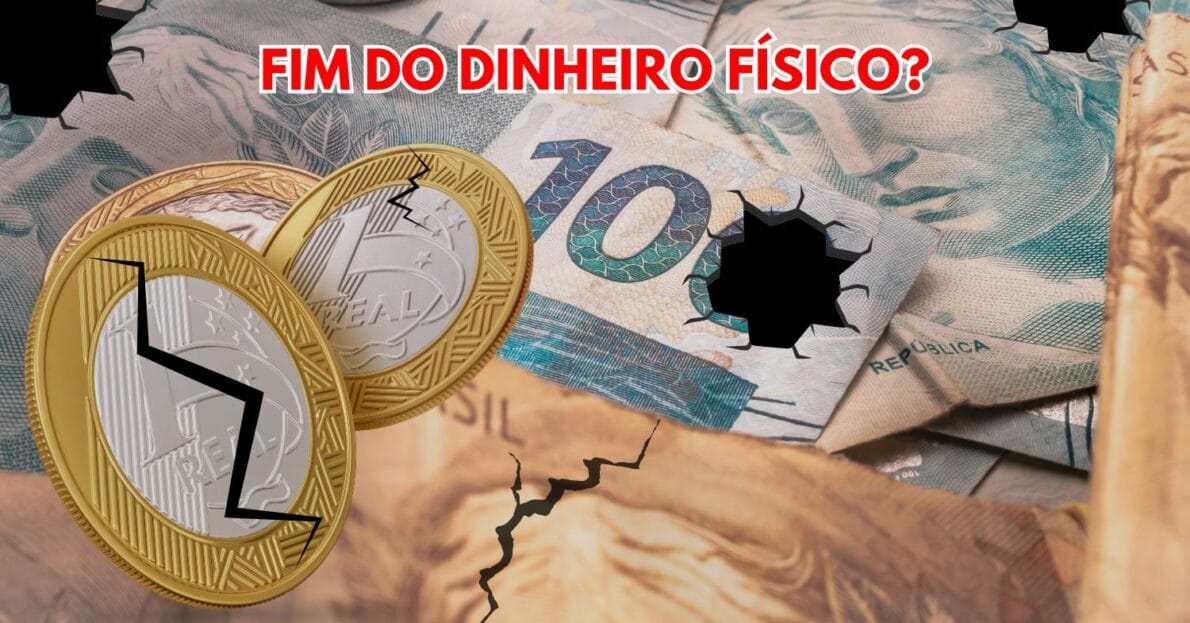

The End Of Physical Cash Is Coming? New Bill Proposes To Abolish The Use Of Bills And Coins, Marking The End Of The Real As We Know It.
Have you ever imagined a world where cash no longer exists? Well, that might be closer than we think. A bill currently underway in the Chamber of Deputies aims to bring the end of physical money to Brazil, completely changing the way we handle the Real. The Bill 4068/20, proposed by Congressman Reginaldo Lopes (PT-MG), seeks to abolish cash and make digital payment methods mandatory for all financial transactions in the country, which could bring an end to the Real as we know it. But what does this mean in practice? Let’s understand a bit more about the impact of this change.
Is It Really The End Of Physical Cash? See What The Bill 4068/20 Proposes
The bill presented by Reginaldo Lopes suggests the gradual elimination of cash in transactions in Brazil. According to the text, bills with denominations above R$ 50 would be prohibited one year after the law is approved, while bills with lower denominations would have up to five years to be phased out. The idea is that during this period, Brazil will transition to a 100% digital financial system, thus bringing an end to physical cash.
The Brazilian Mint would also play an important role in this transition, developing new technologies that facilitate the use of digital means for payments. The project is awaiting opinions from three committees in the Chamber: the Constitution and Justice and Citizenship Committee (CCJC), the Economic Development Committee (CDE), and the Finance and Taxation Committee (CFT).
-
Brazil produces too much clean energy and doesn’t know what to do with it: over 20% of solar and wind capacity was wasted in 2025 while investors flee and 509 renewable generation projects were abandoned in the last year.

-
Piauí will produce a new fuel that replaces diesel without needing to change anything in the truck’s engine and reduces pollutant gas emissions by half: truck drivers from all over the Northeast are already celebrating the news that will arrive later this decade.

-
A new Brazilian shopping center worth R$ 400 million will be built in an area equivalent to more than 4 football fields, featuring 90 stores, 5 cinemas, a supermarket, a college, and parking for 1,700 cars, potentially generating 3,000 jobs.

-
Larger than entire cities in Brazil: BYD is building a 4.6 km² complex in Bahia with a capacity for 600,000 vehicles per year, but the discovery of 163 workers in conditions analogous to slavery has shaken the entire project.


What Are The Reasons Behind The End Of The Real As We Know It?
According to Congressman Reginaldo Lopes, the end of physical cash would bring many benefits to Brazil, especially in the fight against crimes such as corruption, money laundering, and drug trafficking. Since every financial transaction would be traceable, illegal practices would become much more difficult to occur. The congressman also argues that crimes such as bank robberies, ATM thefts, and gas station hold-ups would drastically reduce, as cash would cease to exist.
Another important point raised by the congressman is the tax issue. With the end of cash, oversight would be easier and tax evasion would decrease. This would allow the government to have more control over financial movements and manage public budgets better.
In addition to security and fiscal control aspects, the bill also aims to reduce the costs of issuing and transporting cash. Issuing and distributing bills and coins is costly, and with the digitization of money, these expenses would become unnecessary.
The Use Of Digital Means In Brazil
Brazil is already moving towards an increasingly digital economy, and online payment methods have gained more and more space in the daily lives of the population. According to a 2023 Opinion Box survey, digital payment methods such as credit cards and PIX already lead the market, with 80% and 77% penetration, respectively. However, even so, 73% of respondents said they still use cash.
This scenario shows that despite the growth in the use of digital means, physical cash still holds considerable importance for many Brazilians, especially in everyday transactions. With the end of the Real in physical form, this change may require an adjustment period for people, especially those with limited access to technology.
What Is The Central Bank Doing?
The proposal to end cash is in line with the initiatives that the Central Bank of Brazil has been implementing in recent years to digitalize the economy. In addition to the success of PIX, which has revolutionized the way we make payments, the BC is also working on other projects, such as Open Finance and the Drex, the digital version of the Real.
Drex is an ambitious project that aims to create a system of “programmable money” through smart contracts, allowing certain transactions to be automated and simplified. This innovation is expected to be implemented in phases, following the model of PIX, and besides promising to bring Brazil to the forefront of the digital economy, it should also bring about the end of the Real in physical form.
What Are The Challenges Of The End Of Physical Cash?
Although the bill presents many benefits, the implementation of the end of cash also faces challenges. One of the main obstacles is digital inclusion. Although the use of digital payment methods has grown in Brazil, there is still a portion of the population that does not have easy access to the internet or mobile devices, which are essential for making digital payments.
Additionally, many small businesses and informal workers still prefer to use cash. For these individuals, transitioning to a fully digital system may be more complicated and require greater effort from the government to ensure that everyone has access to the necessary tools.
Another challenge would be cybersecurity. With all financial transactions being conducted digitally, the risk of cybercrime increases. It would be necessary to ensure that the system is secure and reliable to prevent fraud and attacks that could compromise the economy.
Is Brazil Prepared For The End Of The Real In Physical Form?
With the growth of PIX and other forms of digital payment, Brazil seems to be on the right track for the transition proposed by the bill. However, there is still much to be done to ensure this change is made inclusively and safely. The end of physical cash may bring many benefits, such as fighting corruption and reducing violent crimes, but it also requires careful planning to prevent parts of the population from being excluded from this new financial system.
As the bill is still under deliberation, it is up to lawmakers and society to discuss the pros and cons of such a significant change. One thing is certain: if approved, this law could completely transform the way we handle money in Brazil, marking the end of physical Real and ushering in a new era of digital transactions.









fugiram do hospicio .. onde viu acabar com o papel moeda
sistema da b3st4 = drex
marca da b3st4 = vassassinas + b1ometria apresentada nesse sistema
DREX = escravidão (sistema da ****) onde só poderá comprar e vender quem tiver a marca, o nome ou número da ****