





 Portuguese
  English
  Spanish
  4 min of reading
  0 comments


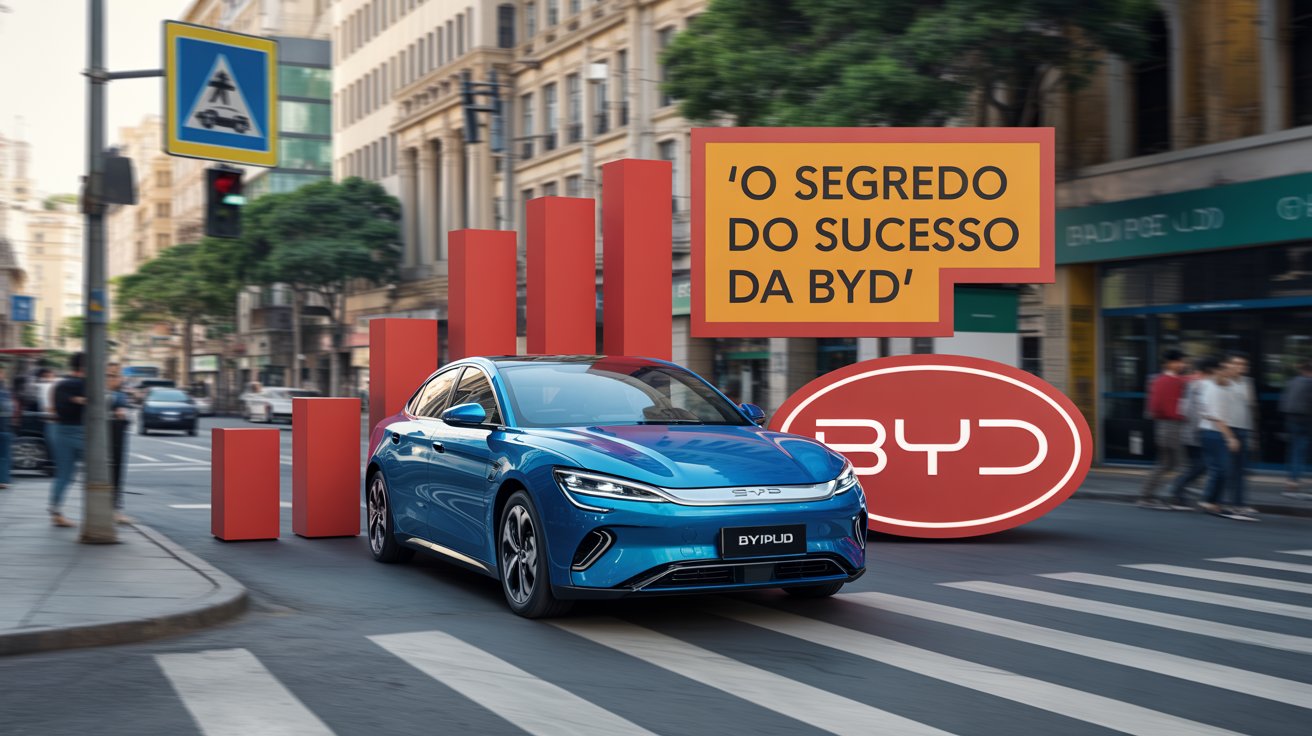
Chinese Automaker Soars in Sales and Challenges Industry Giants Despite Lack of Factory in Brazil. Bold Strategy, Affordable Electric Cars, and Intense Marketing Transformed BYD into the Fastest-Growing Brand in the National Market in Record Time.
BYD reached 9th place in the ranking of automakers in Brazil in 2025, consolidating itself ahead of brands like Caoa Chery and Nissan.
It was about two thousand units behind Honda in total cars sold.
The meteoric rise happened even without producing any car on national soil so far, with all models imported from China after the initial investment in automobiles, which began in 2022.
-
He started running at 66 years old, broke records at 82, and is now a subject of study for having a metabolic age comparable to that of a 20-year-old, in a case that is intriguing scientists and inspiring the world.

-
Less than a Tera TSI, up to 710 km of range and charging in 9 minutes: the new BYD Song Ultra expands the Chinese brand’s bet on increasingly faster, more technological, and competitively priced electric SUVs.

-
With a cost per shot close to zero, the DragonFire laser could change naval warfare in 2027 and provide British ships with nearly unlimited defense against drones.

-
A British startup creates tires that generate electricity in electric vehicles when passing over potholes, speed bumps, and cracks.


For many analysts, this growth is the fastest trajectory since the market opened in the 1990s.
Launch Strategy with Luxury Electric Cars
According to a report published this Monday (16) by UOL portal, in 2022, BYD entered with luxury models like the HAN and the TAN — electric cars of R$ 500 thousand — challenging the prejudice against luxury electric Chinese cars.
The reception, driven by sophisticated cabins, rotating screen technology, and 360° cameras, showed that there was room for innovation in this segment.
Shortly after, the plug-in hybrid Song Plus was launched, signaling the transition to volume models.
Electric Cars Must Be This: Affordable Technology
In 2023, with Brazilians eager for affordable EVs, BYD bet on the Dolphin: an urban electric car of about R$ 150 thousand, with comfort, safety, and competitive drivability.
Its success echoed in the numbers – in May, the Dolphin Mini was the best-selling electric car in the country, with 2,576 units, followed by the Dolphin with 1,864.
Models that combine innovation, technology, and competitive pricing, according to experts, are essential for “massive electrification” to progress.
An electric car must be this: accessible, technological, and urban – a type of electric vehicle that Brazilians want.
Offensive of Hybrids and Aggressive Promotions
The year 2024 marked the mass entry of hybrids: Song Pro, King, and Song Premium arrived with constant discounts, increased trade-in value, and attractive financing rates.
Every week, actions at dealerships reinforce this popular appeal.
This aggressive retail strategy, combined with heavy investments in marketing and influencers – from micro digital creators to appearances in soap operas and Rio’s carnival – made BYD almost “omnipresent” in consumers’ minds.
Growth of the Electric Vehicle Market in Brazil
Data from ABVE indicates: from January to May 2025, 16,641 electrified units were sold in May, a 12.7% increase compared to April and a 22.3% increase over the previous year.
The total accumulated during the period was 71,324 units, a growth of 19.5%.
Among these, electrics represented 31.3% of sales, with plug-in hybrids dominating 50% of registrations.
With 75% market share in the EV segment, BYD not only met but also created demand.
It delivered accessible technology in well-equipped urban models like the Dolphin.
And the impact?
Comparisons with Creta, T‑Cross, and Tracker showed consumers opting for an electric car must be this — loaded with features and practical for daily use.
Camaçari Factory: Production in Brazil and Delays
The Camaçari (BA) factory, a result of the partnership with Ford and an investment of US$ 600 million, promised operation in 2025.
Now, the assembly in kits (SKD) is expected to begin in 2025.
Full production is only scheduled for December 2026, with the creation of up to 10,000 direct jobs and 20,000 indirect jobs.
In June, BYD confirmed that local production of the Dolphin Mini begins on June 26, 2025.
But there are controversies. Authorities found poor working conditions among the Chinese laborers on the site, described as “degrading” and “weekly,” leading to lawsuits and visa suspensions.
This impasse may further delay operations.
Tariff Pressure and Industrial Policy
By exploring Brazil, BYD benefited from reduced tariffs (10%) and incentives until 2026.
It imported about 22,000 vehicles in 2025, expecting a 40% increase by the end of the year.
But the reaction came: entities are calling for an increase in the tariff to 35% already in 2025, in order to protect domestic production.
This movement highlights the dilemma: keep prices affordable or strengthen local industry.
Marketing as the Engine of Brand Growth
The huge investment in automobiles was accompanied by a multichannel marketing strategy.
Digital influencers, merchandising in soap operas, traditional media, presence at fairs and events, and regional actions made BYD a modern, young, and sustainable brand.
This intense exposure reinforces the key phrase: an electric car must be this — an experience that connects to daily life, the environment, and the lifestyle of the Brazilian consumer.
Challenges and Risks of BYD’s Strategy
Despite the strength of the plan, challenges persist.
- The factory remains delayed.
- The Shark pickup did not take off.
- And the strategy of constant promotions raises the risk of brand devaluation in the long run.
Additionally, the pressure on the financial model — with heavy dependence on imports and large subsidies — could compromise sustainability if revenues or incentives fall.
BYD has a remarkable history in Brazilian soil. In 2023, it sold 77% of EVs, placing four models in the top 5 of the segment.
In the first three months of 2025, it led globally with 336,681 cars sold, leaving Tesla behind.
An electric car must be this: accessible, equipped, urban, and connected to the real needs of Brazilians.
What will be the next step to consolidate its position in Brazil: operate locally, face tariff barriers, or gain reputation with more sustainable practices?





-

-

2 pessoas reagiram a isso.