





 English
  Francês
  Alemão
  Italiano
  Japonês
  Norueguês
  Portuguese
  Spanish
  3 min of reading
  17 comments


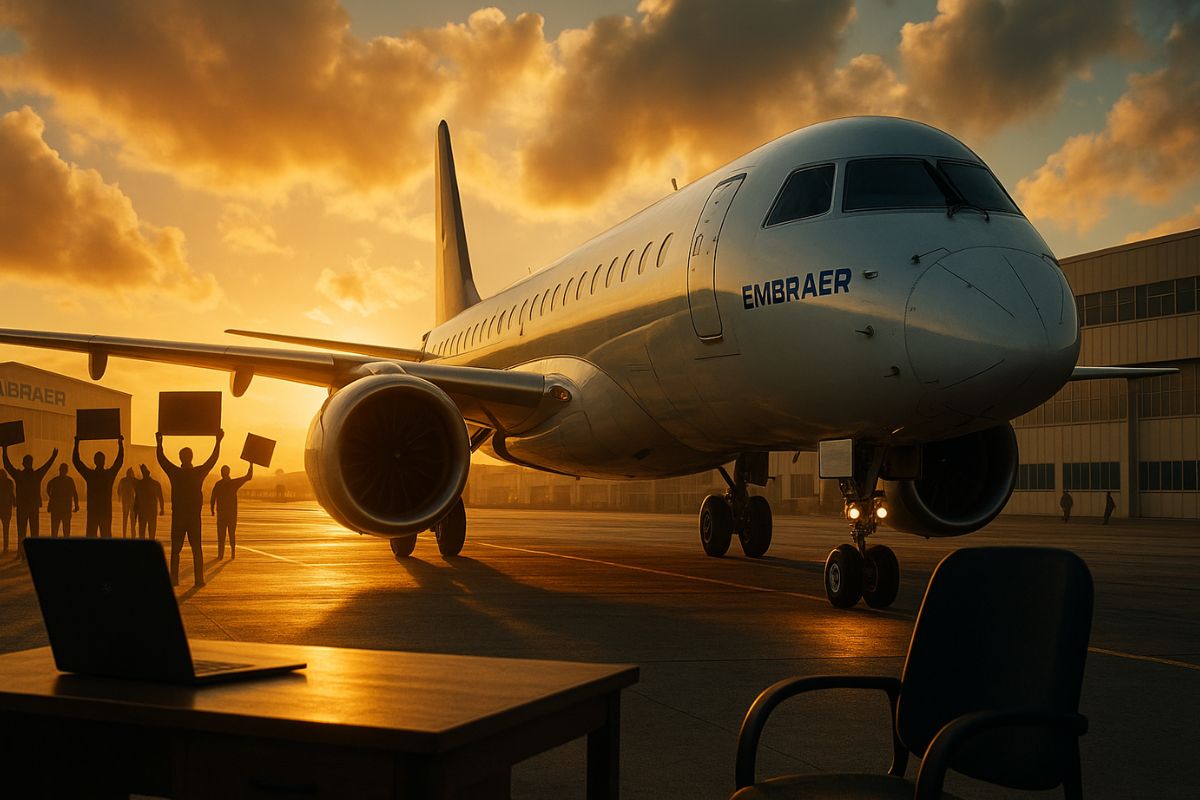


Embraer’s Decision to End 100% Home Office Mobilizes 18 Thousand Employees and Leads Union to Challenge Measure in Court.
Embraer confirmed it will end 100% home office starting on January 5, 2026, requiring employees to return to the in-office model three days a week while maintaining up to two days of remote work. The decision, which affects 18 thousand employees in Brazil, was postponed from August to January following protests from workers in São José dos Campos (SP).
The Metalworkers’ Union of São José dos Campos and Region filed a lawsuit against the measure, claiming the company unilaterally changed contract conditions without collective bargaining. According to representatives, the mandatory return to in-office represents a setback in the workers’ routine, who adapted to the remote model during the pandemic without loss of productivity.
Why Embraer Decided to End Total Home Office
According to an official statement, Embraer argues that ending 100% home office will strengthen the bond between teams, improve collaboration on projects, and ensure greater agility in communication. The company also states that the moment of global expansion requires greater integration of internal areas.
-
Unemployment rises again to 5.8% at the beginning of 2026, raising alarms about the end of temporary positions and its impact on the Brazilian job market.

-
Document organization can cut invisible costs in small businesses, a simple step that prevents waste, rework, and losses in daily operations.

-
Chinese giant worth nearly R$ 4 billion that manufactures cables for electric cars, solar energy, and robotics wants to open a factory in SC.

-
Many employers do not know, but the law guarantees domestic workers a 25% increase in salary during trips, 50% for overtime, 20% for night shifts, and 17 additional benefits that can lead to labor lawsuits if not paid.


The decision follows an international trend: Embraer units in other countries have already returned to in-person work, and the company believes Brazil should align itself. For management, shared experiences within offices are essential for the development of people and the company itself.
The Union’s View and Impacts on Employees
The union contests the measure based on Article 468 of the CLT (Consolidation of Labor Laws), which requires prior negotiation on significant contract changes. The entity also argues that the return financially affects workers, as the monthly allowance of R$ 900 for remote work expenses will cease to be paid.
Another highlighted point is the increase in commuting time, which could reduce the quality of life and impact productivity. Many employees were hired under the remote regime, even from other states, making the return even more complex.
How Embraer Prepared for the Return to In-Person Work
After protests in August, the company postponed the measure and began renovations at its facilities. Restaurants were expanded and communal areas were adapted to accommodate more workers daily. The company emphasizes that the hybrid model will be the rule starting in 2026, balancing office presence with the flexibility of remote work.
Embraer in the Global Scenario
Beyond labor issues, Embraer is at a strategic moment. Recently, the company managed to escape the trade tariffs imposed by the U.S. government, ensuring the continuity of its operations in the world’s largest regional aviation market. With over 9,000 aircraft delivered since 1969, the manufacturer is considered one of the biggest symbols of the Brazilian industry and a reference in the global aerospace sector.
The announcement of ending 100% home office by Embraer opened up a larger debate: how to balance productivity, quality of life, and corporate demands in times of rapid market changes. While the company bets on in-person integration as a strategic differential, workers advocate for the right to the established remote model.
And you, what do you think about this decision? Ending 100% home office is a step forward for Embraer or a setback for employees? Share your opinion in the comments—we want to hear from those who live this reality firsthand.










Tem que ter negociação, em muitos casos o home office é melhor tanto para empresa quanto para o trabalho e para a sociedade especialmente nas grandes cidades onde a infraestrutura estão caóticas além de ajudarem nas medidas contra as mudanças climáticas.
Triste né amigos? Enfim, Faz o L
É fato que o trabalho home office trouxe grandes benefícios para os colaboradores e redução de custos para as empresas. Porém, as empresas identificaram que os aspectos negativos do home office estão afetando a produtividade, principalmente em relação a sinergia das equipes. É preciso encontrar o equilíbrio entre o home office e o presencial. Existem setores que exigem uma presença local maior e outros não. A decisão deveria ser única e exclusivamente do patrão, o sindicato que coloque o rabinho entre as pernas e vá procurar o que fazer.
Se a decisão coubesse exclusivamente à empresa não existiria sindicato, mané. Os funcionários existem, tem força e se valem do sindicato para defender seus interesses. Se você não gosta, morde os punhos aí pra relaxar.