





 English
  Francês
  Alemão
  Italiano
  Japonês
  Norueguês
  Portuguese
  Spanish
  3 min of reading


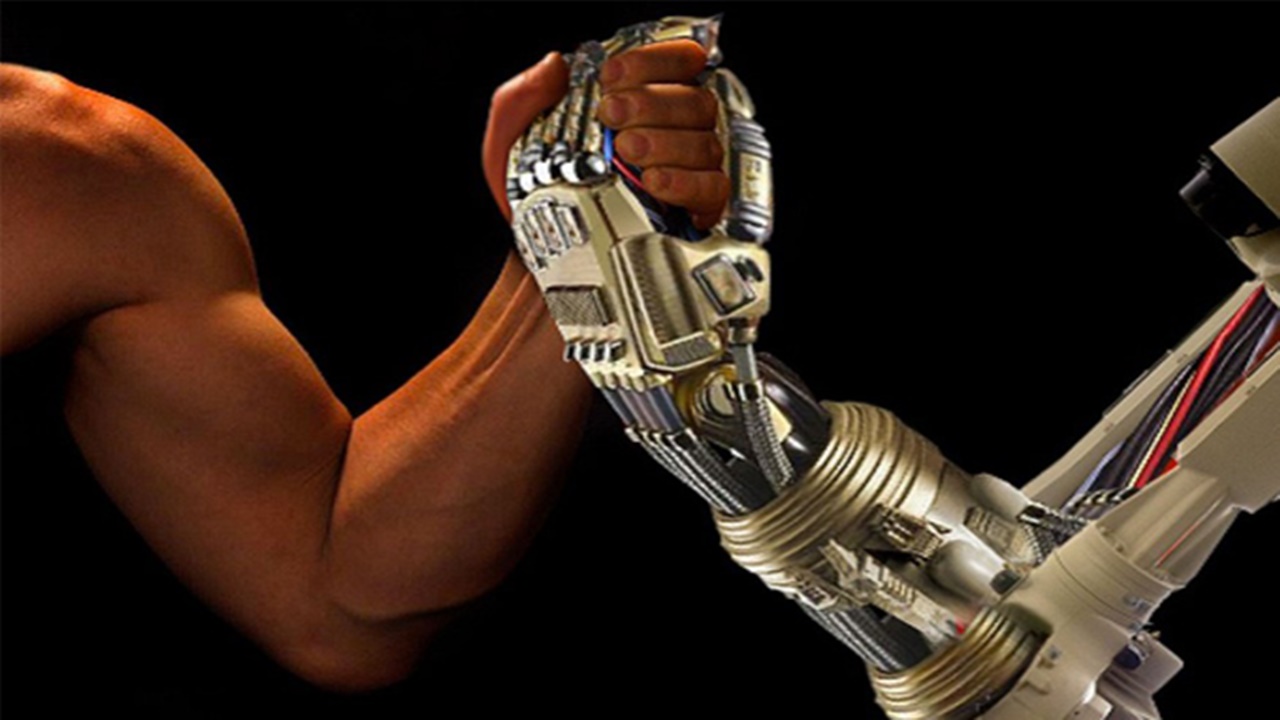
Every Time We Hear The Term Artificial Intelligence, The First Question That Comes To Mind Is: Is It The End Of Human Labor?
Gradually, human labor has been replaced by automation and more recently by Artificial Intelligence, which are robotic tools that simulate a human in repetitive activities. Chatbots, for example, engage in conversation with people, clarifying doubts and offering known solutions to various problems.
Also Read
- Ministry of Economy Offers 48 Free Online Courses (EAD) with Certificates in Infrastructure, Logistics, Environment, and More
- Brazilian Company of Infrastructure Services Calls for Many Positions for Job Openings in Civil and Industrial Construction Projects on This November 18
- Electric Motorcycle with Cell Phone Price and 120 km Range Promises to Revolutionize the Shift from Combustion Engine Vehicles to Electric Models Worldwide
- The Largest Niobium Producer on the Planet, CBMM, Seeks Solutions in Dubai, UAE, for the Company’s Revolutionary Graphene Projects Around the World
- Swedish Multinational in Partnership with Volkswagen Develops the First 100% Recycled Nickel, Manganese, and Cobalt Battery, Aiming to ‘Save’ the Major Ghost of Electric Cars Worldwide
When thinking about activities we did not like because they were repetitive, for example: the issuance of invoices was manual, and later, accountants had to transcribe all invoices one by one into a tax register book. If there was an error, the way to fix it was to use bleach, and later liquid correction fluid for adjustments. In banks, payment values were manually entered, requiring tremendous attention from the tellers. Meanwhile, telemarketing operators spent their days, weeks, or months resolving practically the same problems and providing the same information.
“In this case, the objective is to speed up the process and optimize the customer experience. To reassure, it is not the end of human work,” guarantees executive Atila Nicoletti, commercial superintendent of Run2Biz Software, who mediated a live session to explain how hyperautomation adds value to corporations with solutions that combine Artificial Intelligence, robotics, and machine learning in processes and systems.
-
‘Interlocking brick’ made of earth arrives in the construction industry with cost reductions of up to 40% on the project.

-
Espírito Santo will receive the largest engineering project in its history with the duplication of BR 262, which will have 50 viaducts, 28 bridges, and 2-kilometer tunnels cutting through the most challenging mountainous region of the entire state.

-
A project of nearly 9 million reais already has the first kilometer paved in Santa Catarina and promises to completely transform the access between Jaraguá do Sul and Rio dos Cedros in an area where tourism is growing at a rapid pace.

-
A couple builds a system to bring water from the spring to their land, climbs a hill with materials on their backs, and creates a simple, cheap, and sustainable solution to ensure their own water supply.


Check Below the Live Session on Hyperautomation
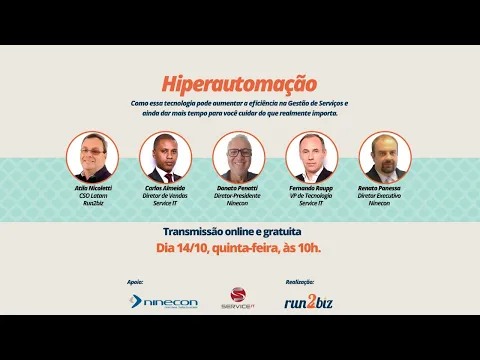

Hyperautomation Came to Speed Up Processes and Optimize Customer Experience, Not to End Human Labor
Since humans have characteristics that machines will hardly be able to replace, such as feelings, social perception, and the ability to solve unknown problems, while some routine tasks can be delegated to Artificial Intelligence, including reading emails and extracting important information from documents, it became clear during the webinar that hyperautomation – which consists of the combination of knowledge and technologies that companies should adopt to ensure automated work processes – brings more speed to the activities carried out by businesses.
“If automation aims to transform mechanical processes into automatic ones, hyperautomation encompasses even more functionalities for analysis, design, performance measurement, monitoring, research, prediction, evaluation, and re-assessment, becoming a much more comprehensive tool,” informs Nicoletti.
Since not all companies are the same and even businesses in the same sector can cater to different profiles, the meeting made it clear that, before using hyperautomation, it is necessary to understand the reality of each establishment, as well as have a broad notion of what can be improved in that context. Therefore, this infrastructure is shifting from a trend to a strong reality, ranking first in Gartner’s “Top 10 Strategic Technology Trends for 2020.”
Companies That Do Not Automate Their Internal Management Processes Risk Falling Behind
“Companies, whether large or small, that do not automate their internal management processes risk falling behind, losing efficiency, security, relevance, reliability, and, consequently, customers. Additionally, they maintain high costs due to manual processes,” Nicoletti stated.
The webinar featured discussions by Donato Penatti, CEO and founding member of Ninecon; Renato Panessa, executive director of sales at the Tech division of Ninecon; Carlos Almeida from Service IT; and Fernando Raupp from Service IT. All participating companies are known as MSPs – the acronym for Managed Service Providers – meaning they are IT (Information Technology) sector enterprises that provide IT-based services.
For those who did not watch the mentioned live session, it is available on YouTube and on LinkedIn of Run2biz.










Seja o primeiro a reagir!