





 Portuguese
  English
  Spanish
  5 min of reading
  0 comments


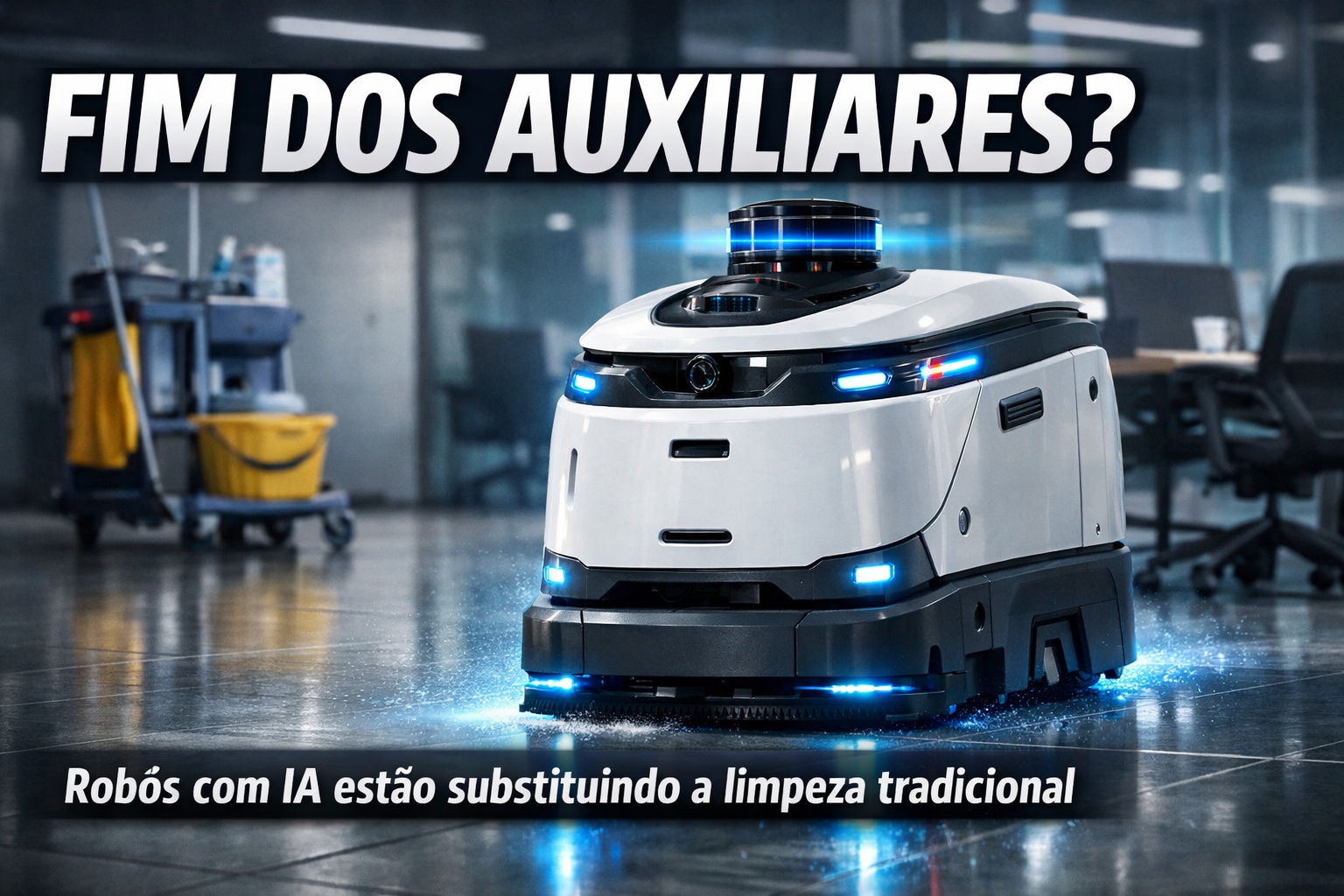
Cleaning Robots With Artificial Intelligence and LiDAR Sensors Operate 24h in Offices and Raise Debate About Replacing General Service Assistants.
In 2024, market reports published by consultancies like Strategic Market Research indicated that the global cleaning robot market surpassed US$ 8 billion and could more than double by the end of the decade, mainly driven by adoption in commercial environments. Companies like the Chinese Gausium, the German United Robotics Group, and US manufacturers specialized in commercial robotics have been expanding the presence of autonomous robots in corporate offices, airports, and hospitals. The growth of automation in cleaning is no longer an experimental trend: it represents a structural change in how office cleaning is organized, executed, and monitored.
The new cleaning robots equipped with artificial intelligence operate with LiDAR sensors, 3D cameras, and autonomous navigation systems capable of mapping corporate environments in real time. The central promise is clear: reduce operational costs, increase predictability, and standardize outcomes. The debate that emerges, however, goes beyond technology and enters the realm of the labor market. The replacement of general service assistants by autonomous robots has already begun in some corporate centers and raises questions about the future of the profession.
How Cleaning Robots With Artificial Intelligence Are Transforming Office Cleaning
Traditional office cleaning has always been based on fixed routines, manual labor, and constant human supervision. The introduction of the autonomous robot completely alters this operational logic. Instead of teams wandering through hallways and rooms at set times, the cleaning robot with artificial intelligence performs digital mapping of the space and executes tasks according to route optimization algorithms.
-
Motorola launched the Signature with a gold seal from DxOMark, tying with the iPhone 17 Pro in camera performance, Snapdragon 8 Gen 5 that surpassed 3 million in benchmarks, and a zoom that impresses even at night.

-
Satellites reveal beneath the Sahara a giant river buried for thousands of kilometers: study shows that the largest hot desert on the planet was once traversed by a river system comparable to the largest on Earth.

-
Scientists have captured something never seen in space: newly born stars are creating gigantic rings of light a thousand times larger than the distance between the Earth and the Sun, and this changes everything we knew about stellar birth.

-
Geologists find traces of a continent that disappeared 155 million years ago after separating from Australia and reveal that it did not sink, but broke into fragments scattered across Southeast Asia.

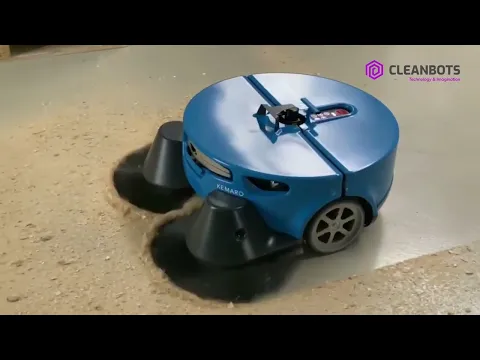

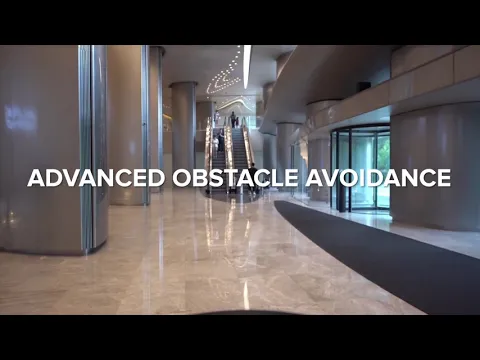
The central technology is LiDAR, a system that emits laser beams to measure distances and create three-dimensional maps of the environment. Combined with SLAM techniques, which stand for Simultaneous Localization and Mapping, the robot can identify obstacles, recalculate trajectories, and adapt to dynamic environments, such as offices with constant foot traffic.
Office cleaning becomes data-driven. The robot records areas that have already been sanitized, detects high-traffic zones, and adjusts scrubbing or suction intensity as needed. This transforms automation in cleaning into a continuous and monitorable process, reducing human variations in the final result.
How an Autonomous Robot With LiDAR Sensors and Intelligent Navigation Works
The corporate cleaning robot integrates multiple sensors in addition to LiDAR. RGB-D cameras capture depth, ultrasonic sensors detect proximity, and inertial systems maintain movement stability. Autonomous navigation is managed by embedded algorithms that process thousands of data points per second.
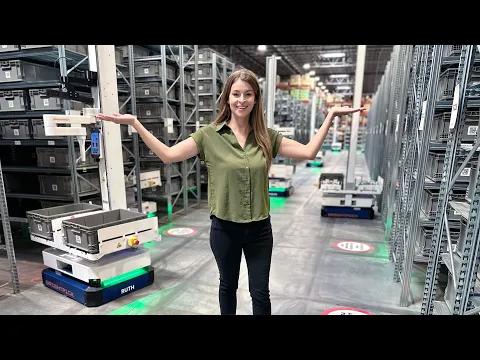
The operation begins with the scanning of the space. The robot roams the environment in exploratory mode and creates a detailed map of the office. This map is stored in an internal system or on a cloud platform, allowing for remote updates and monitoring by building managers.
The embedded artificial intelligence identifies patterns. High-traffic areas, such as receptions and main corridors, can be programmed for more frequent cleaning. The system also detects temporary obstacles, such as moved chairs or boxes, automatically adjusting its route.
Many models operate 24 hours a day, automatically returning to the charging base when battery levels reach a predefined threshold. This continuous operation capability is one of the main selling points for companies looking to reduce costs associated with night shifts.
Can Autonomous Robots Replace General Service Assistants? Impact on the Labor Market
The replacement of workers by technology is not a new phenomenon. However, automation in office cleaning directly impacts one of the most traditional functions in the corporate environment. The autonomous robot performs sweeping, vacuuming, washing, and even UV-C disinfection in some advanced models.
The operational cost of a cleaning robot can be high in initial investment but dilutes over time. Companies argue that the equipment does not have vacations, absences, or productivity fluctuations. This financial predictability is seen as a strategic advantage.
However, labor market specialists point out that the replacement is not necessarily total. In many cases, general service assistants take on supervisory functions, equipment maintenance, and tasks that require human judgment, such as material organization or detailed cleaning in complex areas.
The trend observed in large corporate centers is a gradual reduction in the number of workers in traditional cleaning roles, combined with retraining for technical functions. The impact, therefore, depends on each company’s policy and the pace of technology adoption.
Growth of the Robotics Market and the Expansion of Automation in Corporate Cleaning
Market reports indicate an annual growth of over 15% in the commercial cleaning robotics segment. This advancement is driven by three main factors: reduction in technological costs, increased demand for sanitization post-pandemic, and labor shortages in some markets.
The cleaning robot market is not limited to vacuums. It includes large industrial machines capable of covering thousands of square meters per day. The ability to integrate with smart building systems transforms office cleaning into a component of the building’s digital infrastructure.
Facility management companies have started incorporating autonomous robots as part of their service packages. Automation in cleaning becomes a competitive differentiator, especially in high-end corporate buildings seeking environmental certifications and operational efficiency.
Technical Challenges, Limits of Automation, and the Future of Office Cleaning
Despite advancements, technology faces limitations. Highly irregular environments, stairs, and areas with a lot of small objects still require human intervention. Preventive maintenance is also a critical factor. Sensors need calibration, batteries have a limited lifespan, and software systems require constant updates.
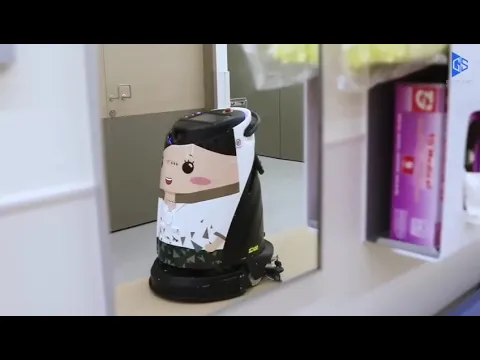
Another sensitive point is cultural acceptance. The presence of autonomous robots moving around in offices alters the dynamics of the space and may generate initial resistance among workers.
From a regulatory perspective, labor laws and technology replacement policies are still being debated in several countries. Mass adoption will depend not only on technical viability but also on corporate strategic decisions.
Office cleaning is transitioning from being just an operational activity to becoming a data-driven automated process. Cleaning robots with artificial intelligence, LiDAR sensors, and autonomous navigation represent a technological leap that redefines costs, efficiency, and predictability.
The end of general service assistants is neither inevitable nor immediate, but the transformation is already underway. Automation in corporate cleaning indicates that artificial intelligence is not restricted to administrative offices or invisible software.
It now navigates hallways, maps rooms, and performs physical tasks with increasing precision, signaling that the next frontier of technological replacement may be closer to everyday life than many imagined.








-

Uma pessoa reagiu a isso.