





 Portuguese
  English
  Spanish
  6 min of reading
  0 comments


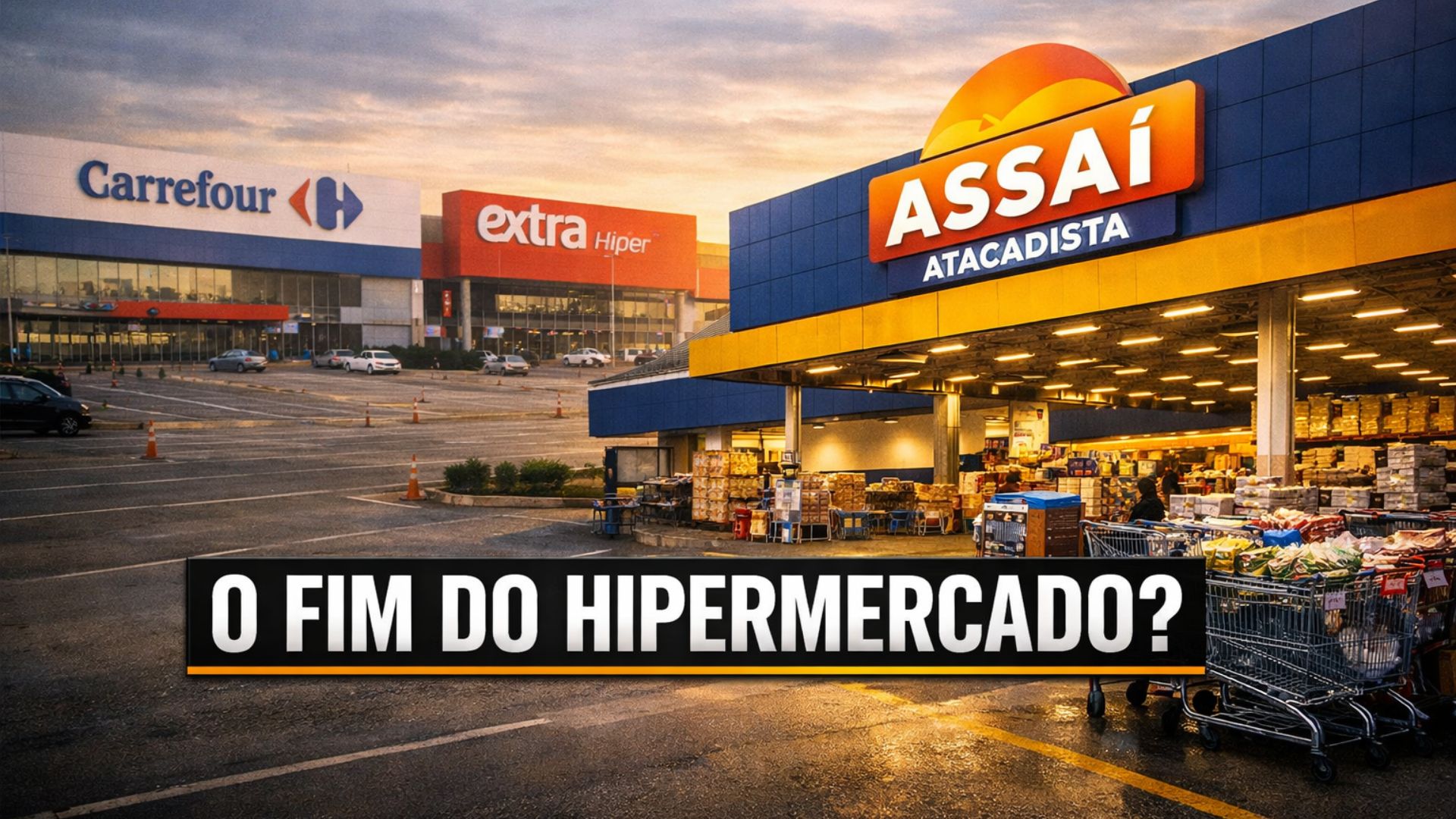
Advancement of Cash-and-Carry Accelerates Change in Shopping, Pressures Traditional Formats, and Restructures the Competition for Price and Convenience in the Food Sector.
The advancement of cash-and-carry, a format that combines characteristics of wholesale and retail, has repositioned the competition for consumers in the food sector and reinforced the pressure on traditional models, such as hypermarkets.
In an interview on the Show Business program at Jovem Pan News, the CEO of Assaí Atacadista, Belmiro Gomes, attributed the change to a mix of demand for lower prices, high logistics costs in the country, and a transformation in the way of shopping, with some categories migrating to e-commerce.
According to the executive, cash-and-carry has gained traction by serving, in the same space, families making stock-up purchases and entrepreneurs who need to frequently restock.
-
The government requests the Federal Revenue Service for a new system to automate the income tax declaration, reducing errors, time, and bureaucracy for millions of Brazilians.

-
Pix in installments, international Pix, and contactless payment without internet: the Central Bank revealed the new features coming to the tool that is already used by almost every adult in Brazil.

-
Mercado Livre has just started selling medications with delivery in up to three hours to your door, and this move could completely change the way Brazilians buy medicines on a daily basis.

-
In Dubai, rising tensions from the war in the Middle East are causing super-rich individuals to leave the Gulf and direct their fortunes to a new financial refuge in Asia.


In his view, the format reduces operational costs by concentrating efforts in one key area: selling food, cleaning, and personal care items at lower prices than in other channels.
Cash-and-Carry in Brazil and the Shift in Consumer Habits
Belmiro stated that the expansion of the model has accompanied structural characteristics of Brazil, such as continental dimensions, high logistics costs, and complex tax systems, in addition to the weight of lower value-added products, especially food.
He also linked the search for savings to the scenario of pressured income and inequality, which increases price sensitivity even outside periods of more intense inflation.
The formula, in practice, relies on two audiences.
On one side, end consumers who buy in bulk to stock up their homes.
On the other side, small businesses, such as bars, restaurants, snack bars, bakeries, and other services, for which purchasing prices directly influence profit margins and business survival.
When discussing this second group, the CEO described cash-and-carry as a kind of “complementary distributor” for the industry, reducing the need for door-to-door deliveries in dense areas where operations become more expensive and less efficient.
The growth of the format, according to the executive, has not been restricted to the outskirts, where cash-and-carry became popular during the initial waves of expansion.
He mentioned that over time, stores have also begun to attract higher-income audiences and have expanded to different regions, boosting a broader presence in shopping routines.
Hypermarkets, E-Commerce, and the Change in Sales Mix


A central part of the interview was the attempt to reorganize the narrative around the weakening of hypermarkets.
Belmiro stated that although many people associate the shift with cash-and-carry, the main factor has been the growth of e-commerce in non-perishable and higher value-added categories, such as electronics and home items.
In his assessment, when consumers began purchasing this type of product online and receiving it at home, hypermarkets lost a significant portion of the traffic that helped sustain the model.
With fewer sales in these categories and high costs of operating large areas and extensive assortments, competition with leaner formats has become more challenging, paving the way for the consolidation of cash-and-carry in daily supply.
Lower Prices and Tight Margins in Food Retail
The executive pointed out that the price advantage of cash-and-carry, compared to hypermarkets and supermarkets, often varies by category.
In the program, he mentioned a typical difference in the range of 12% to 15%, associating this level with the necessary incentive for consumers to switch channels when purchasing food.
Explaining how the business sustains itself with lower prices, Belmiro emphasized that it is a low-margin operation, focused on scale and volume.
He also noted that net profits in the sector tend to be tight, and that, during times of high interest rates, results can be further compressed.
The logic, according to him, is to turn over goods efficiently and pass the cost savings to consumers, preserving the high turnover model.
Assaí Atacadista and the Scale of Cash-and-Carry in the Country
Assaí has become one of the symbols of the advancement of cash-and-carry in the country.
The company closed 2024 with gross revenue of R$ 80.6 billion and operates 302 stores in 24 states and the Federal District, according to information released by the company itself.
The chain also has more than 87,000 employees and, in recent communications, reported a traffic of around 40 million people per month in its units.
In the interview, Belmiro described the change in cash-and-carry as a “natural evolution” of the format.
He mentioned that to expand their presence in more central areas and attract customers with different demands, the sector invested in improving the shopping experience, without abandoning the promise of low prices.
This included adjustments in lighting, air conditioning, training, assortment, and store organization, as well as advances in perishable standards.
Butcher Shop, Bakery, and Self-Service to Expand the Basket
The CEO reported that cash-and-carry, historically associated with large volumes and larger packaging, has begun to seek smaller and more frequent purchases, partly due to changes in the labor market and the way income is received.
He noted the increasing presence of daily-wage workers, which may encourage quicker restocking instead of complete monthly purchases.
In this context, Assaí has expanded services and categories within stores, such as butcher shops and sliced cold cuts areas, as well as initiatives related to self-service at checkout.
The company reported in its communications that more than 110 stores received new services in 2024 and that the presence of these resources has significantly expanded compared to previous years.
In a later announcement, the group also pointed out the increased use of self-service checkouts in a significant part of the network.
When discussing specific numbers, Belmiro stated that some details are not disclosed since it is a publicly traded company.
Still, he argued that service diversification helps maintain competitiveness and increases the ability to cater to different consumer profiles, including those who buy little and those who buy a lot.
Sale of Pharmaceuticals in Supermarkets and Cash-and-Carry in Debate
Another part of the interview addressed the discussion about the sale of pharmaceuticals in food retail, a topic led by organizations in the supermarket sector.
Belmiro stated that he supports the request to allow pharmacies to be set up within supermarkets and cash-and-carry stores, following sanitary regulations and with the presence of a pharmacist, in the model known as store in store.
In Congress, proposals on the subject have been debated in public hearings and have undergone adjustments.
In broad terms, the discussion has evolved to allow complete pharmacies within stores, with physical separation and compliance with Anvisa regulations, rather than simply allowing medications on the shelves.
The executive argued that more competition tends to benefit the end consumer, especially in a country where medications also weigh on family budgets.
Microsoft in Brazil and Investment in Cloud and Artificial Intelligence
The Show Business also announced the participation of Priscila Laran, president of Microsoft in Brazil, in her first TV interview, focusing on the priorities of the local operation and the investment announced by the company.
In an official statement from September 2024, Microsoft reported plans to invest R$ 14.7 billion over three years in cloud infrastructure and artificial intelligence in the country, in addition to large-scale training initiatives.
With cash-and-carry expanding, hypermarkets pressured by changes in mix, and the debate about in-store services gaining strength, what will be the next shopping habit of Brazilians that could reshape retail once again?








-

-

-

-

10 pessoas reagiram a isso.